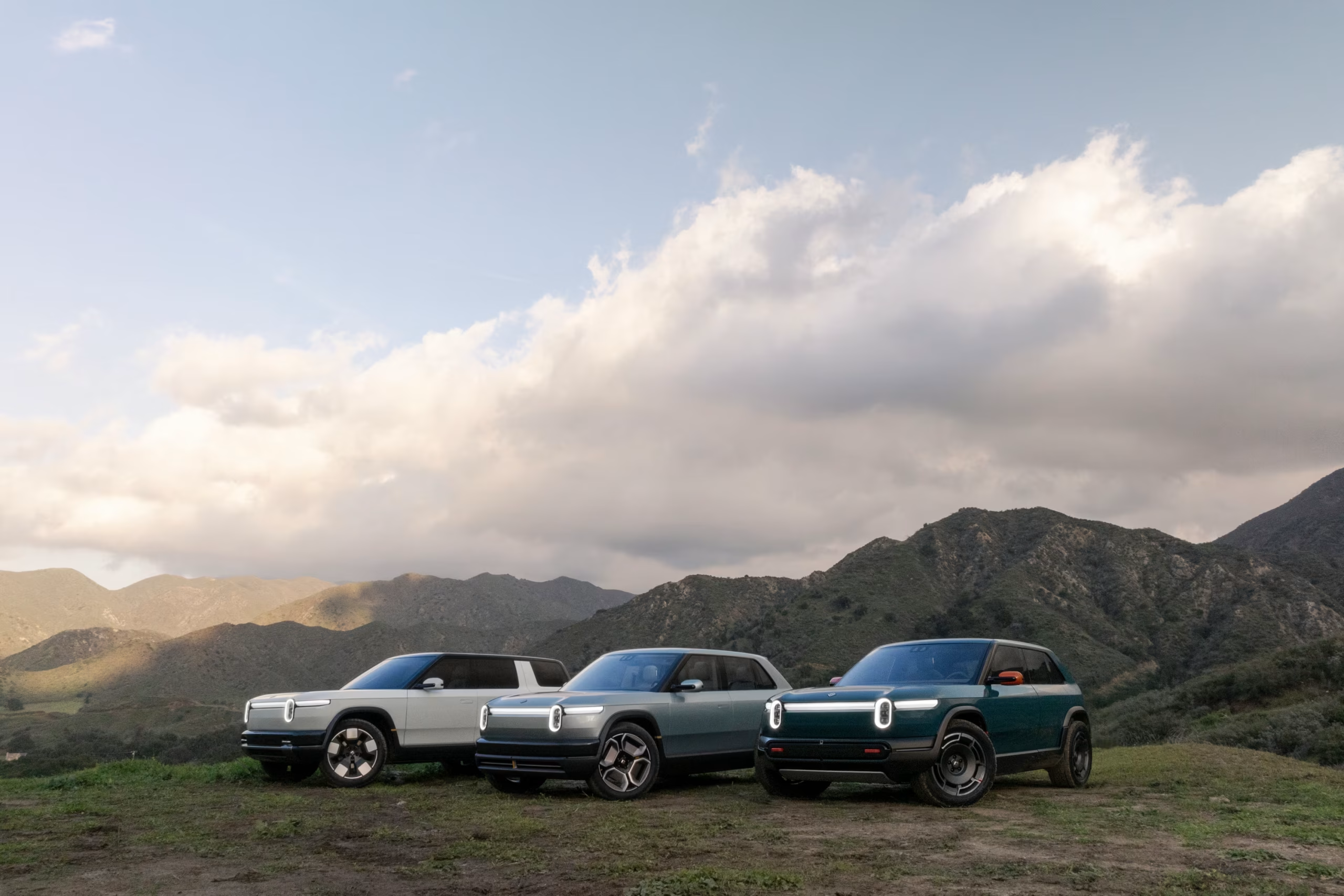
The Rivian R2 SUV represents a turning point for the electric vehicle manufacturer. CEO RJ Scaringe has described the model as the company’s “inflection point,” the vehicle that could determine whether Rivian grows into a major automaker or remains a niche EV brand.
Scaringe has made clear that Rivian cannot rely on expensive flagship models alone. The company currently sells premium vehicles such as the R1T pickup and the R1S SUV, both priced well above the mainstream market. However, the Rivian R2 SUV introduces a far more accessible product designed to reach a broader customer base.
According to Scaringe, Rivian’s long-term ambitions depend on this shift. He has said the company cannot achieve large-scale production by selling only $90,000 vehicles. Instead, Rivian must launch models like the Rivian R2 SUV and the future R3 to compete with mainstream EV offerings.
Rivian plans to release four versions of the Rivian R2 SUV, each aimed at a different segment of buyers. These variants include the standard model, the standard long-range version, the premium trim, and the performance package. The company will release each configuration in stages rather than launching all models at once.
The first version to reach customers will be the performance model. Rivian expects this variant to arrive in spring 2026. It will feature a dual-motor electric drivetrain producing 656 horsepower. This configuration places the Rivian R2 SUV among the more powerful vehicles in its class.
Later in 2026, Rivian will release the premium trim. This version also uses a dual-motor system but produces about 450 horsepower. Meanwhile, the standard long-range version will follow in early 2027. The entry-level standard trim will arrive later that same year.
Rivian has also prepared several color choices for the Rivian R2 SUV. Buyers will find the brand’s familiar colors such as Borealis, Forest Green, Glacier White, and Midnight. In addition, Rivian will introduce three new colors called Catalina Cove, Half Moon Grey, and Esker Silver.
Pricing plays a central role in the strategy behind the Rivian R2 SUV. The base model will start at $45,000. The long-range version will cost about $48,490, while the premium trim will reach $53,990. The performance model will begin at $57,990.
Even the most expensive version remains significantly cheaper than Rivian’s current vehicles. For comparison, the Rivian R1T pickup starts around $72,990. This price gap highlights how the Rivian R2 SUV aims to attract a wider audience.
Each vehicle will also include a $1,495 freight charge. Rivian requires a $100 refundable deposit to reserve a model. This reservation system allows the company to gauge early demand for the Rivian R2 SUV.
The new model also introduces a smaller footprint compared with Rivian’s existing vehicles. The Rivian R2 SUV seats five passengers and provides enough headroom for adults taller than six feet. Despite the smaller size, the interior remains designed for everyday practicality.
Compared with the larger R1S SUV, the Rivian R2 SUV is roughly fifteen inches shorter in length and about ten inches lower in height. Rivian also reduced overall weight significantly. The R2 weighs roughly two tons less than the R1 series.
Ground clearance remains impressive for a compact electric SUV. Rivian states the Rivian R2 SUV offers about 9.6 inches of clearance. This design preserves the brand’s off-road capability while maintaining urban usability.
Cargo capacity also reflects Rivian’s focus on practicality. The vehicle provides about 90.1 cubic feet of enclosed storage space. With the rear seats upright, the cargo area holds roughly 28.7 cubic feet.
Folding the rear seats expands capacity to about 79.4 cubic feet. In addition, the front trunk offers 5.2 cubic feet of storage. According to Rivian, the frunk can hold a carry-on suitcase and a backpack or up to six grocery bags.
Driving range remains another key selling point. Rivian estimates the performance and premium versions of the Rivian R2 SUV will deliver up to 330 miles of range. The long-range trim could reach approximately 345 miles according to company estimates.
The base version should provide at least 275 miles of range. Although official EPA ratings remain pending for some variants, these figures suggest the Rivian R2 SUV will compete directly with other mid-range electric SUVs.
Charging technology also reflects industry trends. The vehicle includes a native NACS charging port, which matches Tesla’s charging connector standard. Rivian estimates the battery can charge from 10 percent to 80 percent in about 29 minutes.
Performance varies by model. The performance trim accelerates from zero to sixty miles per hour in 3.6 seconds. The premium trim reaches the same speed in roughly 4.6 seconds. Meanwhile, the standard versions complete the sprint in about 5.9 seconds.
Technology will also play a central role in the Rivian R2 SUV. Every variant will include hardware for Rivian’s driver assistance system known as Autonomy+. The platform supports hands-free driving on many major highways.
Rivian states the system currently operates on more than 3.5 million miles of roads across the United States and Canada. Owners can purchase the system through a $49.99 monthly subscription or a one-time payment of $2,500.
Future versions of the Rivian R2 SUV may include lidar sensors as well. Rivian has indicated that upcoming variants could support more advanced autonomous capabilities.
In its first phase, the system will support point-to-point hands-free driving. Later versions may enable “eyes-off” driving using Rivian’s next-generation computing platform.
For Rivian, the stakes surrounding the Rivian R2 SUV remain extremely high. The company needs a product capable of reaching a much larger audience. If the R2 succeeds, Rivian could finally scale production to the millions of vehicles Scaringe envisions.