Researchers at ETH Zurich have developed a handheld fat-burning breath test that can show whether the body is using fat for energy after a single exhalation.
The compact device measures acetone, a chemical released in the breath when the body breaks down stored fat. It can reportedly deliver a result in about 90 seconds, offering a faster and less invasive alternative to blood testing or laboratory analysis.
The research team believes the technology could eventually help people monitor changes in their metabolism at home. It may also support clinical research and personalized treatment for conditions such as diabetes, obesity and epilepsy.
How the fat-burning breath test works
The device measures the amount of acetone present in a person’s breath.
Acetone levels generally rise when the body begins using more fat instead of carbohydrates for energy. This can happen during fasting, intense exercise or a ketogenic diet.
Breath acetone has long been recognized as a useful indicator of fat metabolism. However, accurate measurements have traditionally required large and expensive laboratory equipment.
Some consumer devices can also detect acetone, but they may struggle to provide reliable results when concentrations are low.
The ETH Zurich team spent around a decade developing sensor technology that could overcome these limitations while remaining small enough for everyday use.
Device tested using 312 breath samples
Researchers evaluated the fat-burning breath test with 12 healthy adults under conditions designed to reflect normal daily activities.
The device analyzed 312 breath samples and measured acetone concentrations ranging from 0.2 to 45 parts per million.
Its readings closely matched results obtained using mass spectrometry, an established laboratory method for measuring breath acetone.
The findings suggest that the handheld sensor may be sensitive enough to identify relatively small changes in fat metabolism.
However, the initial study involved a limited number of participants. Larger and more diverse clinical trials will be needed to confirm how reliably the device performs across different populations and health conditions.
Researchers examine exercise, food and fasting
The scientists monitored participants under four different conditions to determine whether the device could detect expected metabolic changes.
The scenarios included:
Light exercise followed by a high-carbohydrate meal
Intense exercise followed by a high-carbohydrate meal
A fat-rich ketogenic meal
A period of fasting
Researchers compared the breath readings with established indicators, including blood glucose and ketone levels.
Breath acetone remained low after light exercise and a carbohydrate-rich meal. This suggested that the body continued to rely mainly on carbohydrates for energy.
Levels rose after intense exercise, indicating greater use of fat as fuel.
After intense exercise, acetone readings declined when participants ate a high-carbohydrate meal. They remained elevated following a fat-rich meal and continued increasing during fasting.
These patterns closely followed the changes recorded through blood glucose and ketone measurements.
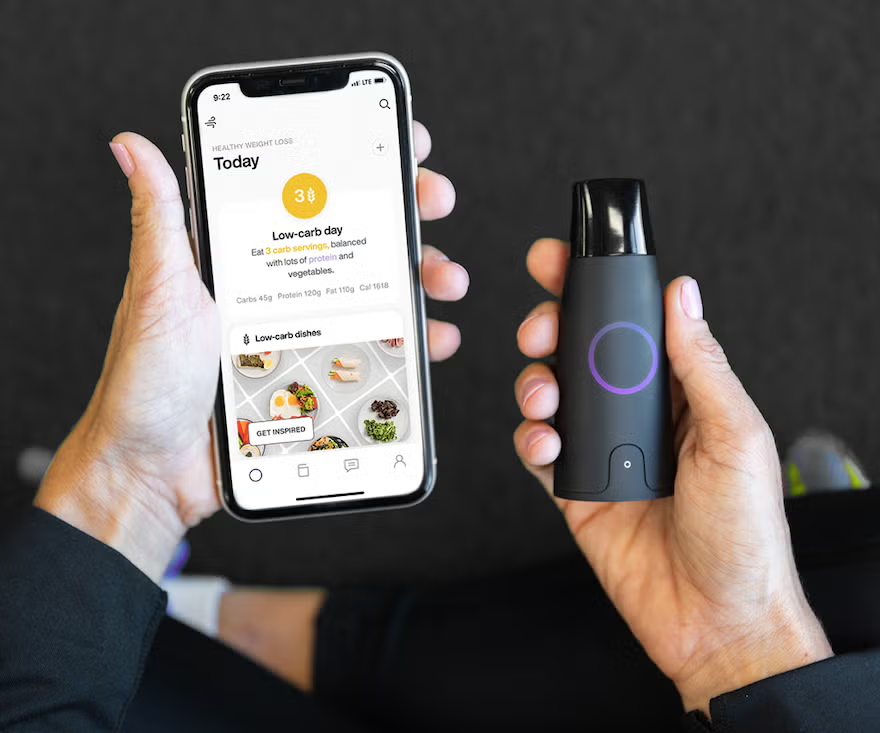
Fat-burning breath test uses a smartphone app
Ease of use was a major part of the device’s development.
A connected smartphone application guides users through each measurement. It instructs them on how strongly and how long they should exhale to produce a valid reading.
The system also includes quality checks that can reject an incorrect breath sample or detect contaminated air.
These features are intended to improve consistency, since differences in breathing technique could otherwise affect the result.
A simple app-guided process could make the technology more suitable for home use than laboratory-based tests.
Possible role in diabetes and epilepsy care
The researchers believe breath acetone monitoring could support several clinical applications.
People with diabetes may benefit from improved tools for tracking metabolic changes. However, the device would need further clinical validation before it could be used for medical decisions or replace approved diagnostic tests.
Breath acetone monitoring is also being studied in epilepsy care.
Some people with epilepsy follow ketogenic diets, which are high in fat and low in carbohydrates. These diets encourage the body to produce ketones and may help control seizures in certain patients.
A non-invasive breath test could give patients and clinicians another way to monitor how the body responds to dietary treatment.
The technology could also support research into obesity, fasting therapies and metabolic health.
Spin-off company commercializes the technology
An ETH Zurich spin-off company called Alivion AG has already introduced a breath acetone analyzer based on the sensor technology.
The product, known as Nutrion, is being used in clinical studies involving epilepsy. It is also available to people interested in monitoring breath acetone during weight-management or athletic programs.
The commercial system reflects the research team’s wider goal of moving metabolic monitoring beyond specialist clinics.
Instead of requiring frequent medical appointments or laboratory tests, people could potentially collect regular measurements from home.
This may help researchers gather more detailed information about how metabolism changes throughout the day.
Could it support weight management?
The fat-burning breath test may help users understand when their bodies are relying more heavily on fat for energy.
However, a higher acetone reading does not automatically show how much body fat a person has lost. It also does not prove that a particular diet, fasting routine or exercise program is safe or effective.
Fat metabolism can change temporarily based on food intake, exercise intensity and the length of time since a person last ate.
For this reason, readings would need to be interpreted carefully and alongside other health information.
The device should not be viewed as a shortcut for weight loss or as a replacement for medical guidance, particularly for people with diabetes or other health conditions.
More clinical studies are needed
The early results indicate that the sensor can detect subtle changes in breath acetone under controlled conditions.
Researchers now want to use the technology in wider clinical trials. One possible area of study is whether regular breath measurements could improve personalized guidance during different fasting therapies.
Future research will also need to determine how factors such as age, medication, diet and existing medical conditions influence readings.
Long-term studies could establish whether home breath monitoring improves treatment outcomes or helps people make better-informed health decisions.
A new direction for home health technology
The fat-burning breath test reflects a broader shift toward compact health devices that can provide information without needles, blood samples or hospital equipment.
Breath contains many chemicals linked to processes occurring inside the body. Advances in sensor technology could eventually make it possible to monitor a wider range of health indicators using a simple exhalation.
ETH Zurich’s device remains at an early stage, but its ability to measure low acetone levels could make it useful for clinical research and future home monitoring.
With further testing, the technology may provide a convenient way to observe metabolic changes while reducing dependence on more invasive testing methods.