Sports complexes in Uganda are changing quickly as the country invests in better stadiums, arenas and training facilities for athletes and fans.
For many years, Kampala had most of the country’s major sporting venues. That is gradually changing. New stadiums are being built outside the capital, older facilities are being improved, and more regions are getting proper spaces for football, athletics, basketball, swimming and other sports.
Some of these venues are designed for large international events, while others focus on training, university sport or regional competitions. Together, they show how much Uganda’s sporting infrastructure has grown.
Here are some of the best sports complexes in Uganda worth knowing about.
1. Hoima City Stadium
Hoima City Stadium is one of the most impressive additions to Uganda’s sporting landscape.
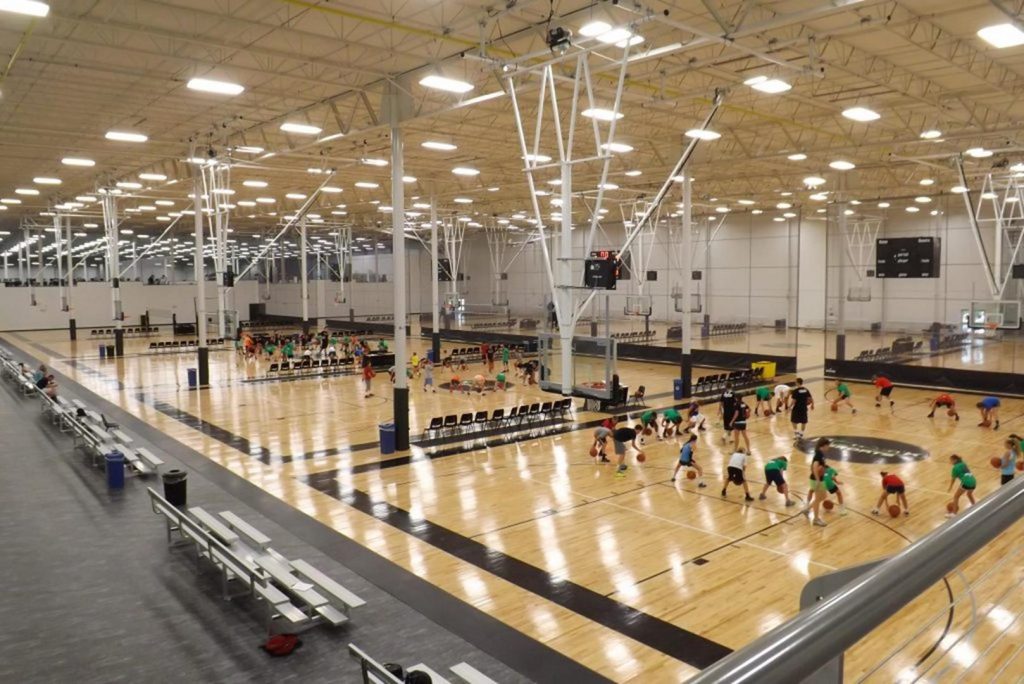
Unlike a traditional football ground, it was developed as a wider multi-sport complex. The facility includes spaces for football, athletics, swimming, basketball, volleyball and indoor sports.
The main stadium can accommodate major football and athletics events, while the indoor arena gives other sports a proper place to compete.
For athletes and sports fans in western Uganda, Hoima City Stadium is particularly important because it brings modern sporting facilities much closer to home.
It also represents the direction many new sports complexes in Uganda are beginning to take, with several sporting disciplines brought together in one development.
2. Hamz Stadium Nakivubo
Nakivubo has been part of Uganda’s sporting story for generations.
For years, the stadium hosted football matches, boxing events and major public gatherings in the middle of Kampala. After extensive redevelopment, it reopened as Hamz Stadium with a completely different look.
The modern stadium includes improved seating, floodlights and facilities capable of hosting football and other sporting or entertainment events.
What makes Nakivubo especially interesting is its location.
Unlike many modern stadiums built outside busy city centres, Hamz Stadium remains surrounded by downtown Kampala. Match days therefore feel connected to the energy of the city itself.
For people who remember the old Nakivubo, the redeveloped venue feels like an important piece of Kampala’s sporting history brought back to life.
3. Mandela National Stadium
Mandela National Stadium, better known as Namboole, remains one of Uganda’s most recognisable sporting venues.
It has hosted some of the country’s biggest football matches, athletics competitions, concerts and national gatherings.
For many Uganda Cranes supporters, Namboole is more than simply a stadium. It is connected to years of important qualifiers, packed stands and memorable national-team moments.
The stadium has also undergone significant renovation as Uganda prepares to host more international competitions.
Even as newer sports complexes in Uganda emerge, Namboole continues to hold an important place in the country’s sporting identity.
4. Lugogo Sports Complex and MTN Arena
Lugogo has long been one of Kampala’s busiest sporting areas.
Rather than being built around a single sport, the wider complex supports several different disciplines.
MTN Arena is particularly well known for basketball, volleyball, boxing and other indoor competitions.
The surrounding Lugogo area also includes cricket facilities and other sporting spaces, meaning completely different competitions can sometimes be taking place within the same neighbourhood.
That variety has helped Lugogo remain relevant even as newer stadiums have appeared around Uganda.
For indoor sport in particular, it continues to be one of Kampala’s most familiar venues.
5. St Mary’s Stadium Kitende
St Mary’s Stadium in Kitende has established itself as one of Uganda’s important football grounds.
It is best known as the home of Vipers SC and has hosted both domestic and continental matches.
Compared with some larger stadiums, Kitende has a more compact layout. That often brings supporters much closer to the action and can create an energetic atmosphere during important matches.
The stadium also has floodlights, covered seating and facilities designed for high-level football.
Among football-focused sports complexes in Uganda, St Mary’s Stadium has become one of the most recognised.
6. National High Altitude Training Centre, Teryet
Uganda’s sporting success goes far beyond football.
The country has produced world-class distance runners, and the National High Altitude Training Centre at Teryet in Kapchorwa was developed with athletics in mind.
The facility sits in a naturally high-altitude environment that is well suited to endurance training.
It includes a modern running track, field-event facilities, training spaces and accommodation for athletes.
Kapchorwa already has a strong running culture, so the location feels particularly appropriate.
Instead of asking athletes to leave an area famous for producing runners, the centre brings better training infrastructure directly into that environment.
7. Makerere Indoor Sports Arena
Makerere University has played an important role in Ugandan sport for decades.
Its sporting facilities support basketball, volleyball, netball, hockey, handball and several other disciplines.
The indoor arena is particularly important for student sport and university competitions.
It may not have the size of Namboole or Hoima City Stadium, but it serves a different purpose.
Many athletes begin their development at school and university level rather than inside national stadiums. Facilities such as Makerere’s give them somewhere to train regularly, compete and improve.
That makes university sports infrastructure an important part of the wider network of sports complexes in Uganda.
8. Bukedea Comprehensive Sports Complex
Bukedea is another example of major sporting infrastructure developing outside Kampala.
The Bukedea Comprehensive Sports Complex has become increasingly visible through school competitions and regional sporting events.
Its growth is important because athletes outside Kampala should not have to travel to the capital every time they need access to quality facilities.
Regional sports complexes also make it easier for schools to host larger tournaments and give young athletes opportunities to compete closer to home.
Bukedea shows how Uganda’s sporting infrastructure is gradually becoming less centred on Kampala.
What makes sports complexes in Uganda stand out?
A good sports complex is about much more than the number of seats inside a stadium.
For athletes, the quality of the playing surface, training areas, changing rooms and medical facilities can be more important than how impressive the building looks from outside.
Fans need comfortable seating, security, clean facilities and a good view of the action.
Modern venues must also accommodate referees, journalists, broadcasters, officials and emergency teams.
The strongest sports complexes in Uganda are therefore the ones that work well for both the people competing and those watching.
Sports complexes in Uganda are becoming more versatile
One of the biggest changes in recent years has been the move towards multi-sport facilities.
Instead of constructing a stadium that can only host football, some newer developments include running tracks, swimming facilities, indoor arenas and courts for sports such as basketball and volleyball.
Hoima City Stadium is a good example.
Lugogo has also operated as a multi-sport area for years, although its facilities were developed more gradually.
This approach makes sense because a sports complex becomes more useful when different athletes can use it throughout the year.
It also means communities benefit from the facility beyond football match days.
Sports infrastructure is spreading beyond Kampala
For a long time, Kampala dominated Uganda’s sports infrastructure.
That is slowly changing.
Hoima now has a major sports complex. Kapchorwa has the National High Altitude Training Centre, while Bukedea has developed into an important regional sporting destination.
Other projects around Uganda are also giving athletes access to better facilities without requiring them to travel to Kampala.
This could have a major impact on the development of young talent.
Uganda has talented athletes in every region, but talent develops more easily when people have somewhere suitable to train and compete.
Major tournaments are driving investment
International sporting events are also encouraging Uganda to improve its stadiums and training facilities.
Preparations for AFCON 2027 have helped accelerate investment in new and existing venues.
Large tournaments usually bring stricter requirements for security, playing surfaces, changing rooms, media facilities and spectator areas.
The lasting value of these developments, however, will depend on what happens after major tournaments are over.
The most useful sports complexes in Uganda will be those that continue serving local clubs, schools, athletes and communities long after international visitors have gone home.
Final thoughts
Sports complexes in Uganda have become more varied and more widely distributed than they were a few years ago.
Hoima City Stadium represents a newer generation of multi-sport developments, while Hamz Stadium has brought a modern sporting venue back into the heart of Kampala.
Mandela National Stadium remains closely connected to Uganda’s football history, and Lugogo continues to play an important role in basketball and other indoor sports.
St Mary’s Stadium has established itself as an important football venue, while the Teryet High Altitude Training Centre gives Uganda’s runners a specialised environment built around athletics.
Perhaps the most important change is that quality sporting infrastructure is gradually spreading beyond Kampala.
As more sports complexes in Uganda are developed across different regions, young athletes will have better opportunities to train, compete and develop closer to home.