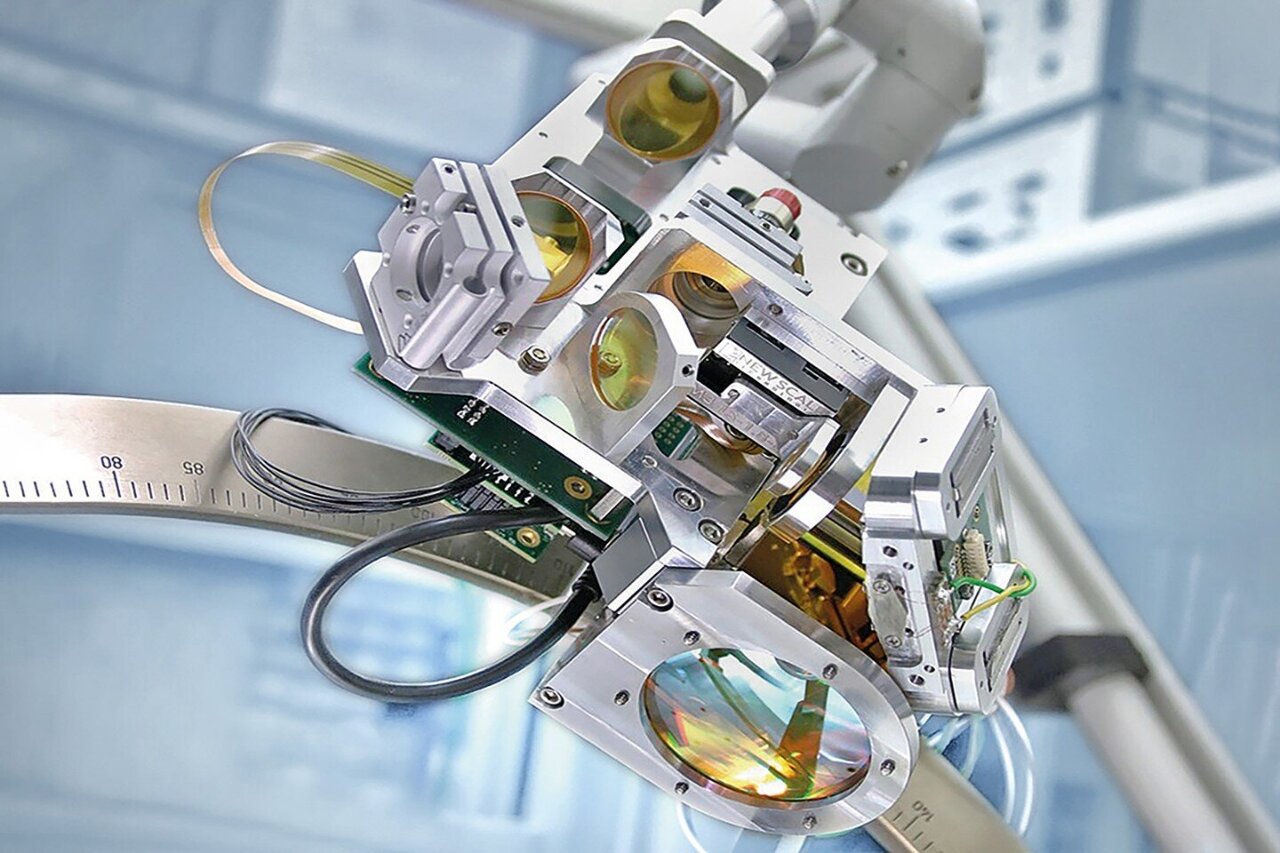
A laser osteotomy breakthrough from researchers at the University of Basel could transform the future of bone surgery. For decades, surgeons have relied on mechanical tools such as saws, drills, and chisels. While effective, these instruments apply pressure to bone, which can cause microcracks and limit surgical precision.
Now, this laser osteotomy breakthrough demonstrates a way to cut bone deeper and more efficiently than previous laser systems allowed. The innovation could open the door to safer procedures and improved outcomes, especially for complex joint implant surgeries.
Why the Laser Osteotomy Breakthrough Matters
Lasers are already widely used in soft tissue procedures because they cut precisely and without direct contact. However, bone has always posed a challenge. Earlier laser systems could only cut to depths of two to three centimeters, which is not sufficient for many orthopedic procedures.
The laser osteotomy breakthrough changes that limitation. Researchers achieved cutting depths of up to 4.5 centimeters, nearly doubling what was previously possible. This development brings laser bone surgery closer to practical clinical use.
For patients requiring joint replacements or custom 3D-printed implants, deeper and more precise cuts can improve implant fit and long-term stability.
How the Laser Osteotomy Breakthrough Works
The key to this laser osteotomy breakthrough lies in reshaping the laser beam profile. Traditional surgical lasers use a Gaussian beam distribution. In this configuration, energy is strongest at the center and gradually weakens toward the edges.
This uneven energy distribution reduces cutting efficiency. As the laser penetrates deeper, energy is absorbed by the walls of the cut, leaving insufficient power at the base to continue cutting effectively.
Researchers led by Dr. Ferda Canbaz redesigned the beam into what is known as a “top hat” profile. In this design, energy is distributed evenly across the beam surface before sharply dropping at the edges.
Because the energy spreads more uniformly, the laser removes bone material more efficiently and maintains sufficient power even at greater depths.
Testing and Results
To validate the laser osteotomy breakthrough, researchers conducted trials on bovine bone samples. During the experiments, the bone was cleaned and cooled using compressed air and water to prevent heat damage.
The results were striking. The conventional Gaussian beam achieved a maximum cutting depth of about 2.6 centimeters. In contrast, the top hat beam reached 4.4 centimeters.
Importantly, increasing raw laser power was not considered a safe solution. Higher energy could char bone tissue and negatively affect healing. By adjusting the beam profile instead, researchers improved depth without increasing harmful thermal effects.
Efficiency Challenges Still Remain
Although the laser osteotomy breakthrough marks significant progress, speed remains a challenge. The current system removes approximately 0.4 cubic millimeters of bone per second.
By comparison, a mechanical saw can remove around 11 cubic millimeters per second. This means traditional tools are still more than 20 times faster.
However, the ability to reach clinically relevant depths for the first time represents a major milestone. Researchers are now working to improve cutting speed while maintaining precision and safety.
Future Applications in Orthopedic Surgery
The laser osteotomy breakthrough could benefit procedures requiring highly specialized bone cuts. For example, custom 3D-printed implants demand exact dimensions to ensure optimal fit.
Lasers, unlike mechanical tools, do not apply pressure to bone. This reduces the risk of microfractures and allows for more delicate surgical techniques.
The research is part of the “Miracle” project, funded by the Werner Siemens Foundation. It also contributes to the Innosuisse “Laser-Blade” initiative, a collaboration with medical technology company Smith & Nephew.
Before clinical adoption, researchers must adapt the system for real surgical environments. Protecting surrounding tissues and ensuring consistent performance inside the human body are key next steps.
A Promising Future for Laser Bone Surgery
The laser osteotomy breakthrough signals a shift in how bone surgery could be performed in the coming years. While mechanical tools will not disappear overnight, advanced laser systems may soon join the surgical toolkit.
With continued optimization, laser-based bone cutting could offer greater precision, reduced trauma, and improved recovery for patients undergoing orthopedic procedures.
As researchers refine this technology, the prospect of safer and more efficient laser-assisted bone surgery is becoming increasingly realistic.