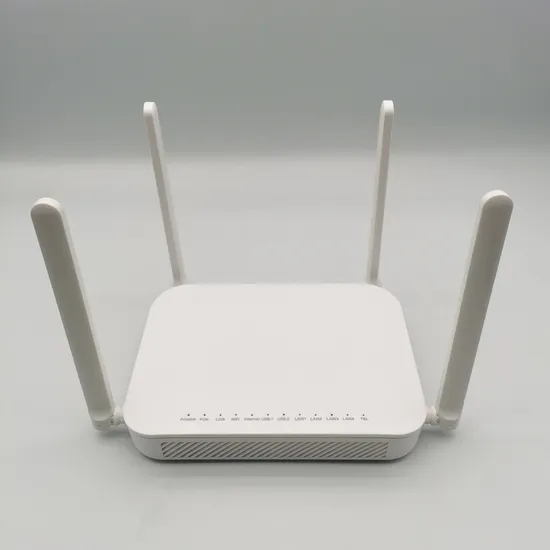
A practical look at Uganda’s leading fibre internet providers for homes, apartments, remote workers, gamers and small businesses.
Fast home internet is becoming less of a luxury in Uganda.
Families are streaming television in different rooms, students are attending online classes, people are working from home, security cameras are constantly connected, and gamers want a connection that does not suddenly become unstable in the middle of a match.
Mobile internet can handle many of these activities, but once several people and devices are connected at the same time, fibre starts making much more sense.
The challenge is choosing the right provider.
Uganda now has several fibre internet companies competing for households and small businesses, particularly around Kampala, Wakiso, Entebbe, Mukono and other growing urban areas.
Some offer extremely attractive speeds for the money. Others have stronger infrastructure, wider coverage or better packages for heavy users.
So, which is the best fibre WiFi network in Uganda?
There is no perfect answer for every home, but MTN WakaNet, Airtel Xstream Fibre, Zuku, CanalBox, Liquid Home, Simba Fiber, Blue Crane Communications, Roke Telkom and Savanna Fibre are among the providers worth comparing.
Best Fibre WiFi Networks in Uganda at a Glance
| Provider | Good For | Example Home Offer |
|---|---|---|
| MTN WakaNet Fibre | Overall home and office use | Up to 100 Mbps from UGX 110,000 on qualifying renewal plans |
| Airtel Xstream Fibre | Families and remote workers | 100 Mbps was advertised at UGX 99,000 |
| Zuku Fiber | Value for higher speeds | 100 Mbps around UGX 89,400 |
| CanalBox | Unlimited home fibre | 100 Mbps at UGX 110,000 |
| Liquid Home | Symmetrical upload and download speeds | 60 Mbps at UGX 130,000 |
| Simba Fiber | Higher-speed households | 100 Mbps at UGX 120,000 |
| Blue Crane Communications | Unlimited home and SME internet | Plans from UGX 65,000 |
| Roke Telkom | Established local ISP | Multiple unlimited home plans |
| Savanna Fibre | Alternative residential fibre provider | Plans from around UGX 72,000 |
Prices and packages change regularly, and availability depends on your exact address. Always confirm the current offer before paying for installation.
1. MTN WakaNet Fibre
Best Fibre WiFi for an All-Round Home Connection
MTN WakaNet is one of the first services many Ugandans will consider when looking for fibre internet.
MTN positions WakaNet Fibre as a fixed connection for homes and small offices, with unlimited high-speed internet designed for entertainment, education, surveillance, gaming and remote work.
Its current fibre range goes as high as 500 Mbps.
MTN’s official support information lists auto-renewal options including 100 Mbps at UGX 110,000, 200 Mbps at UGX 150,000 and 500 Mbps at UGX 300,000 for 30 days. One-off subscription prices can be higher.
That makes WakaNet particularly interesting for households where several people are connected at once.
Think of a normal evening in a busy Kampala home: one television is streaming Netflix, someone is on TikTok, another person is working on a laptop, CCTV cameras are online and a teenager is gaming.
A good fibre connection should handle that without everyone arguing about who is slowing down the internet.
Why MTN WakaNet stands out
WakaNet is a strong option for:
- Large households
- Remote workers
- Smart TVs
- Online gaming
- CCTV systems
- Small offices
- Heavy streaming
- Homes with many connected devices
Another advantage is that customers can check whether fibre is available at their location before requesting installation.
The biggest limitation is simple: MTN fibre is not available everywhere.
A fantastic package means very little if the fibre cable does not reach your street.
2. Airtel Xstream Fibre
A Strong Alternative for Home Fibre
Airtel has also been investing heavily in home broadband.
Its Xstream Fibre service was introduced as a fibre-to-the-home solution for households and businesses with multiple devices.
Airtel’s 2025 annual report said the company had accelerated its fibre-to-the-home rollout and offered unlimited home internet packages starting at around UGX 100,000. Airtel has continued expanding its fibre network as part of its home broadband strategy.
In May 2026, Airtel Uganda was advertising a 100 Mbps home and office fibre package at UGX 99,000 for 30 days.
That puts Airtel in direct competition with MTN, Zuku, CanalBox and other residential providers.
Why Airtel Xstream is worth considering
It can work well for:
- Families
- Video streaming
- Working from home
- Video conferencing
- Online classes
- Gaming
- Homes with multiple smartphones and TVs
Airtel has also continued expanding its broader fibre infrastructure. That is important because residential fibre competition in Uganda is increasingly becoming a battle over last-mile availability rather than simply advertised speeds.
Before choosing Airtel, check whether Xstream Fibre is actually available at your specific house or apartment.
3. Zuku Fiber
Best Fibre WiFi for Value
Zuku has become one of the more aggressive competitors on price.
Its Uganda website currently advertises an internet-only 40 Mbps package at UGX 65,000, 75 Mbps at UGX 75,000, 100 Mbps at UGX 89,400 and 200 Mbps at UGX 199,000 per month.
The packages include installation and a WiFi router according to the current Zuku offer.
The 100 Mbps package is particularly interesting.
For a household that can actually receive close to the advertised performance, 100 Mbps is more than enough for ordinary browsing, several simultaneous video streams, Zoom calls, software downloads and online gaming.
Why Zuku stands out
Zuku is worth considering if your priorities are:
- High speeds for the price
- Unlimited home internet
- Streaming
- Multiple connected devices
- A family household
- Work-from-home use
Zuku also operates television services, which may appeal to households that want entertainment and broadband from the same provider.
As with every ISP, however, advertised speed should not be the only thing you consider.
Talk to neighbours who already use the service.
A provider can perform brilliantly in one estate and less impressively a few kilometres away.
4. CanalBox Uganda
Best for Simple Unlimited Fibre Packages
CanalBox has become another noticeable player in Uganda’s home fibre market.
Its offer is refreshingly easy to understand.
At the time of writing, CanalBox Uganda lists:
- 50 Mbps unlimited at UGX 90,000 per month
- 100 Mbps unlimited at UGX 110,000 per month
- 200 Mbps unlimited at UGX 200,000 per month
The company promotes the service as fibre internet designed for households with several people using the connection simultaneously.
This simplicity is appealing.
You do not have to calculate how many gigabytes you are likely to use watching YouTube, downloading games or streaming television.
Why CanalBox stands out
It is especially attractive for:
- Streaming households
- Heavy internet users
- Families
- Smart homes
- Online gaming
- People tired of counting data bundles
There is one important detail heavy users should know.
CanalBox’s published terms state that after more than 1,000 GB of downloads in a month, the company reserves the right to reduce speeds until the next billing date.
For an ordinary household, 1 TB is still a lot of data. But extremely heavy users should understand the policy before describing any connection as completely unrestricted.
5. Liquid Home Uganda
Best Fibre WiFi for Upload Speeds
Liquid Home has an interesting advantage: its residential packages advertise matching upload and download speeds.
That can matter much more than people realise.
Most internet advertising focuses on download speed because that determines how quickly you can stream videos or download files.
But upload speed becomes important when you are:
- Uploading large videos
- Running cloud backups
- Hosting online meetings
- Sending large work files
- Running security cameras
- Creating YouTube content
- Livestreaming
Liquid Home currently lists its Bronze package at UGX 130,000 for up to 60 Mbps download and 60 Mbps upload.
Its other residential tiers include 90/90 Mbps, 120/120 Mbps and 240/240 Mbps packages, all advertised with unlimited usage. Installation and a WiFi router are included in the listed offers.
Who should consider Liquid Home?
Liquid can make particular sense for:
- Content creators
- Businesses
- YouTubers
- Remote professionals
- Cloud-heavy households
- People uploading large files
- CCTV-heavy properties
Someone who only watches YouTube might not care much about symmetrical speeds.
Someone uploading a 10GB video certainly will.
6. Simba Fiber
Best for Higher-Speed Home Packages
Simba Fiber has also built a growing residential footprint around Kampala and neighbouring areas.
Its official site lists coverage in numerous locations, including Bugolobi, Bukoto, Bunga, Buziga, Kabalagala, Kansanga, Kira, Kisaasi, Kiwatule, Kyanja, Najjera, Naguru, Ntinda, Namugongo, Entebbe, Kajjansi and Mukono.
Current advertised packages include:
- 100 Mbps at UGX 120,000
- 150 Mbps at UGX 175,000
- 200 Mbps at UGX 230,000
- 500 Mbps at UGX 499,000
These are advertised as unlimited packages.
Why Simba Fiber is interesting
Simba may suit:
- Large households
- Gamers
- Heavy streaming
- Home offices
- Smart homes
- Users who want 200 Mbps or more
Its coverage list is also useful because one of the biggest frustrations with fibre shopping is discovering a great package only to learn that your neighbourhood is not connected.
7. Blue Crane Communications
Best Fibre WiFi for Unlimited Usage Without Volume Caps
Blue Crane Communications is another Ugandan ISP offering fibre connections to homes and small businesses.
The company currently promotes four residential and SME plans priced at UGX 65,000, UGX 75,000, UGX 110,000 and UGX 200,000 per month.
More interestingly, Blue Crane describes these as true unlimited packages with no fair usage policy and no volume caps. It also advertises free installation and 24/7 technical support.
That wording will immediately attract heavy internet users.
Blue Crane may be worth considering for
- Heavy downloading
- Streaming
- Small businesses
- Remote workers
- Home offices
- Users who dislike data caps
As always, ask the company to confirm the actual speed attached to the package you are considering and whether fibre is available at your address.
8. Roke Telkom
One of Uganda’s Established Internet Providers
Roke Telkom has been providing internet services in Uganda for years and remains another company worth checking when comparing home connections.
Its current home internet page advertises unlimited packages at several speed levels.
The listed Roke Home offers include packages starting around UGX 75,000 per month, with higher tiers for households that need more bandwidth.
Roke also operates dedicated fibre-to-the-home services in selected locations.
One thing worth noting is that different sections of Roke’s website currently display different package structures, so customers should confirm the latest FTTH speed, installation cost and monthly price directly before making payment.
That is good advice for every ISP, not only Roke.
Telecom packages change surprisingly quickly.
9. Savanna Fibre
An Alternative Worth Checking in Covered Areas
Savanna Fibre is another residential internet provider competing in Uganda’s growing fibre market.
The company says its home plans are unlimited and currently lists monthly options starting at approximately UGX 72,000.
Its published packages include Twiga, Chui, Simba and Ndovu plans, with listed speeds ranging from 5 Mbps to 50 Mbps.
Savanna also advertises 24/7 support and a 99%+ uptime commitment on its website.
It may not advertise the headline speeds offered by some competitors, but not every household needs 200 or 500 Mbps.
A stable lower-speed fibre connection can sometimes be more useful than a much faster package that performs inconsistently.
So, What Is the Best Fibre WiFi Network in Uganda?
For most households, the answer comes down to four things:
speed, price, reliability and coverage.
If value per advertised megabit is your main consideration, Zuku currently has some particularly aggressive packages.
If you want a major telecom operator with fibre, mobile services and an extensive support infrastructure, MTN WakaNet and Airtel Xstream are obvious companies to compare.
If you want straightforward unlimited fibre packages, CanalBox is one of the most interesting options.
If upload speed is important for your work, Liquid Home deserves serious consideration because of its symmetrical packages.
For high-speed alternatives, Simba Fiber is worth checking.
Blue Crane may appeal to heavy users because of its no-FUP, no-volume-cap positioning.
Roke and Savanna provide additional alternatives depending on where you live.
The real winner, however, may be different from one Kampala neighbourhood to another.
Why Fibre Coverage Matters More Than Advertised Speed
Suppose Provider A offers 500 Mbps but has no fibre cable near your house.
Provider B offers 100 Mbps and already has infrastructure inside your apartment building.
Provider B is clearly the better option.
Fibre internet requires a physical cable to reach your property.
That is very different from mobile internet, where you can simply buy a router and connect to the nearest cellular tower.
Before comparing packages, therefore, start by checking availability.
Give the provider your:
- Area
- Street
- Estate or apartment name
- House number where applicable
- Nearest landmark
Some providers may need to perform a physical survey before confirming installation.
How Much Internet Speed Does a Home Really Need?
Internet companies love large numbers.
500 Mbps sounds much better than 50 Mbps.
But many households will never use the full capacity of an extremely fast connection.
20–50 Mbps
This can be enough for:
- Browsing
- Social media
- HD streaming
- Online classes
- Light remote work
- Small households
50–100 Mbps
This is a comfortable range for many modern homes.
It can handle:
- Several video streams
- Multiple smartphones
- Zoom meetings
- Smart TVs
- CCTV
- Casual gaming
- Large downloads
For many Ugandan families, around 100 Mbps is a sensible sweet spot.
100–200 Mbps
This becomes useful for homes with many users.
It suits:
- 4K streaming
- Gaming
- Large downloads
- Several TVs
- Remote workers
- Cloud backups
- Smart-home devices
500 Mbps and Above
This is more appropriate for extremely heavy households, professional users or businesses.
Buying 500 Mbps simply because it exists is not necessarily good value.
If only two people live in your house and mainly use WhatsApp, TikTok and Netflix, you probably do not need it.
Fibre WiFi Is Not the Same as WiFi
This causes a lot of confusion.
Fibre is how internet reaches your home.
WiFi is how the router distributes that internet wirelessly around your house.
You can therefore have an excellent 200 Mbps fibre connection and still experience terrible WiFi in your bedroom.
Why?
The router may be:
- Too far away
- Hidden behind furniture
- Located downstairs
- Surrounded by thick concrete walls
- Overloaded with devices
Large houses may need additional access points or a mesh WiFi system.
So before blaming the ISP, test the connection using an Ethernet cable or stand close to the router.
If the speed improves dramatically, your problem may be WiFi coverage rather than the fibre connection itself.
What Gamers Should Look for
Gamers should stop looking only at Mbps.
Latency matters.
A stable 50 Mbps connection with low latency can provide a better gaming experience than an unstable 500 Mbps connection.
Look at:
- Ping
- Packet loss
- Jitter
- International routing
- Evening congestion
This is one area where talking to gamers already using the provider in your neighbourhood can be extremely useful.
What Remote Workers Should Look for
If your job depends on the internet, reliability matters more than impressive advertising.
You need stable:
- Zoom or Teams calls
- VPN connections
- Cloud applications
- File uploads
- Downloads
Upload speed should also be considered.
For someone sending large files or backing up work to the cloud every day, symmetrical fibre such as some Liquid Home packages can be particularly attractive.
It is also sensible to maintain a 4G or 5G mobile connection as backup.
Even excellent fibre networks can occasionally experience outages.
Unlimited Does Not Always Mean Exactly the Same Thing
The word unlimited can mean different things depending on the provider.
One company may provide unrestricted usage.
Another may apply a fair usage policy after extremely heavy consumption.
Another may reduce speed after a particular threshold.
Before subscribing, ask:
Does the package have a fair usage policy?
Is there a monthly data threshold?
Can my speed be reduced after heavy use?
Are torrents or other services restricted?
What happens after exceeding the fair usage allowance?
The answers matter more than the word “unlimited” printed on an advertisement.
How to Choose the Best Fibre WiFi Network
Do not subscribe just because somebody on social media says one network is the fastest.
Start locally.
Ask two or three neighbours which connection they use.
Find out how it performs in the evening, when networks are usually busiest.
Then compare providers based on:
- Monthly price
- Advertised speed
- Upload speed
- Installation cost
- Fair usage policy
- Customer service
- Reliability
- Coverage
- Router quality
- Repair response time
A cheap package becomes expensive very quickly if you are constantly buying mobile data whenever the fibre goes down.
Frequently Asked Questions
What is the best fibre WiFi network in Uganda?
MTN WakaNet, Airtel Xstream, Zuku, CanalBox, Liquid Home and Simba Fiber are among the strongest options to compare. The best network for you depends heavily on coverage and performance in your neighbourhood.
Which fibre internet is cheapest in Uganda?
Prices change frequently, but providers such as Zuku, Blue Crane and Savanna currently advertise entry-level home internet packages below UGX 100,000 per month.
Which fibre provider offers 100 Mbps in Uganda?
Several providers now offer packages around 100 Mbps, including MTN WakaNet, Airtel Xstream Fibre, Zuku, CanalBox and Simba Fiber.
Is fibre better than 5G internet?
Fibre normally provides more consistent fixed-home performance because the connection reaches the property through a physical cable. However, a strong 5G service can still be an excellent option where fibre is unavailable.
Is unlimited fibre really unlimited?
It depends on the provider. Some companies advertise no volume caps, while others reserve the right to apply fair usage rules after exceptionally heavy consumption. Always read the current terms.
Is 100 Mbps enough for a family?
For most households, yes. A stable 100 Mbps connection can comfortably support several smartphones, computers, smart TVs, video calls and streaming devices simultaneously.
What internet speed is good for gaming?
Gaming itself does not require enormous bandwidth. Stability, low latency and low packet loss usually matter more than having several hundred megabits per second.
Final Thoughts
Uganda’s fibre internet market is becoming genuinely competitive.
That is good news for consumers.
MTN and Airtel are expanding their home broadband businesses, while Zuku, CanalBox, Liquid Home, Simba Fiber, Blue Crane, Roke and Savanna are giving customers more alternatives.
There is no single best fibre WiFi network in Uganda for every person.
Zuku currently looks particularly competitive on advertised price-to-speed value. MTN WakaNet offers powerful packages backed by one of Uganda’s largest telecom networks. Airtel Xstream is another serious mainstream option. CanalBox has straightforward unlimited plans, while Liquid Home is attractive for people who value symmetrical upload speeds.
But the smartest choice is often determined by your address rather than a national ranking.
Before paying anyone, check fibre availability, ask neighbours about their experience and compare the actual package terms.
A reliable 100 Mbps connection that works every day is far more valuable than a 500 Mbps package that looks impressive on paper but struggles when you need it most.