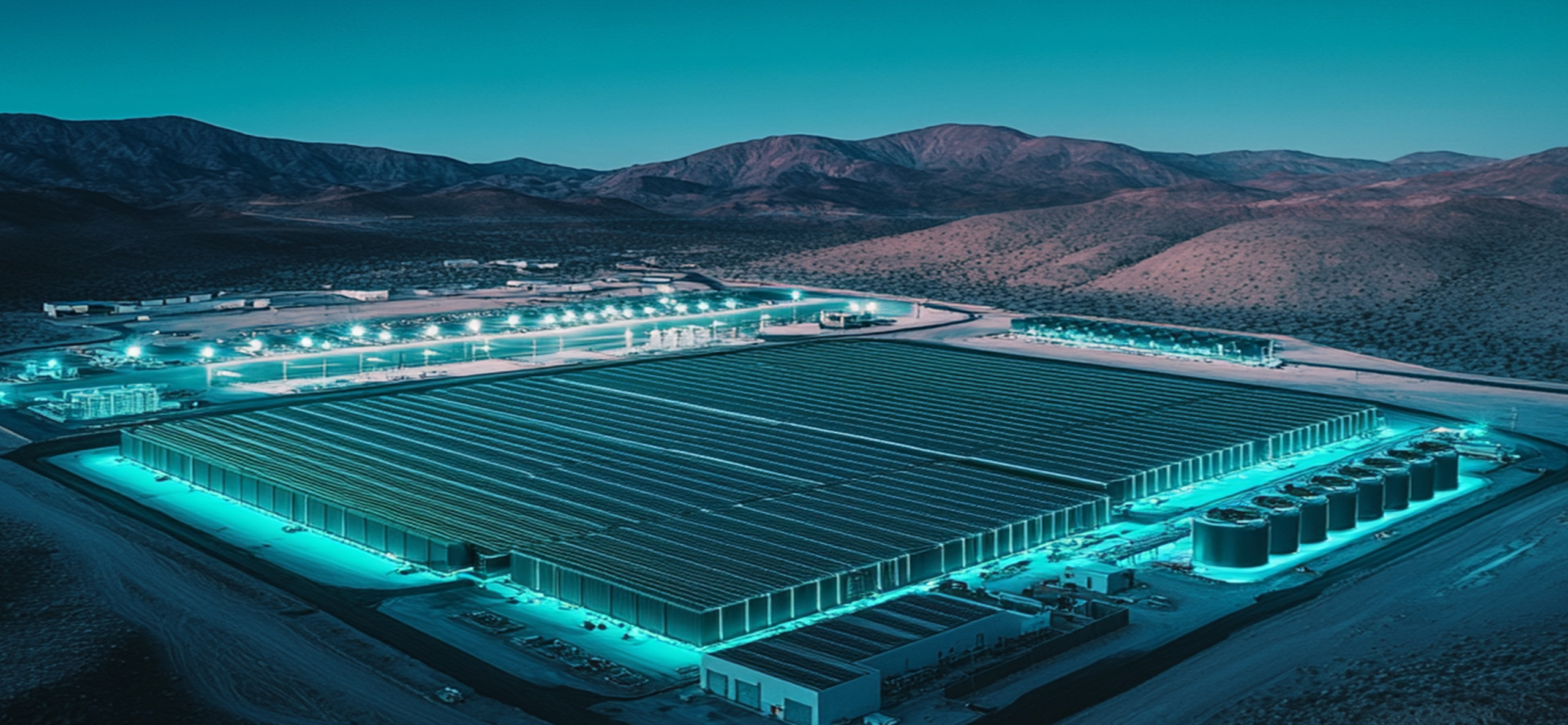
Arizona’s rapid data center boom is running into a growing question: how much more can the state’s water and electricity systems realistically handle?
Arizona Attorney General Kris Mayes is now calling for a statewide pause on approvals for new Arizona AI data centers, arguing that the state needs a clearer plan for managing their enormous demand for power and water before allowing another wave of large projects to move forward.
Her proposal comes as Arizona wrestles with pressure on the Colorado River, rising electricity demand and growing public concern about massive data center campuses being proposed around the Phoenix metropolitan area.
“The only sane thing to do is to pause the approval of new data centers,” Mayes said in a statement reported by Arizona Mirror, arguing that Arizona is already stretched on both water and power.
Why Arizona AI Data Centers Are Facing More Scrutiny
Arizona has become one of the most attractive data center markets in the United States.
Its relatively business-friendly environment, available land and established technology sector have helped draw developers looking for space to build enormous facilities capable of supporting cloud computing and artificial intelligence.
But the AI boom has changed the scale of those developments.
Modern hyperscale facilities can consume huge amounts of electricity because thousands of high-performance computer chips need to run around the clock. Those machines also generate enormous amounts of heat, requiring sophisticated cooling systems.
That creates two particularly sensitive issues in Arizona: electricity and water.
The state already faces long-term concerns about water availability, while utilities must prepare for rapidly increasing electricity demand from both population growth and new industrial developments.
Mayes believes those pressures justify slowing down.
She is asking lawmakers and Gov. Katie Hobbs to consider legislation that would temporarily halt new data center approvals while Arizona develops a broader system for monitoring and managing the industry.
Water Is at the Heart of the Arizona AI Data Centers Debate
Water may be the most politically sensitive part of the discussion.
Arizona is one of several states that depend heavily on the Colorado River, which has been strained by prolonged drought, warming temperatures and decades of heavy demand.
A new federal Colorado River management plan is expected to require significant reductions in water use across Lower Basin states, including Arizona, California and Nevada.
Against that backdrop, adding water-intensive infrastructure has become harder to ignore.
Mayes pointed to research from sustainability nonprofit Ceres examining the impact of data center growth around Phoenix.
The report found that annual water consumption associated with electricity used by data centers could rise from about 2.9 billion gallons to more than 14.5 billion gallons as planned projects come online.
Direct water used for cooling could increase from approximately 385 million gallons annually to more than 3.7 billion gallons.
Those numbers do not mean every data center uses the same amount of water. Cooling technology, location, facility design and the electricity source can all make a significant difference.
But taken together, the projects could put additional pressure on water systems that are already being carefully managed.
Electricity Demand Could Be an Even Bigger Problem
Water tends to dominate Arizona’s environmental debate, but electricity may prove just as important.
AI computing requires considerably more infrastructure than a traditional office or warehouse.
A major data center can require hundreds of megawatts of electricity, potentially comparable to the demand from tens of thousands of homes.
Mayes has already challenged one major data center power agreement.
Earlier this year, she appealed the Arizona Corporation Commission’s approval of an electricity agreement involving Tucson Electric Power and the developers of the proposed Project Blue data center.
Her office argued that parts of the agreement could allow electricity rates to be negotiated without sufficient regulatory oversight.
Tucson Electric Power estimated that it could eventually provide 286 megawatts to the project — an amount Mayes’ office said was comparable to the electricity needed to cool approximately 57,000 homes.
Mayes has argued that ordinary electricity customers should not end up paying for infrastructure required primarily by enormous technology facilities.
A Planned Ahwatukee Data Center Is Drawing Attention
One project likely to remain at the centre of the debate is a proposed hyperscale campus in Ahwatukee.
The Menlo Digital development is planned as a roughly 38-acre campus containing around one million square feet of data center space, according to Arizona Mirror.
The project has faced criticism from some local residents concerned about its potential impact on the surrounding community.
Mayes plans to hold a town hall in Ahwatukee on October 14 to hear directly from residents about the proposal.
The dispute reflects a much broader shift occurring across the United States.
For years, local governments frequently competed to attract data centers because they promised major investment and tax revenue.
Now, communities are increasingly asking what they receive in return for the electricity, land and water those facilities require.
Arizona Has Already Paused New Data Center Tax Breaks
Arizona’s approach to the industry was already changing before Mayes called for a development pause.
In June, Gov. Katie Hobbs signed the state’s FY2027 budget, which included a three-year moratorium on new data center tax incentives.
Arizona has historically offered qualifying data centers exemptions from certain state, county and local transaction privilege and use taxes on eligible equipment.
Those incentives were designed to encourage companies to build large computing facilities in the state.
Hobbs has increasingly questioned whether those incentives still make sense now that Arizona has become an established data center destination.
During her 2026 State of the State address, she also proposed making data centers contribute more toward the state’s water costs and questioned whether taxpayers should continue subsidizing the industry.
The eventual budget compromise did not permanently eliminate the program, but it stopped new incentives for three years.
Not Everyone Agrees on How Arizona Should Respond
A statewide pause would likely face resistance.
Arizona lawmakers have debated several different approaches to meeting future data center electricity demand.
Republican lawmakers have generally been more open to policies that would allow continued data center expansion while finding new sources of electricity to support it.
Proposals have included making it easier to develop additional power infrastructure and allowing small modular nuclear reactors to be located near major data center projects.
Gov. Hobbs previously vetoed legislation connected to that approach.
The disagreement illustrates the difficult balance Arizona faces.
Data centers can bring billions of dollars in investment, construction activity and technology infrastructure. AI companies also argue that expanding computing capacity is increasingly important to American economic competitiveness.
On the other hand, infrastructure costs do not disappear simply because a project creates investment.
Someone must provide the electricity, transmission systems and water needed to keep those facilities operating.
The political battle is increasingly about who should pay for that infrastructure and how much growth Arizona can support.
Arizona AI Data Centers Are Part of a National Backlash
Arizona isn’t alone.
Communities across the United States are reconsidering their relationship with data centers as the AI infrastructure boom accelerates.
Projects have faced opposition over electricity prices, water use, noise, land consumption and the relatively small number of permanent employees needed to operate highly automated facilities.
That opposition has crossed traditional political lines in some areas, bringing together environmental groups, homeowners, farmers and fiscal conservatives.
Axios recently described data center construction as one of the biggest forces reshaping American infrastructure, with thousands of facilities already operating nationwide and billions more being committed to new projects.
Arizona may become one of the clearest tests of how states respond.
Its combination of rapid population growth, a booming technology industry, intense summer temperatures and limited water resources makes the consequences of uncontrolled infrastructure expansion particularly visible.
The Bigger Question for Arizona
The debate over Arizona AI data centers isn’t really about whether artificial intelligence should continue growing.
It is about what that growth should cost — and who should carry that cost.
Mayes isn’t calling for existing data centers to shut down. Instead, she wants Arizona to pause new approvals long enough to establish stronger rules around water consumption, electricity demand and the financial burden placed on ordinary residents.
Whether lawmakers will agree is another matter.
Data center development represents billions of dollars in potential investment, giving the industry considerable economic weight. At the same time, Arizona cannot create more Colorado River water simply because another hyperscale computing campus wants to open.
That tension is likely to become increasingly important as AI companies demand more computing power.
For Arizona, the challenge will be finding a way to participate in the AI boom without allowing the infrastructure behind it to overwhelm resources that residents and businesses already depend on.
And with Arizona AI data centers continuing to expand, that debate is unlikely to disappear anytime soon.