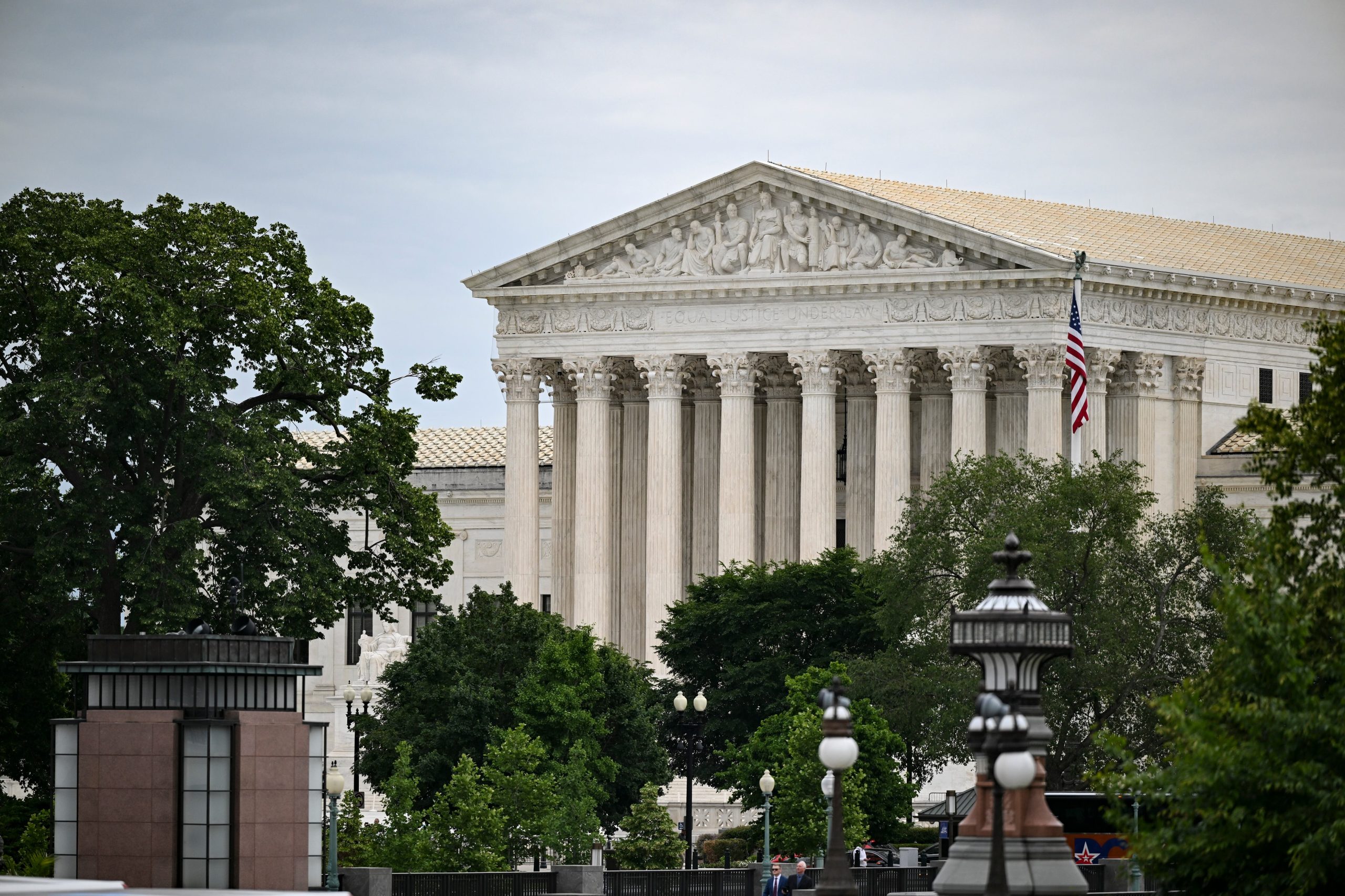
The voter citizenship database at the centre of a major U.S. election-law dispute can once again be used after the Supreme Court on September 25 allowed the Trump administration to resume an expanded federal system for checking the citizenship status of people on voter rolls.
In Department of Homeland Security v. League of Women Voters, the Supreme Court granted the federal government’s request to stay a lower-court order that had blocked the modified Systematic Alien Verification for Entitlements system, better known as SAVE. The decision means the revamped database can operate while the underlying legal challenge continues through the courts.
The decision does not finally resolve whether every aspect of the system is lawful. Instead, it temporarily removes the lower court’s restriction while the case proceeds on appeal.
What is the voter citizenship database?
SAVE is not a new government programme.
It was created in 1986 to allow government agencies to verify the citizenship and immigration status of people applying for certain public benefits. States have also used SAVE for voter-verification purposes since 2005.
The system changed significantly after President Donald Trump signed an executive order in March 2025 directing federal agencies to make additional citizenship information available for voter verification.
Two months later, the Department of Homeland Security introduced a modified version of SAVE.
The updated system incorporated records from the Social Security Administration and allowed state and local authorities to conduct bulk searches rather than checking people individually. Officials can submit information such as a person’s name, date of birth or Social Security number for comparison with federal records.
Those changes triggered the legal battle now before the Supreme Court.
Supreme Court says federal law likely supports information sharing
The Supreme Court’s unsigned majority opinion concluded that the groups challenging the system were unlikely to succeed on their central legal claims.
The majority pointed to a provision of the Illegal Immigration Reform and Immigrant Responsibility Act of 1996. The Court said that law likely authorizes the Department of Homeland Security to request and receive information concerning citizenship or immigration status from other government agencies.
That interpretation was important because challengers had argued that the revamped system violated federal privacy protections, including provisions of the Social Security Act and Privacy Act.
The majority concluded that the 1996 immigration law likely permits the information-sharing arrangement despite those restrictions.
The Court also said the government could suffer harm if prevented from using a programme it considers suitable for responding to citizenship-verification requests from state and local election officials.
Lower courts had blocked the voter citizenship database
The Supreme Court’s intervention reverses the practical effect of earlier decisions from lower courts.
In June, U.S. District Judge Sparkle Sooknanan blocked the modified SAVE system after concluding that its development and use violated federal law.
The district court found in favour of organisations including the League of Women Voters and the Electronic Privacy Information Center, which challenged the government’s handling of personal information and raised concerns about inaccurate citizenship data.
A divided panel of the U.S. Court of Appeals for the District of Columbia Circuit later declined to suspend that ruling while the government appealed.
The Trump administration then asked the Supreme Court to step in.
On September 25, the justices granted that request.
Why critics are concerned about voter citizenship checks
The dispute is about more than government databases.
Voting-rights and privacy organisations argue that inaccurate or outdated records can incorrectly flag U.S. citizens as noncitizens.
That can be especially significant for naturalized citizens if one government database has not yet been updated to reflect a person’s citizenship status.
The Supreme Court’s own majority opinion acknowledged the case of a Louisiana voter whose Social Security Administration record did not accurately show that she had become a naturalized citizen. The Court said she likely would have been required to provide additional proof of citizenship under the modified system, while still concluding that the challengers’ broader statutory claims were unlikely to prevail.
Reuters reported that the overall error rate for the modified system has not been made public. Plaintiffs have cited examples from individual jurisdictions where some people initially flagged as possible noncitizens were later shown to be citizens.
Trump administration argues system protects election integrity
The Trump administration has defended the voter citizenship database as a tool for helping states identify people who are not legally eligible to vote in federal elections.
Non-U.S. citizens are prohibited from voting in federal elections.
The Justice Department argued that preventing use of SAVE interfered with efforts by federal officials to assist states in verifying voter eligibility. According to Reuters, government lawyers told the Supreme Court that the lower-court order threatened election administration ahead of the November 2026 midterms.
The majority accepted part of that argument in granting the stay, saying federal law places obligations on DHS to respond when state and local officials request citizenship information.
The broader political debate is more contested. Supporters of expanded verification say it provides another safeguard against ineligible registration, while opponents argue that flawed data can impose unnecessary burdens on lawful voters.
Three justices dissent from the decision
Justices Ketanji Brown Jackson, Sonia Sotomayor and Elena Kagan dissented.
Jackson wrote the dissent and disagreed with the majority’s interpretation of the federal immigration law used to justify the expanded data sharing.
Her opinion argued that the relevant provisions do not themselves grant the government broad new authority to override statutory privacy restrictions. In her reading, the law prevents officials from interfering with otherwise lawful information exchanges but does not erase other legal restrictions on disclosure.
The dissent also raised concerns about the potential effect of outdated Social Security records on recently naturalized citizens.
The disagreement illustrates one of the central legal questions in the case: how far federal immigration-information laws extend when they intersect with privacy protections and election administration.
What the Supreme Court ruling means for the 2026 midterms
The immediate effect may be more limited than the headline suggests.
Federal law generally requires states to complete systematic voter-roll removal programmes at least 90 days before a federal election.
The Supreme Court specifically noted that this rule restricts what states can do with voter lists in the weeks immediately preceding the November midterms.
However, individualized citizenship checks can still occur during this period.
That means election authorities may be able to use SAVE for individual cases even where broader systematic voter-list maintenance is restricted. Supreme Court
Use of SAVE is also voluntary for states rather than a requirement imposed on every election authority. ABC News reported that states may choose whether to use the federal system for voter-eligibility checks.
Voter citizenship database remains subject to legal challenge
The Supreme Court’s ruling should not be confused with a final judgment on the entire case.
The justices granted a stay while the dispute continues in the D.C. Circuit and potentially returns to the Supreme Court through a later petition.
The stay will remain in place during that appellate process under the conditions set out by the Court.
That means questions surrounding privacy, statutory authority and the accuracy of citizenship records remain unresolved.
Separate litigation is also continuing over how federal election law applies to voter-list maintenance close to an election. The Supreme Court noted that another pending case will address the scope of the National Voter Registration Act’s 90-day restriction, but said that issue was not being decided in the SAVE case.
A significant ruling in a wider election-law debate
The voter citizenship database case highlights a broader tension between election security, state authority and individual voting rights.
The Trump administration says expanded federal data can help election officials verify whether registered voters meet citizenship requirements.
Voting-rights and privacy organisations counter that government records can contain errors and that mistaken matches may force eligible citizens to prove their status or risk problems with their registrations.
For now, the Supreme Court has allowed the expanded SAVE programme to operate while those legal questions continue through the courts.
The September 25 ruling therefore represents an important procedural victory for the administration, but it is not the final word on the legality of the voter citizenship database or how states may ultimately use its information.