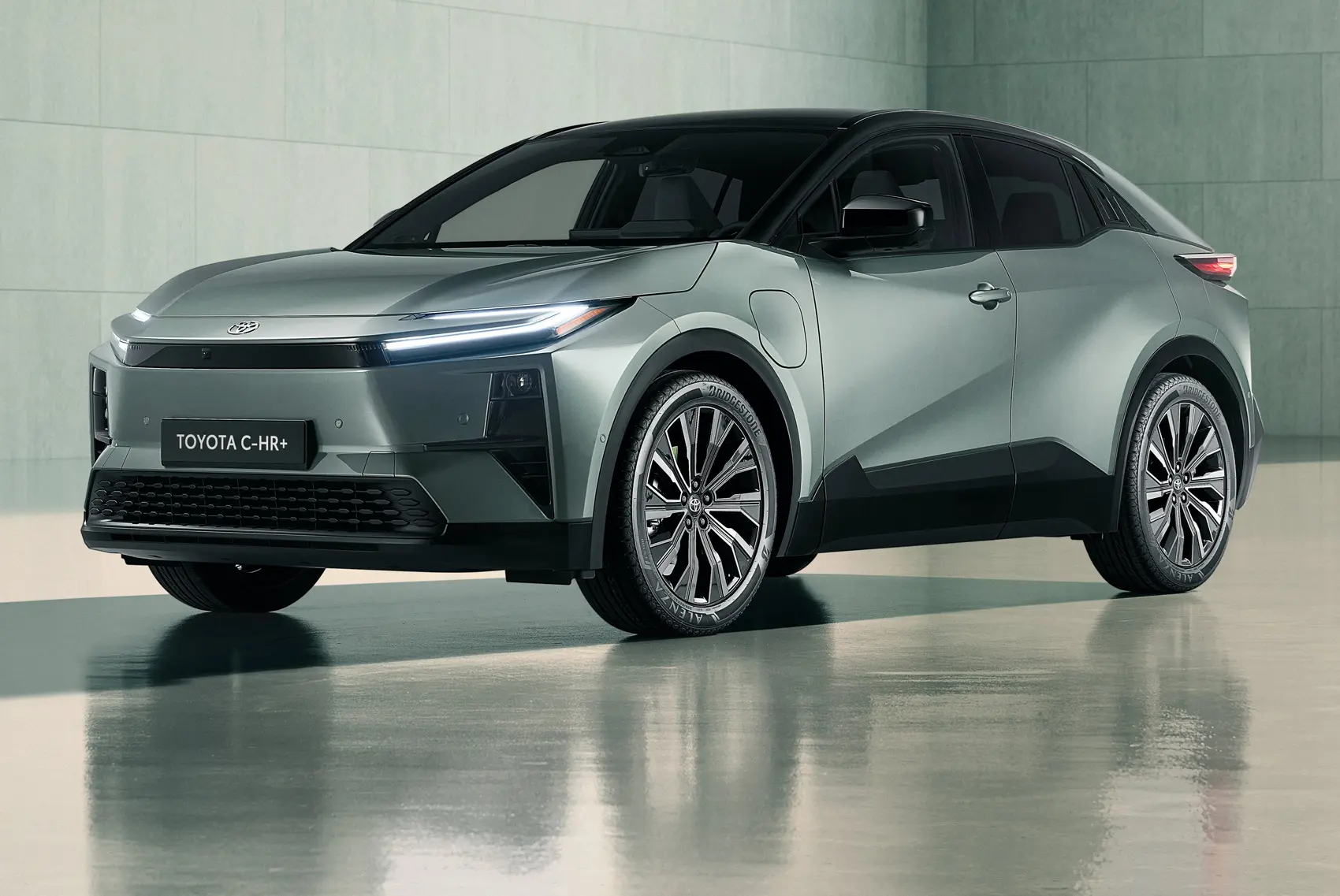
Toyota range extender models could soon become a major part of the Japanese automaker’s strategy in China as it looks for new ways to compete in the world’s largest and fastest-moving electrified vehicle market.
According to a Nikkei Asia report cited by several automotive publications, Toyota is preparing to manufacture extended-range electric vehicles, commonly known as EREVs, in China beginning in April 2027.
The reported plan starts modestly, with production of several hundred vehicles a month. But Toyota is said to have much bigger ambitions: around 200,000 units during 2027 and approximately 400,000 units in 2028.
If the plan goes ahead, it would mark Toyota’s first major move into a category that Chinese automakers have already turned into an important part of the country’s new-energy vehicle market.
Toyota itself has not publicly confirmed those production figures, meaning the timeline and volumes should still be treated as reported targets rather than final company guidance.
What Is a Toyota Range Extender?
A Toyota range extender vehicle would essentially operate as an electric car with an onboard petrol engine acting as a generator.
Unlike a conventional hybrid, the combustion engine in a typical EREV does not directly drive the wheels. Instead, the vehicle’s electric motors provide propulsion while the petrol engine generates electricity when the battery needs additional energy.
That gives drivers much of the feel of a battery-electric vehicle while reducing concerns about running out of charge on longer journeys.
The concept has become particularly popular in China.
Drivers can handle shorter daily journeys largely on battery power while retaining the ability to travel much farther without depending entirely on public charging infrastructure.
This approach has helped make extended-range vehicles an attractive middle ground between conventional plug-in hybrids and fully battery-powered cars.
Toyota Range Extender Production Could Begin in April 2027
The reported schedule would see Toyota begin Chinese EREV production in April 2027.
Initial output is expected to amount to only several hundred units per month before increasing rapidly.
Toyota could produce roughly 200,000 extended-range vehicles during 2027 before doubling that figure to approximately 400,000 units in 2028, according to the report.
Such a steep ramp-up would suggest Toyota sees the technology as more than a small experiment.
For comparison, the company sold about 1.78 million vehicles in China during 2025, according to its regulatory filings. Toyota held approximately 7.4% of China’s domestically produced passenger-vehicle market that year.
Adding hundreds of thousands of range-extender vehicles could therefore give the technology a meaningful role in Toyota’s Chinese lineup.
Exactly which models will receive the system has not yet been officially disclosed.
Why Toyota Is Looking at Range Extenders in China
China has forced global automakers to rethink how quickly they develop cars.
Electric vehicles, software, driver-assistance systems and connected-car technology are advancing rapidly, while domestic manufacturers have become increasingly competitive on both technology and price.
Toyota itself acknowledges how different the Chinese market has become.
In its 2025 integrated report, the automaker said new-energy vehicles represented more than half of new vehicle sales in China during 2025, describing the country as a global leader in electrification and intelligent vehicle technology.
That creates a difficult environment for foreign manufacturers that were once able to rely heavily on established petrol-powered models.
Range extenders could give Toyota another way to respond.
Instead of betting exclusively on full battery-electric vehicles, Toyota can continue its long-standing multi-pathway strategy by offering customers hybrids, plug-in hybrids, BEVs and potentially EREVs.
China’s Automakers Have Already Proven the Formula
Toyota would not be entering an empty market.
Chinese manufacturers have spent years building demand for extended-range electric vehicles.
Li Auto became particularly closely associated with the technology, while other companies have also expanded into the category.
Aito and Leapmotor are among the manufacturers offering range-extender vehicles, while other major brands have shown growing interest in the technology.
The reason is relatively straightforward.
China has developed one of the world’s largest charging networks, but the country is also enormous. Drivers travelling between cities or into areas with less convenient charging infrastructure may still value the security of an onboard generator.
EREVs offer a way to make most routine journeys electric without forcing drivers to plan every long-distance trip around charging stations.
For Toyota, that flexibility fits naturally with its broader philosophy of offering multiple powertrain options rather than committing every customer to the same technology.
Toyota Has Been Localising Its China EV Development
The reported Toyota range extender strategy would also fit a broader transformation already underway inside the company’s Chinese operations.
Toyota has increasingly moved development responsibilities closer to China.
One of the clearest examples is the bZ3X.
The electric SUV was developed with Guangzhou Automobile Group and launched in China in March 2025. Toyota says the project was led through a locally driven development structure headed by a Chinese regional chief engineer.
That local approach appears to have worked.
Toyota says the bZ3X recorded 70,008 sales during 2025 and became the best-selling battery-electric vehicle among joint-venture brands in China.
The company has also increasingly incorporated Chinese technology partners into its vehicles, particularly in areas such as intelligent driving assistance and connected-car features.
That suggests future EREVs could be designed specifically around Chinese driving habits rather than simply adapting vehicles developed for Japan or other international markets.
Toyota’s China EV Lineup Is Growing Quickly
Toyota’s electric presence in China has expanded significantly over the past several years.
The company initially brought the bZ4X to the market before adding the bZ3 sedan.
It then expanded its locally developed portfolio with vehicles including the bZ3X and bZ5.
Toyota also introduced the bZ7, a large electric sedan developed specifically for China with GAC Toyota and Toyota’s Chinese intelligent-electric-vehicle research organization.
The bZ7 highlights just how local Toyota’s strategy is becoming.
Rather than relying solely on technologies created at its Japanese headquarters, the automaker has been combining its manufacturing expertise with China’s rapidly developing EV ecosystem.
Adding range-extender powertrains would widen that strategy even further.
Toyota Range Extender Models Could Fill an Important Gap
Pure electric cars work particularly well for drivers with predictable daily journeys and easy access to charging.
But not every Chinese customer fits that description.
Some buyers live in cities but frequently travel long distances. Others may not have reliable access to private charging at home.
A Toyota range extender could appeal to those drivers by providing a substantial electric driving range while keeping petrol available as a backup energy source.
That makes an EREV different from Toyota’s familiar conventional hybrids.
Traditional Toyota hybrids use their petrol engines as an integral part of driving the vehicle. An extended-range EV is primarily propelled electrically, with the combustion engine serving largely as an electricity generator.
That distinction could allow Toyota to attract buyers who want an EV-like driving experience but are not yet comfortable depending entirely on a charging network.
The Move Fits Toyota’s Multi-Pathway Strategy
Toyota has long resisted the idea that one powertrain technology should immediately replace every other option worldwide.
Its so-called multi-pathway strategy includes hybrids, plug-in hybrids, battery-electric vehicles, hydrogen fuel-cell vehicles and other technologies depending on local conditions.
At Auto Shanghai, Toyota reiterated that its approach is based on providing electrified technologies suited to the needs of individual countries and regions.
Range extenders could fit neatly into that philosophy.
Toyota would not need to abandon full BEVs. Instead, EREVs could sit alongside them as another option for customers who want electric propulsion without relying completely on battery charging.
This is especially relevant in China, where competition is moving so quickly that automakers increasingly need multiple technologies to cover different price points and customer preferences.
Competition in China Is Becoming Tougher
Toyota’s reported plans come at a difficult time for many established international automakers in China.
Domestic manufacturers including BYD, Geely and Chery have strengthened their positions while foreign brands have faced increasing pressure.
Reuters reported in September 2026 that Toyota’s Chinese joint-venture structure could undergo significant changes as the country’s car industry deals with overcapacity, intense competition and the rapid move toward electric vehicles.
Toyota’s overall China sales have remained substantial, but maintaining that scale increasingly requires products developed around local market expectations.
The company cannot simply rely on the reputation built by models such as the Corolla, Camry and RAV4.
Chinese buyers increasingly expect advanced infotainment systems, sophisticated driver assistance, aggressive pricing and rapidly updated electric powertrains.
That helps explain why Toyota is accelerating local development.
Range Extenders Are Not Replacing Toyota’s Battery EV Plans
A move into EREVs would not mean Toyota is walking away from fully electric cars.
The company continues investing heavily in battery technology.
Toyota has previously outlined plans for next-generation lithium-ion batteries offering greater driving range and faster charging, along with solid-state battery technology targeted for commercialization around 2027 or 2028.
Its Chinese BEV lineup is also continuing to expand.
Toyota describes China as one of the world’s most advanced electrified markets and has pledged to keep developing vehicles tailored to Chinese consumers.
The reported range-extender program is therefore better understood as an expansion of Toyota’s options rather than a reversal of its BEV strategy.
A 400,000-Unit Target Would Be a Serious Commitment
The most striking part of the report is the scale.
Starting with only hundreds of vehicles per month in April 2027 and reaching approximately 400,000 annual units in 2028 would require an unusually rapid production increase.
If achieved, Toyota would move from being a newcomer in the EREV segment to producing the technology at substantial volume in less than two years.
The target also shows how quickly strategies can change in China’s car market.
Toyota spent decades becoming one of the world’s biggest manufacturers by refining proven technologies over long product cycles. China increasingly rewards companies capable of moving much faster.
For Toyota, local development, new battery-electric vehicles and now reportedly range extenders all point toward the same goal: adapting more quickly to what Chinese customers are actually buying.
The Toyota range extender plan remains unconfirmed by the automaker, so model names, technical specifications and final production numbers could still change.
But if the reported 400,000-unit target is reached in 2028, EREVs could move from being a missing piece in Toyota’s Chinese portfolio to one of the company’s most important electrified vehicle categories in the market.