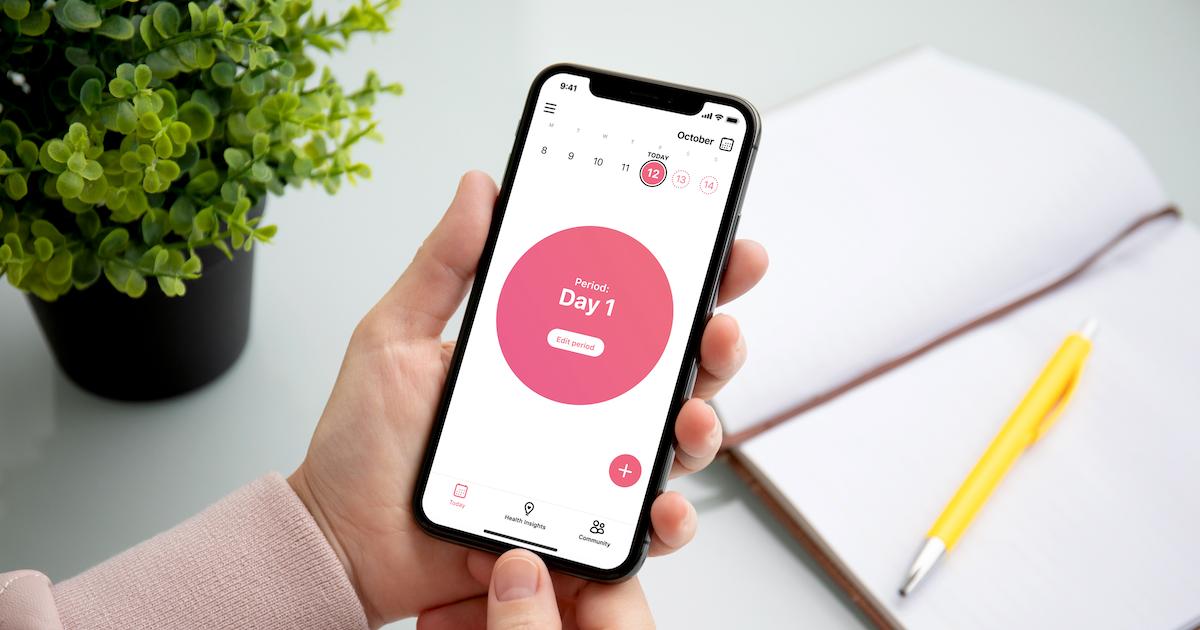
Google is taking a bigger interest in women’s health, investing in the company behind the popular Flo period-tracking app and planning new wearable devices that could make menstrual and reproductive health tracking more personal.
Google is expanding its ambitions in women’s health through a new investment in Flo Health, the company behind one of the world’s most widely used period-tracking applications.
The two companies announced a multi-year partnership on Monday, October 12, 2026, that will bring Flo’s menstrual health insights into Google’s growing ecosystem of fitness trackers, smartwatches and AI-powered health services.
The agreement also includes plans to develop new wearable products specifically designed around women’s health needs.
Google has taken a financial stake in Flo, although neither company has disclosed how much money is involved or the size of the investment.
For the millions of women who already use Flo to track their menstrual cycles, symptoms and reproductive health, the partnership could eventually make everyday health information more useful by connecting it with measurements collected by wearable devices.
It is also another sign that technology companies are beginning to look beyond steps, calories and workout statistics when developing health products.
Google Flo Health Partnership Will Connect Period Tracking With Wearables
The first major change is expected in early 2027, when users will be able to connect their Flo accounts directly to the Google Health app.
Once connected, the two applications will be able to share selected health information, provided users give permission.
For example, a person who tracks their menstrual cycle through Flo and wears a Fitbit device could see how their recorded sleep patterns, resting heart rate and skin temperature relate to different phases of their cycle.
That information is currently often spread across different applications.
Someone might use one app to record periods, another to monitor sleep and a third to track exercise.
Google and Flo want to bring those separate pieces of information together.
The companies say the integration will allow information to move in both directions. Flo will be able to use selected Google Health measurements to improve its insights, while Google Health will incorporate Flo’s cycle information into its wellness features.
The intention is to give users a more connected picture of their health without requiring them to manually compare several different sets of statistics.
Why Google Is Investing in Flo Health
Flo has grown into a major name in women’s digital health.
Launched more than a decade ago, the application allows users to record menstrual cycles, track symptoms, monitor reproductive health changes and access educational information.
The company says its app has been downloaded more than 500 million times worldwide and currently serves over 80 million monthly active users.
That gives Google access to a partner with considerable experience in menstrual health technology and an established international user base.
Flo has also developed algorithms designed to identify patterns in information users record over time.
Google, meanwhile, brings experience in wearable hardware, health sensors, artificial intelligence and software development.
The partnership combines those strengths.
Rather than building every aspect of menstrual health tracking from the beginning, Google can work with a company that has spent years developing products specifically for this market.
For Flo, the arrangement creates opportunities to bring its services into devices people already wear throughout the day.
The company will remain independent following Google’s investment.
New Women’s Health Wearables Are Being Planned
Perhaps the most interesting part of the announcement is what Google and Flo intend to build next.
The companies have confirmed plans to develop new products that combine Flo’s women’s health technology with Google’s experience in wearable devices and sensors.
They have not revealed exactly what those products will look like.
There are no announced product names, prices or release dates.
However, the partnership suggests that future health wearables could place greater emphasis on menstrual cycles, hormonal changes and reproductive health rather than treating these as secondary features.
Existing fitness trackers already collect information such as heart rate, skin temperature, sleep duration and activity levels.
These measurements can vary across the menstrual cycle, although the patterns differ significantly from person to person.
Combining them with information recorded in Flo could make it easier for users to understand their own trends.
Google already offers health-tracking capabilities through devices such as Fitbit Air, Fitbit Edge and Pixel Watch.
The companies have not confirmed whether their future collaboration will result in an entirely new device or additional features for existing product lines.
For now, the hardware plans remain at an early stage.
Google Wants AI to Understand Women’s Health Better
Artificial intelligence will play an important role in the partnership.
Google plans to integrate Flo’s information into Google Health Coach, its personalised wellness service powered by Gemini.
The idea is to make health guidance more responsive to individual circumstances.
Instead of looking only at how much someone exercised or slept, the system could consider how those measurements relate to their recorded menstrual cycle.
For example, a user might notice changes in sleep quality or energy levels during certain parts of the month.
By combining recorded symptoms with wearable measurements, the service could help explain those patterns and offer general wellness suggestions.
Google also wants the experience to support different stages of life, including menstruation, pregnancy and perimenopause.
These changes are not identical for everyone, which makes personalised information particularly important.
The AI coaching features will require Google Health Premium, the company’s paid health subscription service.
They are intended to provide general wellness information rather than diagnose medical conditions or replace professional healthcare.
Google Flo Health Research Will Focus on Overlooked Health Conditions
The partnership extends beyond applications and wearable devices.
Google and Flo are also planning research into aspects of women’s health that have historically received less attention.
Among the areas being considered are perimenopause, polycystic ovary syndrome (PCOS), endometriosis, pregnancy and recovery after childbirth.
These are areas where symptoms can vary widely, making it difficult to identify meaningful patterns without reliable information collected over time.
The companies hope to investigate whether information from wearable sensors can support better understanding of these changes.
For example, researchers could examine whether patterns in sleep, heart rate or temperature are associated with changes experienced during perimenopause.
They also want to study how AI-generated health information can be evaluated for accuracy and safety.
There is an important distinction between recognising a possible pattern and diagnosing a condition.
Wearable devices cannot currently replace clinical examinations or established diagnostic tests for conditions such as PCOS or endometriosis.
Google and Flo say future research and features will be subject to appropriate clinical evaluation, with regulatory review where necessary.
Privacy Will Be a Major Concern
Bringing menstrual health information together with wearable data creates opportunities, but it also raises serious privacy questions.
Period-tracking applications can contain particularly sensitive information, including details about menstrual cycles, pregnancy and symptoms.
Users may be understandably cautious about sharing that information with a large technology company.
Google and Flo say their integration will be based on explicit consent.
No information will move between the two applications unless the user agrees to share it.
Permissions will be requested separately for different types of data and purposes, and users will be able to withdraw consent.
The companies have also promised that Flo information shared through the partnership will not be sold, used for advertising or made available to other developers through Google’s health platforms.
These commitments are particularly significant given Flo’s earlier privacy controversies.
In 2021, Flo reached a settlement with the US Federal Trade Commission following allegations that it had shared sensitive health information with third-party analytics providers despite making privacy assurances.
A separate US class-action lawsuit concerning historical data-sharing practices has also resulted in proposed settlements involving Flo, Google and Flurry.
The companies deny wrongdoing in that litigation, which concerns allegations relating to app use between November 2016 and February 2019.
The new partnership will therefore face scrutiny over how effectively its privacy promises are implemented.
For users, the ability to understand exactly what information is being shared, who can access it and how it is protected will be essential.
A Growing Market for Women’s Health Technology
Google’s investment comes as women’s health technology continues to attract attention from investors and major technology companies.
Often described as femtech, the sector includes applications, medical technologies and digital services developed around women’s health needs.
Flo has been one of its prominent success stories.
In July 2024, the company secured more than $200 million in investment from General Atlantic, taking its valuation above $1 billion.
That made it one of the best-known privately held companies focused on digital women’s health.
Google’s latest investment adds another major technology company to Flo’s list of financial backers.
It also reflects a wider shift in wearable technology.
Fitness devices were once marketed primarily around exercise, calorie estimates and step counting.
Over time, manufacturers introduced sleep tracking, heart monitoring and other wellness measurements.
Now, companies are exploring how those same technologies might help users understand changes associated with different stages of life.
The commercial opportunity is significant, but the success of these products will depend on whether their features are accurate, genuinely useful and respectful of users’ privacy.
What the Partnership Means for Existing Fitbit Users
For people who already own compatible Google wearables, the most immediate benefits are expected to come through software.
Google says the upcoming Flo integration will work with the Google Health app, allowing selected sensor measurements to be combined with menstrual cycle information.
Users will not necessarily need to purchase a new device to take advantage of the app connection.
However, access to particular features may depend on device compatibility, regional availability and subscription requirements.
Google has already been expanding the capabilities of its health platform through partnerships with other companies.
Its recent collaborations include work with Abbott on glucose-related insights and additional integrations involving nutrition and medical information.
The Flo agreement adds a stronger focus on menstrual and reproductive health to that broader strategy.
When Will Google’s Flo Health Features Be Available?
The first phase of the partnership is expected to arrive in early 2027.
That is when Google and Flo plan to introduce direct syncing between their applications.
Users who choose to connect their accounts should then be able to bring together selected menstrual cycle information and wearable health measurements.
The companies have not yet announced a specific launch date for the integration.
There is also no confirmed timetable for their planned jointly developed wearable products.
Research projects and more advanced AI features may take longer, particularly where clinical validation or regulatory approval is required.
For now, the announcement establishes the companies’ direction rather than promising that every planned feature will arrive immediately.
Google’s Flo Investment Could Change How Wearables Approach Women’s Health
Google’s decision to invest in Flo is about more than adding another feature to its health application.
The partnership reflects a growing recognition that wearable technology should account for the different ways people experience changes in their health.
For years, many fitness devices concentrated on general activity measurements, leaving menstrual and reproductive health tracking largely to separate applications.
Connecting those experiences could make everyday health information more meaningful.
Someone who already records symptoms in Flo may appreciate being able to understand how those records relate to sleep, activity and other measurements without switching between multiple apps.
But the benefits will depend on how accurately the technology interprets that information.
AI-generated suggestions need to be reliable, sensor measurements need to be presented with appropriate context, and users must remain in control of sensitive personal data.
Google and Flo have outlined ambitious plans, including new wearable products, research and more personalised health coaching.
The first real test will come in 2027, when the companies begin connecting their applications.
If the integration works as intended, it could make menstrual health tracking a more natural part of everyday wearable technology.
For now, Google’s investment shows that women’s health is becoming an increasingly important part of its long-term plans for Fitbit, Pixel Watch and the wider Google Health platform.