Google seems to have realised that not everyone wants a smartwatch that does almost everything a smartphone can do. Some people just want something comfortable on their wrist that tracks their activity, helps them understand their health and doesn’t need charging every night.
That is where the Fitbit Edge comes in.
The new fitness tracker, announced on October 12, 2026, is designed to sit between the simpler Fitbit Air and Google’s more advanced Pixel Watch. It brings together features from both devices, offering a screen, built-in GPS and a range of health-tracking tools without going all the way into full smartwatch territory.
Starting at $179.99 in the United States, the Fitbit Edge is aimed at people who want a little more from their fitness tracker but aren’t necessarily interested in paying for features they may never use.
It also gives Google’s Fitbit lineup a clearer direction at a time when the difference between fitness bands and smartwatches has become increasingly blurred.
Fitbit Edge Keeps Things Simple Without Feeling Basic
The first thing that stands out about the Fitbit Edge is its design.
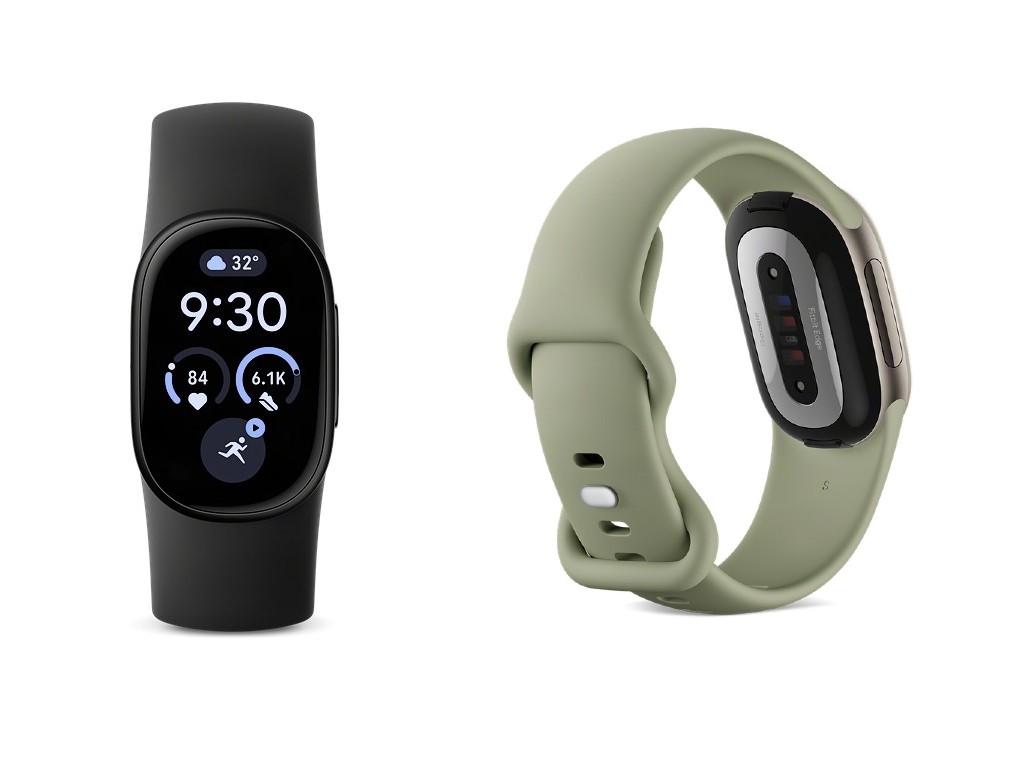
Google has kept the familiar slim shape that made earlier Fitbit trackers popular, but the Edge looks a little more refined. It has a curved aluminium body and a 1.34-inch OLED touchscreen that gives users more room to check their activity, read notifications and navigate the interface.
That might not sound like a major upgrade, but anyone who has tried reading information on a tiny fitness band while walking or running will understand why a larger display matters.
There’s also a physical button on the side, which should make the tracker easier to use when tapping the screen isn’t particularly convenient.
The device is designed to feel light and comfortable enough for everyday use, including during sleep.
That matters because a fitness tracker only becomes genuinely useful when someone is comfortable wearing it consistently.
Google is also offering interchangeable bands, allowing users to change the appearance without replacing the entire device.
Somewhere Between Fitbit Air and Pixel Watch
Google already has devices for people who want very different things from their wearables.
The Fitbit Air takes the minimalist approach. It works largely in the background, collecting health information without requiring users to constantly look at a screen.
The Pixel Watch sits at the other end of the range. It offers a full smartwatch experience, complete with applications, notifications and more advanced connected features.
The Fitbit Edge tries to find a comfortable middle ground.
You can check your steps, follow a workout, view notifications or glance at directions directly from your wrist. At the same time, you don’t have to deal with the more complicated experience of a full smartwatch.
For someone who mainly wants to stay active and keep track of everyday health information, that balance could make sense.
It is also a reminder that wearable technology doesn’t always need more features to become more useful.
Sometimes, the better approach is to concentrate on the things people actually use.
Fitness Tracking Is Still the Main Attraction
Despite the larger display and additional smart features, the Fitbit Edge is first and foremost a fitness tracker.
Google says the device can automatically recognise more than 100 types of activity, while users can manually select from over 50 exercise modes.
That should make it easier to keep a record of daily movement without constantly remembering to start or stop a workout.
For example, someone going for a walk after work may appreciate having the activity recorded automatically rather than having to open a menu before leaving home.
The tracker also provides information about workout intensity, heart rate and other activity measurements.
These features aren’t particularly unusual in today’s wearable market, but the way they work together is what matters.
A fitness tracker should make it easier to understand activity patterns, not leave users staring at a collection of numbers they don’t know what to do with.
Google is trying to make that information more accessible through its wider health platform.
Built-In GPS Makes the Fitbit Edge More Useful Outdoors
One addition that should appeal to runners and cyclists is built-in GPS.
It means users can track outdoor routes and distances without necessarily carrying their smartphones during every workout.
For someone who prefers a quick morning run without a phone bouncing around in a pocket, that can be a welcome convenience.
Google claims GPS accuracy has improved compared with earlier Fitbit trackers.
Of course, those claims will need to be tested in everyday conditions. Tracking performance can vary depending on buildings, trees and the surrounding environment.
Still, having GPS built into a relatively compact fitness tracker makes the Edge a more practical option for outdoor exercise.
The inclusion of an altimeter also allows the device to record changes in elevation, adding another useful measurement for people who enjoy walking or hiking.
Google Wants AI to Make Health Information More Useful
Artificial intelligence is becoming a bigger part of Google’s products, and the Fitbit Edge is no exception.
The tracker works with Google’s Gemini-powered Health Coach, which is designed to help users make sense of the information collected by their wearable.
Instead of simply showing activity totals or sleep statistics, the system aims to provide suggestions based on personal routines and recorded trends.
Someone who has been unusually busy, for example, might receive guidance about adjusting their activity schedule or making time for recovery.
The idea is interesting because many people already have access to more health information than they know how to interpret.
A useful digital coach could help turn some of that information into practical advice.
However, there is a catch.
The more advanced coaching features require a Google Health Premium subscription. Buyers receive an introductory three-month subscription, but continued access comes at an additional cost.
That is worth considering before buying the tracker, particularly for people who dislike paying monthly fees for features connected to hardware they already own.
And while the device can highlight health trends, its wellness insights should not be treated as medical diagnoses.
Sleep Tracking Remains an Important Part of the Experience
Fitbit has spent years developing its sleep-tracking features, and Google is continuing that focus with the Edge.
The device monitors sleeping patterns and provides information that users can review through the accompanying application.
Google says its updated sleep-stage tracking offers improved accuracy over previous generations.
For people who enjoy understanding their daily routines, that information can be useful.
It may help them notice patterns between their sleep, activity and everyday habits.
Of course, no wrist-worn fitness tracker can provide a complete picture of someone’s health. The information is better understood as a guide to personal trends rather than a replacement for professional medical assessment.
The Edge also includes sensors for monitoring heart rate and other wellness measurements.
Google’s broader goal appears to be making these measurements work together instead of presenting each one as a separate feature.
Seven Days of Battery Life Sounds Refreshing
Battery life might be one of the strongest reasons to choose the Fitbit Edge over a more advanced smartwatch.
Google claims the tracker can last up to seven days on a single charge under certain conditions.
That is particularly appealing for people who don’t want to add another device to their nightly charging routine.
It also makes sleep tracking more convenient, since users can keep wearing the device overnight without worrying as much about battery life.
There is a compromise, however.
Keeping the always-on display enabled can reduce the estimated battery life to around two days.
Using GPS regularly and enabling additional features may also affect how long the battery lasts.
Even so, the prospect of several days between charges gives the Edge a practical advantage over many smartwatches.
Google has also introduced a user-replaceable battery, potentially making the tracker easier to keep using over a longer period.
Not Everything From the Pixel Watch Makes It Across
The Fitbit Edge is more capable than a basic fitness band, but it isn’t a smaller Pixel Watch.
And Google isn’t pretending otherwise.
There is no built-in microphone or speaker, so users won’t be taking voice calls directly from the device.
It also lacks NFC, meaning Google Wallet contactless payments are not supported.
That omission may disappoint people who have become accustomed to paying for purchases with their watches.
The Edge also doesn’t offer the extensive range of third-party applications available on Wear OS.
Instead, Google has focused on features such as notifications, basic navigation, media controls and fitness tracking.
Whether that is a drawback depends on what someone expects from a wearable.
A person who regularly uses their smartwatch for payments, voice commands and applications may find the Edge too limited.
But someone who mostly checks activity statistics and occasional notifications may not miss those features at all.
Fitbit Edge Price and Availability
The Fitbit Edge starts at $179.99 in the United States, placing it between the more affordable Fitbit Air and the premium Pixel Watch range.
Google is offering the tracker in Obsidian, Fog, Olive and Canyon colour options.
A Stephen Curry Special Edition is also available at a higher price of $219.99.
Preorders opened on October 12, with retail availability scheduled for October 27, 2026.
The pricing puts the Edge in an interesting position.
It isn’t the cheapest way to track daily activity, but it is considerably less expensive than a fully featured smartwatch.
For buyers who value built-in GPS, a readable display and several days of battery life, the price may be easier to justify.
However, the additional subscription required for some AI-powered features could influence the overall value.
Who Is the Fitbit Edge Actually For?
The Fitbit Edge makes the most sense for someone who wants useful health and fitness features without wearing a bulky smartwatch.
It could appeal to people upgrading from an older Fitbit Charge, runners who want independent GPS tracking or anyone who appreciates detailed activity information but prefers a simpler device.
It may also suit users who find modern smartwatches a little overwhelming.
Not everyone wants another screen demanding attention throughout the day.
Sometimes, being able to check a few important details and get on with everything else is enough.
On the other hand, those who rely heavily on smartwatch applications, contactless payments or voice controls may be better off considering the Pixel Watch.
The Fitbit Air remains an alternative for people who would rather avoid having a display altogether.
Google Is Giving Fitbit a More Defined Role
The Fitbit Edge also says something about where Google wants to take the Fitbit brand.
Since acquiring Fitbit, Google has gradually brought its health-tracking technology closer to the Pixel ecosystem.
That raised questions about whether traditional Fitbit devices would eventually disappear as Pixel Watches became more capable.
The arrival of the Edge suggests Google still sees a place for dedicated fitness trackers.
Rather than forcing everyone into the same type of wearable, the company appears to be offering different choices based on how much technology people want on their wrists.
Fitbit Air keeps things minimal. Fitbit Edge offers a more interactive fitness experience. Pixel Watch provides the wider smartwatch features.
It is a sensible division, particularly when customers have different priorities when it comes to comfort, battery life, price and functionality.
Fitbit Edge Might Be Exactly What Some Users Have Been Missing
The Fitbit Edge isn’t trying to revolutionise wearable technology, and perhaps that is part of its appeal.
It takes familiar fitness-tracking features, adds a larger display and built-in GPS, and packages everything in a slim device designed for everyday use.
There are compromises. The lack of contactless payments will frustrate some users, while the subscription model for advanced health coaching may discourage others.
Still, the Edge seems to recognise something that gets overlooked in the race to build increasingly sophisticated smartwatches.
Not everyone wants more technology on their wrist.
Some people just want a dependable tracker that records their activity, helps them follow their health trends and lasts several days between charges.
For those users, the Fitbit Edge could offer a comfortable balance between the simplicity of Fitbit Air and the more demanding experience of the Pixel Watch.
Whether it delivers on that promise will depend on how well it performs in everyday use. But the thinking behind it makes sense: a fitness tracker doesn’t have to do everything to be useful.