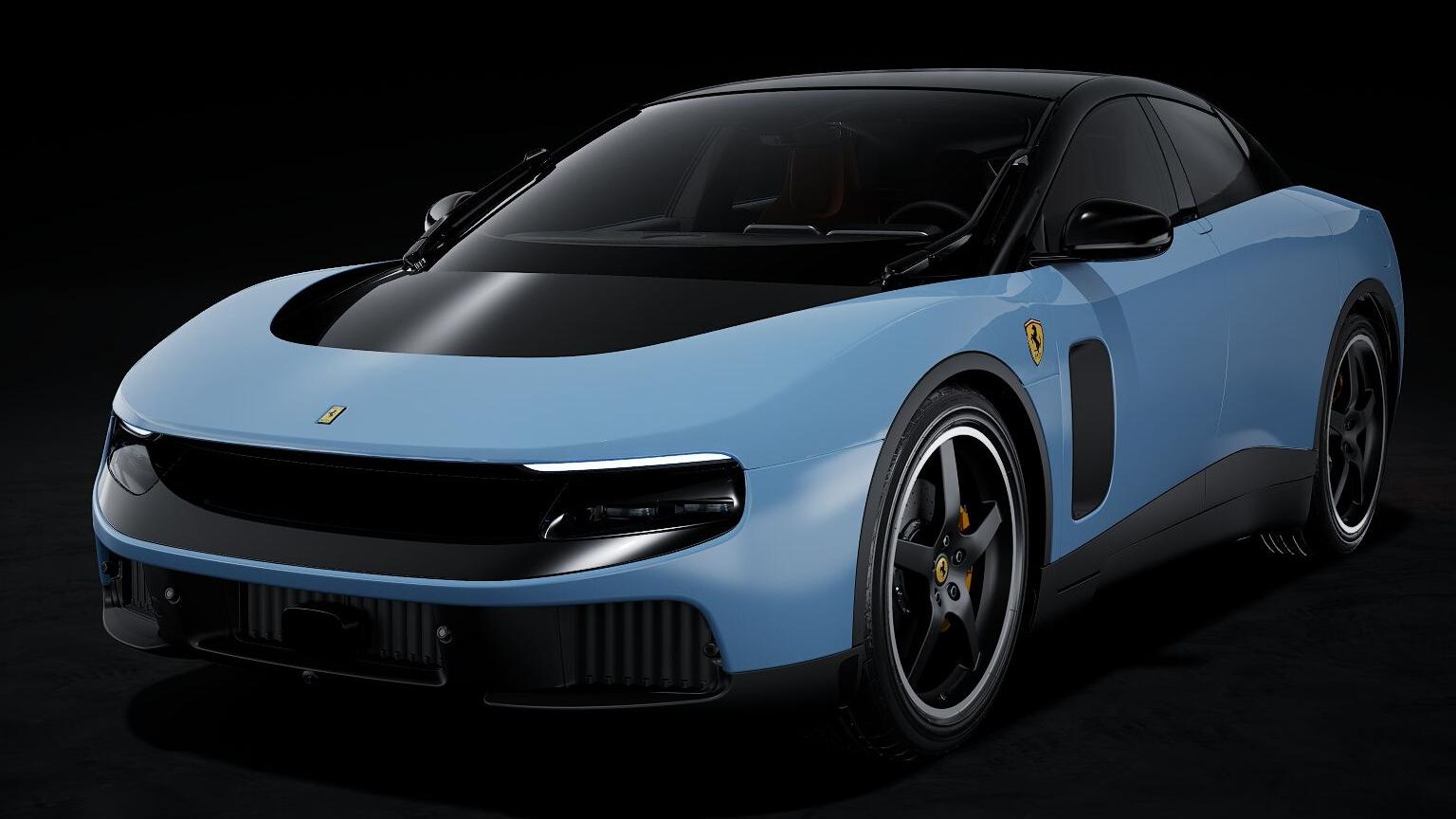
Ferrari EV backlash has intensified after the luxury carmaker confirmed that its long-serving marketing and commercial chief, Enrico Galliera, is leaving the company just weeks after the difficult launch of its first fully electric supercar, the Ferrari Luce.
Galliera, who spent 16 years at Ferrari, will step down from his role as chief marketing and commercial officer. He is expected to be replaced in July by Massimiliano Di Silvestre, the former head of BMW Italy.
Ferrari said Galliera had chosen to begin a new professional chapter and that the decision had been shared with the company earlier. The carmaker did not directly connect his departure to the reaction surrounding the Luce.
Still, the timing has attracted attention because the all-electric Ferrari Luce, unveiled in May, received a sharp response from some fans, investors and public figures.
Ferrari EV Backlash Follows Controversial Luce Unveiling
The Ferrari EV backlash began after the company introduced the Luce, its first all-electric model, in May.
The vehicle marked a major shift for one of the world’s most famous performance car brands. Ferrari has long been associated with powerful petrol engines, dramatic sound and traditional supercar emotion. Moving into fully electric technology was always going to be a sensitive moment for the brand.
However, the Luce launch did not land smoothly with everyone.
The car’s design drew criticism online, where images of the model quickly became the subject of memes and debate. Some critics argued that the design did not match the emotional identity many people associate with Ferrari.
The backlash also reached high-profile figures in Italy. Matteo Salvini, Italy’s deputy prime minister and transport minister, who previously served as Ferrari chairman, was among those who criticised the look of the new electric model.
Enrico Galliera Leaves After 16 Years at Ferrari
Galliera’s departure ends a long and influential period at Ferrari.
He joined the company’s senior leadership structure in 2010 and became closely associated with Ferrari’s commercial strategy, brand positioning and customer management.
His role was not only about marketing campaigns. At Ferrari, commercial leadership also involves managing demand for some of the world’s most sought-after cars. The company has built part of its luxury appeal on scarcity, exclusivity and careful customer selection.
Ferrari vehicles are often produced in limited numbers, and demand regularly exceeds supply. That means deciding which clients can access certain models is a major part of protecting the brand’s value.
Galliera was involved in this delicate balance for many years.
Ferrari Thanks Galliera for His Role in Brand Growth
Ferrari chief executive Benedetto Vigna praised Galliera’s contribution to the company, saying he had played an important role in Ferrari’s growth and in strengthening the brand worldwide.
The company also expressed gratitude for his years of service.
Galliera did not provide additional comment beyond Ferrari’s official statement.
His exit comes during a period of major transition for the company. Ferrari is trying to protect its heritage while adapting to a changing car market where electric vehicles, hybrid systems and environmental regulations are becoming more important.
Ferrari EV Backlash Highlights the Brand’s Electric Challenge
The Ferrari EV backlash shows how difficult electrification can be for heritage performance brands.
For many mainstream carmakers, electric vehicles are mainly about efficiency, lower emissions and technology. For Ferrari, the challenge is deeper. The company must convince buyers that an electric Ferrari can still feel like a Ferrari.
That means design, performance, exclusivity, driving emotion and brand identity all matter.
Ferrari has already introduced hybrid technology in some models, including the LaFerrari, which launched in 2013 as the company’s first production hybrid hypercar. That model combined a petrol engine with electric power and helped show that electrification could support performance.
But a fully electric Ferrari is a bigger leap.
The Luce is not simply another model. It represents a symbolic test of whether Ferrari can move into the electric era without weakening the emotional appeal that made the brand famous.
Luce Launch Put Pressure on Ferrari Shares
The reaction to the Luce was not limited to social media.
Ferrari’s shares reportedly dropped by 8% the day after the electric model was unveiled. The decline suggested that investors were also watching closely to see whether the company could manage the transition into electric vehicles without damaging its premium image.
The Luce is priced at about $640,000, placing it firmly in the ultra-luxury segment. At that level, buyers expect more than speed. They expect craftsmanship, status, design excellence and a strong emotional connection to the brand.
Negative reaction to such an important launch can therefore create broader concerns about strategy, market positioning and future demand.
Design Reaction Becomes Central to Ferrari EV Backlash
One of the biggest talking points around the Luce was its design.
The car’s look was linked to Sir Jony Ive, the famed designer best known for his work on Apple products, including the iPhone. His involvement added global attention to the project but also raised expectations.
For some observers, the design represented a bold attempt to redefine Ferrari for a new era. For others, it felt too far removed from the visual language that traditional Ferrari fans admire.
That debate matters because Ferrari’s brand is built on emotion as much as engineering. Every major design decision is judged against decades of history, racing heritage and collector expectations.
The response to the Luce shows that even the most powerful luxury brands face risk when they try to reinvent themselves.
Massimiliano Di Silvestre to Take Over Commercial Role
Ferrari’s next marketing and commercial chapter will be led by Massimiliano Di Silvestre.
He previously headed BMW Italy and is expected to take over the role in July. His appointment comes at a crucial moment for Ferrari as the company works to manage customer expectations, defend its brand identity and continue its shift toward electrified performance.
Di Silvestre will inherit a complex brief. He will need to support Ferrari’s commercial growth while helping the company communicate its electric future more clearly to loyal customers and new buyers.
The challenge will be to make electrification feel like an extension of Ferrari’s heritage rather than a departure from it.
Ferrari Faces a Delicate Road Ahead
The Ferrari EV backlash does not mean the company’s electric strategy has failed. But it does show that Ferrari must handle the transition carefully.
Luxury customers do not only buy technology. They buy meaning, emotion, heritage and status. For Ferrari, every major product launch must protect those values.
The company’s first fully electric model was always likely to divide opinion. Some fans will welcome the innovation. Others may worry that electric power changes the sound, feel and identity of Ferrari forever.
The departure of Galliera adds another layer of attention to an already sensitive moment.
Ferrari EV Backlash Marks a Turning Point for the Supercar Maker
Ferrari is entering one of the most important periods in its modern history.
The company must prove that it can compete in the electric age while staying true to the qualities that made it one of the world’s most admired car brands.
The Ferrari EV backlash surrounding the Luce has shown how difficult that balance can be. It has also highlighted the pressure facing Ferrari’s leadership as the company moves deeper into electrification.
Galliera’s exit closes a major chapter in Ferrari’s commercial story. His successor will now help shape how the brand presents itself to customers, investors and fans at a time when the future of the supercar is being redefined.
For Ferrari, the road ahead is not only about building electric cars. It is about convincing the world that an electric Ferrari can still carry the soul of the Prancing Horse.