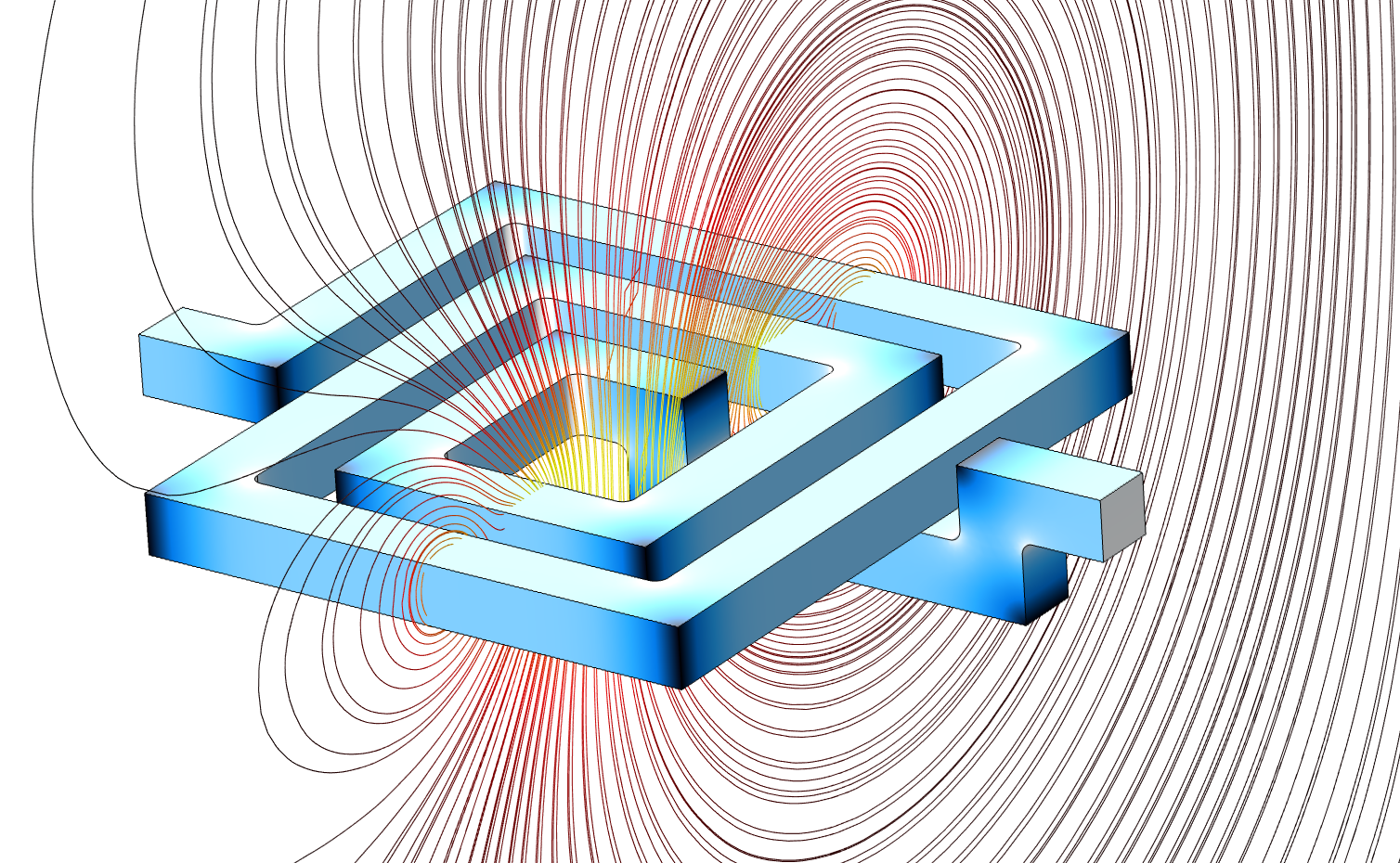
QCD matter behaves in remarkable ways under extreme temperatures, powerful magnetic fields, and high densities. In a new theoretical study, researchers have shown that these intense conditions can fundamentally reshape the thermodynamic properties of matter that once filled the early universe.
Understanding QCD matter is central to modern high energy physics. It describes the behavior of quarks and gluons, the fundamental building blocks of protons and neutrons, when they are subjected to enormous heat and pressure. These conditions existed just microseconds after the Big Bang and can now be recreated in heavy ion collision experiments.
How Magnetic Fields Reshape QCD Matter
To explore these effects, scientists developed a hybrid equation of state designed to model QCD matter across different phases. Their approach smoothly connects two established frameworks. At lower temperatures, matter behaves like a hadron resonance gas made of particles such as protons and neutrons. At extremely high temperatures, it transitions into a quark gluon plasma where quarks and gluons move freely.
This hybrid equation of state allows researchers to examine how QCD matter responds when strong magnetic fields and nonzero chemical potentials are introduced. Chemical potential reflects how particle densities change in dense environments, such as those inside neutron stars or created during particle collisions.
When a magnetic field is present, charged particles experience Landau quantization. Their motion perpendicular to the magnetic field becomes restricted to discrete energy levels. Neutral particles, however, remain unaffected in this way. This quantization alters how pressure and energy are calculated and changes the overall thermodynamic behavior of the system.
Entropy Density and Pressure Under Extreme Conditions
One of the most striking findings concerns entropy density in QCD matter. At zero chemical potential, entropy density increases as temperature rises. However, when a magnetic field is introduced, entropy density is suppressed at lower temperatures but enhanced at higher temperatures. This reveals a temperature dependent influence of magnetism on the system.
As chemical potential increases, entropy density rises across both the hadronic phase and the quark gluon plasma phase. Pressure follows a similar pattern. Magnetic fields reduce pressure at lower temperatures but increase it at higher temperatures. Meanwhile, increasing chemical potential consistently boosts pressure.
Energy density also responds to both magnetic fields and chemical potential. The overall picture shows that QCD matter does not react uniformly. Instead, its behavior depends strongly on temperature, density, and magnetic intensity working together.
Speed of Sound and the Phase Transition
The speed of sound in QCD matter is another crucial quantity. It reflects how compressible the system is and provides insight into phase transitions. Near the critical temperature, where hadronic matter transitions into quark gluon plasma, both magnetic fields and chemical potential increase the squared speed of sound.
At lower temperatures, however, these same factors reduce it. This complex interplay shows that magnetic fields and density can either stiffen or soften the medium depending on the thermal regime.
Researchers also examined the trace anomaly, an important indicator of the QCD phase transition. Their model reproduced key temperature trends seen in lattice QCD simulations at lower magnetic field strengths. However, at stronger magnetic fields, the model underestimated the magnitude of fluctuations, even though it captured the overall pattern.
Why This Research Matters
This work advances efforts to connect theoretical predictions with experimental observations from heavy ion collisions. It also improves our understanding of QCD matter in astrophysical environments where intense magnetic fields and extreme densities exist.
By refining the equation of state, scientists are building a more accurate picture of the quark gluon plasma and the early universe. The results confirm that magnetic fields and chemical potential significantly modify entropy, pressure, and the speed of sound in QCD matter.
Although the model performs well at moderate magnetic strengths, it highlights the need for improved treatments of very strong magnetic interactions. Future research may incorporate more realistic collision geometries and explore how these extreme conditions influence the formation of specific particles.
Ultimately, mapping the behavior of QCD matter under extreme conditions brings physicists closer to understanding how matter evolved in the first moments after the Big Bang. It also deepens our knowledge of the fundamental forces that govern the structure of the universe.