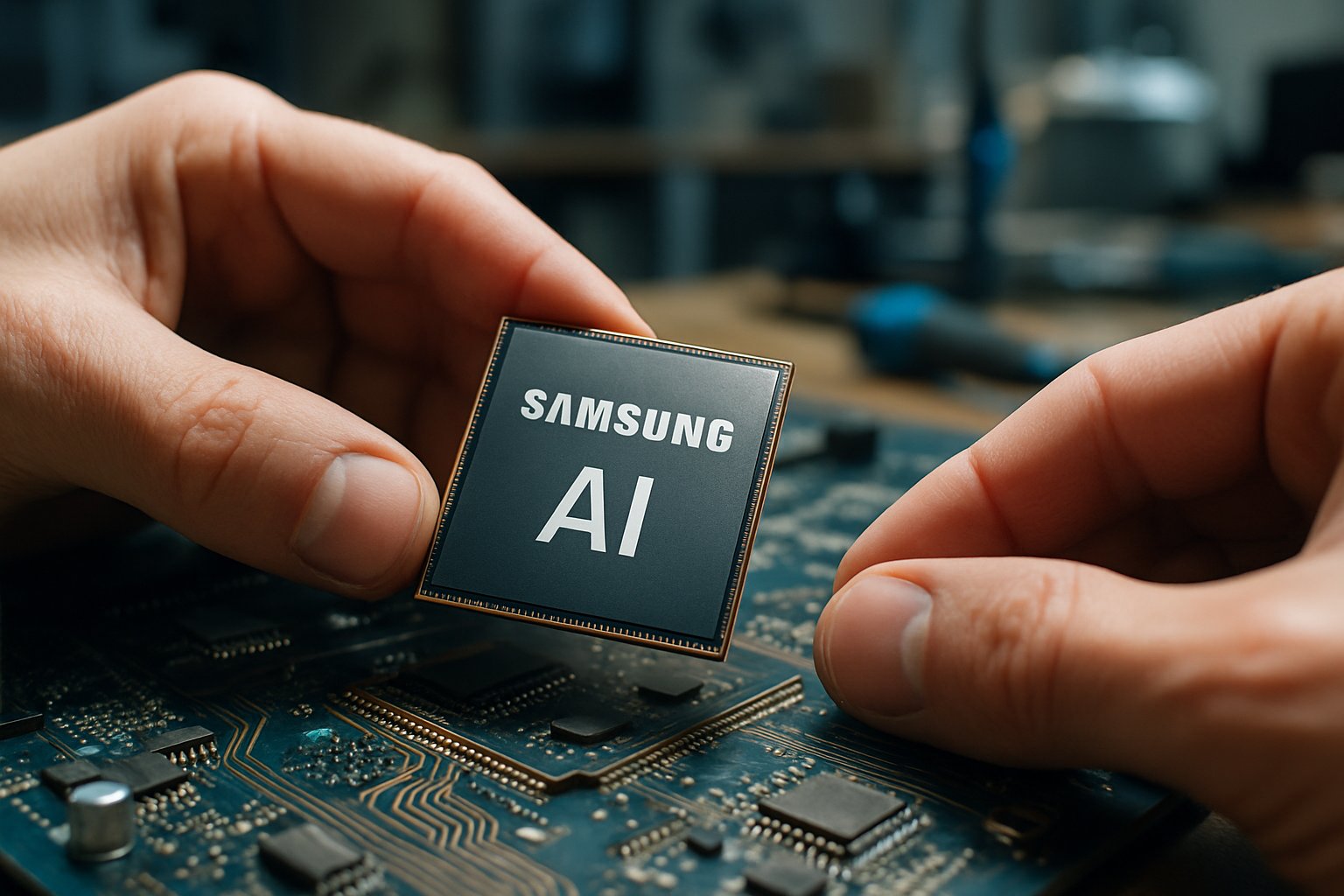
Samsung AI chips are driving one of the strongest earnings rebounds in the global technology industry, with the South Korean giant forecasting a dramatic jump in quarterly profit as artificial intelligence demand continues to reshape the semiconductor market.
Samsung Electronics expects its operating profit to rise nearly 19-fold for the April-to-June quarter, reflecting soaring demand for advanced memory chips used in AI data centres, cloud computing systems and high-performance servers. The company’s latest earnings guidance shows how quickly the AI boom has transformed the fortunes of major chipmakers.
The company estimated that it generated 89.4 trillion won, about $58.4 billion, during the quarter, marking another record performance. Samsung also projected sales of roughly 171 trillion won, more than double the level reported during the same period last year.
The figures underline the scale of the AI-driven recovery in memory chips, a sector that had previously suffered from weaker consumer electronics demand and oversupply. Now, with technology companies racing to build AI infrastructure, Samsung is benefiting from rising prices, tight supply and strong demand from enterprise customers.
Samsung AI Chips Push Profits to Record Levels
The surge in Samsung AI chips demand has helped the company deliver what analysts described as one of its strongest quarterly performances ever.
Artificial intelligence systems require enormous amounts of memory to process and move data quickly. That has made advanced memory chips essential for data centres and AI servers operated by major cloud companies, chip designers and enterprise technology groups.
Samsung is one of the world’s largest semiconductor manufacturers and supplies memory chips used by major technology firms. It also remains one of the biggest smartphone and consumer electronics companies globally, giving it a broad role across both hardware production and consumer devices.
However, the latest profit boom is being driven mainly by semiconductors rather than smartphones. The AI infrastructure race has lifted demand for memory chips at a pace the industry has rarely seen.
Why Samsung AI Chips Are in High Demand
Samsung AI chips are benefiting from a major shift in global technology spending. Companies are pouring money into AI infrastructure, including data centres, servers and specialized computing systems that can train and run large AI models.
These systems depend heavily on memory chips. While AI processors often receive most of the attention, they cannot operate efficiently without fast and reliable memory. This has increased demand for products such as high-bandwidth memory, DRAM and NAND chips.
High-bandwidth memory is especially important for AI workloads because it allows large volumes of data to move quickly between memory and processors. As more companies deploy AI tools, demand for this type of memory has grown sharply.
Samsung has responded by raising prices as supply remains tight. Stronger pricing, combined with growing order volumes, has helped improve margins and push profits higher.
AI Data Centres Are Reshaping the Chip Market
The global expansion of AI data centres is one of the biggest forces behind Samsung’s earnings growth.
Cloud providers, enterprise software companies and AI startups are building large computing facilities to support model training, inference and AI-powered services. These facilities require huge quantities of chips, storage systems, networking equipment and power infrastructure.
For memory chipmakers, this has created a major opportunity. Demand is no longer being driven only by smartphones, laptops and gaming devices. AI infrastructure has become a central growth engine.
Industry researchers say the current demand cycle is different from previous memory booms because AI data centres require unusually large amounts of capacity. That has placed pressure on supply chains and limited the availability of some chips for everyday electronics.
As a result, memory chipmakers such as Samsung and SK Hynix are experiencing a powerful recovery after a difficult period for the sector.
Samsung Shares Slip Despite Strong Profit Forecast
Despite the impressive earnings forecast, Samsung’s shares fell in Seoul after the announcement. Some investors had expected an even stronger profit figure, showing how high market expectations have become during the AI chip boom.
Samsung’s stock market value has still more than doubled since the beginning of the year, reflecting investor confidence in the company’s AI-related growth prospects.
The broader South Korean market has also benefited from the rise of semiconductor stocks. Samsung and SK Hynix have helped drive major gains in the Kospi index, as investors bet that South Korea will remain a key player in the global AI hardware supply chain.
Still, the share decline shows that investors are watching the sector closely. In a market driven by very high expectations, even strong results can disappoint if they fall short of the most optimistic forecasts.
SK Hynix and Samsung Lead South Korea’s Chip Boom
Samsung is not the only South Korean company riding the AI chip wave. SK Hynix, another major memory chipmaker, has also seen its share price surge as demand for high-bandwidth memory continues to rise.
Together, Samsung and SK Hynix are central to South Korea’s position in the global semiconductor industry. Both companies are investing heavily to expand production and meet rising demand from AI customers.
South Korea has announced major investment plans aimed at strengthening domestic chip manufacturing and AI infrastructure. These investments are designed to ensure the country remains competitive as the global semiconductor race intensifies.
Japan, Taiwan and China are also increasing chip investments, creating a fierce regional contest for leadership in advanced manufacturing.
AI Chip Demand Brings Opportunity and Risk
The boom in Samsung AI chips creates major opportunities, but it also comes with risks.
Memory chips are a cyclical business. When demand is strong and supply is tight, prices can rise quickly. But if companies build too much capacity or demand slows, prices can fall just as sharply.
Samsung and its rivals are investing heavily in new manufacturing capacity. Those factories take time and money to build. If AI demand continues growing, the investment could pay off. If market conditions change, the industry could face another period of oversupply.
There is also uncertainty around how AI hardware will evolve. Future AI systems may require different chip designs, improved efficiency or new memory technologies. Companies that lead today must keep innovating to stay ahead.
For now, however, demand remains strong, and Samsung is well positioned to benefit from the current cycle.
Nvidia’s Success Highlights the AI Hardware Race
Samsung’s earnings surge comes as Nvidia and other AI hardware companies continue to post strong results from the global AI boom.
Nvidia has become the most visible winner of the AI infrastructure race because its processors power many leading AI systems. But the success of Nvidia has also lifted companies throughout the semiconductor supply chain.
Memory makers, chip foundries, equipment suppliers and data centre infrastructure companies are all benefiting from the same trend. Samsung’s latest profit forecast shows that AI demand is no longer limited to one part of the industry.
Instead, it is creating a broader hardware supercycle, with memory chips playing a critical role.
What Samsung’s Profit Surge Means for Consumers
The rapid rise in demand for Samsung AI chips could also affect consumers.
As chip supplies remain tight, some electronics makers may face higher costs for memory components. That could influence prices for products such as computers, tablets, smartphones and other devices that rely on memory chips.
Some technology companies have already warned that chip shortages and rising component costs may affect product pricing. If AI data centres continue absorbing large volumes of supply, pressure on consumer electronics could continue.
This means the AI boom is not only a story for investors and technology firms. It may also shape the cost and availability of everyday devices.
Samsung’s AI Chip Momentum Could Continue
Samsung’s latest earnings guidance suggests the company remains one of the biggest beneficiaries of the AI infrastructure race.
The combination of strong demand, rising memory prices and limited supply has created a favorable environment for the company’s semiconductor business. If demand from AI data centres remains high, Samsung could continue to report strong results in the coming quarters.
However, investors will be watching the company’s full earnings report for more details on margins, chip supply, capital spending and future guidance.
They will also want to know how Samsung plans to compete with SK Hynix and other rivals in advanced memory, especially high-bandwidth memory for AI processors.
Final Thoughts on Samsung AI Chips
Samsung AI chips are now at the center of one of the most important growth stories in global technology. The company’s expected 1,800% profit surge shows how artificial intelligence is transforming the semiconductor industry and creating huge demand for advanced memory.
Samsung’s strength in memory manufacturing gives it a powerful position as cloud companies and AI developers expand their infrastructure. At the same time, the company must manage the risks of heavy investment, changing technology needs and the cyclical nature of chip pricing.
For now, the message from Samsung’s earnings guidance is clear: AI demand is reshaping the chip market, and memory makers are becoming some of the biggest winners.