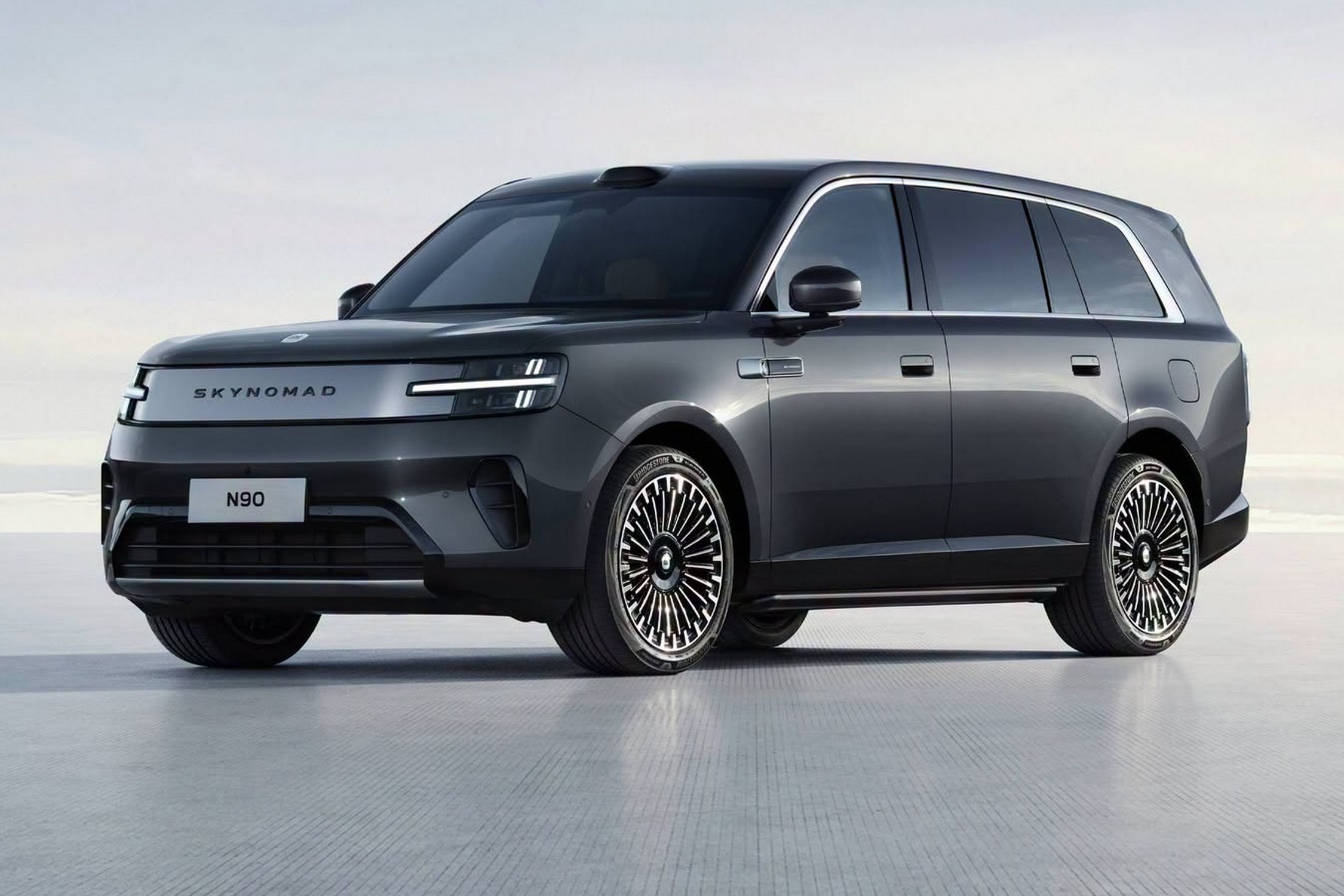
Xiaomi has expanded its electric vehicle portfolio with the Xiaomi SkyNomad SUV, a new family-focused model line built around spacious cabins, flexible seating and long-distance travel.
The Chinese technology company introduced the SkyNomad series in Beijing on July 30, 2026, as it seeks a larger share of the country’s highly competitive vehicle market. The range is expected to go on sale in China in September, with pre-orders opening immediately after the launch.
Unlike Xiaomi’s SU7 sedan and YU7 SUV, which place greater emphasis on driving performance, the new range is positioned as an intelligent, reconfigurable and spacious vehicle for families.
The flagship SkyNomad N90 Max combines a large battery with a gasoline-powered range extender. Xiaomi says the seven-seat SUV can travel up to 1,705 kilometers using its combined energy systems.
Xiaomi SkyNomad SUV Expands the Company’s EV Lineup
The Xiaomi SkyNomad SUV represents the company’s latest effort to build a broader vehicle business alongside its smartphones, home appliances and other consumer electronics.
Xiaomi entered the automotive market with models that emphasized technology and performance. The SkyNomad line takes the company in a different direction by targeting families that need more seats, storage and flexibility.
The launch comes as Xiaomi works to increase deliveries after its electric vehicle sales during the first half of 2026 reached about one-third of its annual target.
China’s wider car market has been affected by weaker consumer demand and a slow economy. Competition is also intense, with manufacturers cutting prices, introducing new technology and launching models across nearly every vehicle category.
By entering the large-family SUV segment, Xiaomi is attempting to reach buyers who may prioritize cabin space and practicality over sporty driving.
N90 Max Leads the Xiaomi SkyNomad SUV Range
The flagship model in the new series is the SkyNomad N90 Max.
Xiaomi describes the vehicle as “a house you can move,” highlighting its large interior and adaptable seating arrangement.
The N90 Max includes seven seats, making it suitable for larger households or buyers who regularly travel with several passengers.
During the launch, Xiaomi founder and Chief Executive Lei Jun said six seats may not be sufficient for some families. He compared the vehicle’s flexible interior to a home in which people can arrange and personalize the available space.
That idea forms the central theme of the SkyNomad range. Instead of treating the cabin as a fixed seating area, Xiaomi is presenting it as a space that can be adjusted for different journeys and passenger needs.
Flexible Interior Designed for Family Travel
The Xiaomi SkyNomad SUV is built around a reconfigurable cabin.
Although the company has not provided every interior measurement in the supplied information, its marketing emphasizes the ability to adjust the vehicle’s space based on how it is being used.
A family SUV may need to perform several roles during the same week. It can transport children, carry luggage, accommodate additional passengers or provide more storage when some seats are not required.
Xiaomi is positioning the SkyNomad as a vehicle that can adapt to these changing needs.
The strategy could help the company compete with other Chinese automakers that have increasingly promoted large SUVs as mobile living spaces rather than basic transportation.
Chinese consumers have shown growing interest in vehicles that offer large displays, connected services, advanced driver-assistance systems and comfortable interiors for long journeys.
Xiaomi’s experience with consumer technology may help it integrate digital features across the cabin, although the company has not yet detailed all the software and entertainment systems available in the vehicle.
Xiaomi SkyNomad SUV Uses Range-Extender Technology
The N90 Max is an extended-range electric vehicle, commonly known as an EREV.
Unlike a conventional hybrid, an EREV is driven mainly by electric motors. Its gasoline engine acts as an onboard generator that can recharge the battery or maintain the electricity supply when needed.
The N90 Max combines three major energy components:
- A 76-kilowatt-hour battery
- A 1.5-liter turbocharged gasoline range extender
- A 60-liter fuel tank
This setup is designed to provide an electric driving experience while reducing concerns about running out of battery power during long trips.
The gasoline engine can generate electricity after the battery charge falls, extending the distance the vehicle can travel without requiring an immediate charging stop.
Xiaomi Claims a Combined Range of 1,705 Kilometers
Xiaomi says the SkyNomad N90 Max can cover up to 1,705 kilometers using its battery and fuel supply.
The figure represents the vehicle’s combined range rather than the distance available from battery power alone.
That distinction matters because drivers will still need to use gasoline to reach the full claimed distance.
Even so, an extended range could make the vehicle attractive to families that frequently travel between cities or visit areas where public charging infrastructure is less reliable.
China has built one of the world’s largest electric vehicle charging networks, but charging availability and speed can still vary by location.
Range-extender vehicles offer an alternative for buyers who want electric motor performance without relying entirely on charging stations.
N90 Max Price Starts at CN¥299,900
The flagship SkyNomad N90 Max is priced at CN¥299,900.
The pricing places it in a competitive section of China’s family SUV market, where several domestic manufacturers offer large electric, hybrid and range-extended models.
Xiaomi will need to convince buyers that the vehicle’s interior flexibility, connected technology and claimed driving range justify the price.
The company may benefit from its established brand recognition. Xiaomi already sells smartphones, televisions, home appliances and smart devices to millions of customers.
That existing ecosystem could help it promote the SkyNomad to consumers who already use Xiaomi products and services.
However, vehicles require a different level of customer support, manufacturing quality and long-term reliability than consumer electronics.
The company will face pressure to demonstrate that it can produce and service vehicles at scale.
New Kunlun Architecture Supports Larger SUVs
The Xiaomi SkyNomad SUV is based on the company’s new Kunlun vehicle architecture.
Xiaomi says the platform was created specifically for larger SUVs with adaptable interiors.
A dedicated architecture can allow an automaker to better organize the battery, drivetrain, seating and storage areas around the needs of a particular vehicle category.
For the SkyNomad, the platform appears to prioritize cabin room and flexibility.
The Kunlun architecture could also support additional Xiaomi SUVs in the future, although the company has not confirmed which other models may use it.
Developing a shared platform can reduce production costs and make it easier for manufacturers to release vehicles in different sizes and configurations.
SkyNomad Launch Comes During Tough Market Conditions
The new range arrives at a challenging time for China’s automotive sector.
Consumer demand has weakened as the country deals with slower economic growth. At the same time, manufacturers continue to introduce new electric vehicles at a rapid pace.
The result is a crowded market in which brands must compete on price, technology, driving range, design and interior features.
Xiaomi’s first-half vehicle sales reached only about one-third of its full-year goal, increasing the importance of the SkyNomad launch.
A successful family SUV could help the company reach customers who were not attracted to its earlier performance-focused models.
Large family vehicles can also generate higher revenue because they are often priced above smaller sedans and compact SUVs.
Xiaomi Plans European Vehicle Launch
Xiaomi is also preparing to enter the European vehicle market in 2027.
The company has not confirmed whether the SkyNomad will be among the models sold in Europe.
A European launch would expose Xiaomi to different safety standards, environmental regulations and customer expectations.
It would also place the company in direct competition with established European automakers, Tesla and a growing number of Chinese EV brands expanding internationally.
The SkyNomad’s range-extender system could face a mixed response in Europe, where regulations and incentives increasingly favor fully electric vehicles.
However, its large cabin and long claimed range may appeal to families seeking a practical vehicle for extended travel.
Xiaomi’s EV Business Becomes More Important
Xiaomi’s vehicle division has become an increasingly important source of revenue during the past two years.
The company is using its technology background to compete in a car industry that is becoming more dependent on software, artificial intelligence and connected services.
Modern vehicles are no longer judged only by engines, handling and exterior design. Buyers also consider navigation, voice assistants, entertainment, mobile applications and integration with other digital devices.
Xiaomi already operates a large ecosystem of connected products, which could allow its vehicles to communicate with smartphones and smart-home devices.
The SkyNomad may therefore serve as both a family vehicle and another central part of the company’s wider technology platform.
Pre-Orders Open Ahead of September Release
Xiaomi began accepting pre-orders for the SkyNomad series on July 30.
The vehicles are scheduled to reach the Chinese market in September 2026.
The period between the launch and first deliveries will give Xiaomi time to build interest, secure orders and reveal more information about available versions.
Customers will likely be watching for details about battery-only range, charging speeds, safety systems, warranty coverage and standard equipment.
Those specifications could play a major role in determining how well the vehicle performs against established rivals.
Final Thoughts
The Xiaomi SkyNomad SUV marks a significant expansion of the company’s growing automotive business.
With seven seats, a reconfigurable interior and a claimed combined range of up to 1,705 kilometers, the N90 Max is clearly aimed at families seeking space and long-distance flexibility.
Its range-extender system may also attract buyers who want electric driving without depending completely on charging infrastructure.
The launch places Xiaomi in another fiercely contested part of China’s vehicle market. Its success will depend on whether the company can translate its strength in consumer technology into the reliability, comfort and service expected from a family SUV.
Pre-orders are now open, with sales scheduled to begin in September.