India and the European Union (EU) have finalized a groundbreaking free trade deal, hailed as a major step in recalibrating global trade dynamics. The agreement, which comes after nearly two decades of negotiations, will significantly reduce tariffs on over 90% of goods exchanged between the two regions. However, as the deal progresses, it faces a crucial challenge—U.S. President Donald Trump’s response, which remains unclear and could potentially cast a shadow over the landmark agreement.
The Historic India-EU Free Trade Agreement
On January 27, 2026, Indian Prime Minister Narendra Modi and European Commission President Ursula von der Leyen announced what they described as a “landmark” trade deal. The agreement is poised to reshape trade relations between the EU and India by removing or reducing tariffs on a vast majority of goods. The sectors affected by the deal include agriculture, automobiles, textiles, leather, marine products, and gems and jewelry.
India’s commitment to lowering tariffs on European automobiles and agricultural products is particularly significant, as these sectors have long been politically sensitive. The EU, in return, will ease tariffs on Indian products such as textiles, leather, and jewelry, creating a more balanced trade flow between the two regions.
This historic agreement, dubbed the “mother of all deals” by von der Leyen, is seen as a response to a global shift in trade dynamics. As countries, particularly in Europe and Asia, seek to diversify their supply chains away from an over-reliance on the U.S. and China, bilateral agreements like this one have become increasingly common. The India-EU pact is part of a broader trend in which nations are recalibrating their economic ties in the wake of Washington’s growing use of tariffs and its more aggressive stance on global trade.
Rising Tensions Over Trade Relations: Trump’s Potential Response
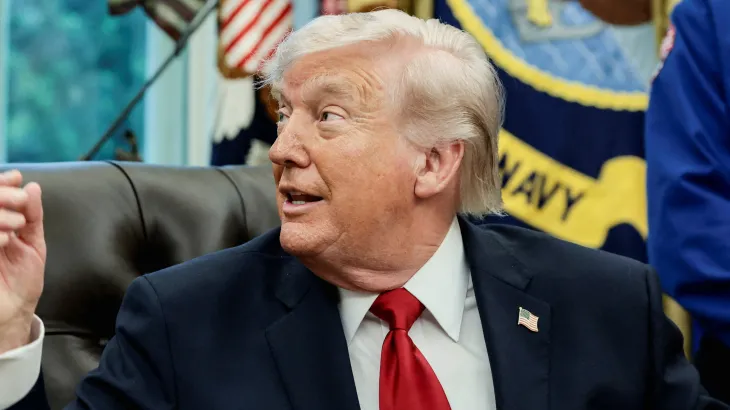
Despite the enthusiasm surrounding the deal, there is a cloud hanging over the agreement, one that has yet to be fully addressed by the U.S. government. President Trump has made no public comment on the India-EU trade deal, and his silence is raising questions about the future of U.S.-India relations. Trump has a history of imposing punitive tariffs on both allies and adversaries, and his administration’s stance on global trade has been increasingly unpredictable.
Last August, the U.S. imposed higher tariffs on Indian goods, including oil purchased from Russia, after India continued to engage in energy deals with Moscow. Just days later, the U.S. levied a 25% duty on Indian goods. These actions have strained relations between Washington and New Delhi, making it unclear how the Trump administration will respond to the India-EU trade deal.
Adding to the uncertainty, U.S. Treasury Secretary Scott Bessent recently criticized the EU for negotiating a trade agreement with India. Bessent’s remarks highlight the ongoing tensions between the U.S. and Europe over trade policies and could foreshadow more friction as the India-EU deal moves closer to implementation.
U.S.-India Trade Deal in the Works
Despite these concerns, there is still optimism surrounding U.S.-India trade relations. India’s Minister of Petroleum and Natural Gas, Hardeep Singh Puri, confirmed in a CNBC interview on January 27, 2026, that the U.S. and India are in the final stages of negotiating a separate trade agreement. According to Puri, the two countries are at “a very advanced stage” of finalizing the deal, which could pave the way for closer economic ties between the two nations.
The U.S.-India trade deal, if successfully concluded, could offer a counterbalance to the EU’s growing economic partnership with India. For the U.S., strengthening its trade ties with India is seen as a strategic move to compete with China and to ensure that India remains aligned with Western trade practices, particularly in the technology and energy sectors.
Global Shift in Trade Alliances
The India-EU trade deal is part of a larger global trend in which nations are reevaluating their trade partnerships and seeking alternatives to the U.S.-China dominance. Recently, Canadian Prime Minister Mark Carney visited China for the first time in 17 years, aiming to strengthen economic ties with the world’s second-largest economy. U.K. Prime Minister Keir Starmer is also planning a visit to China, marking the first such trip by a British leader in nearly five years.
These diplomatic efforts underscore the growing importance of bilateral trade agreements in an era where protectionist policies and tariffs are reshaping global trade. The India-EU free trade agreement, while significant, is not an isolated case. More nations are expected to follow suit, forging new economic partnerships outside of the traditional U.S.-China rivalry.
The Economic Impact: Who Stands to Gain?
For both India and the EU, the trade deal is expected to yield significant economic benefits. India, as the EU’s ninth-largest trading partner, is poised to gain access to a wider European market for its goods. The reduction in tariffs will make Indian products more competitive in Europe, while providing European manufacturers with better access to India’s fast-growing consumer market.
India’s agricultural and automotive sectors, in particular, stand to benefit from reduced tariffs, as these industries are critical to the Indian economy. Similarly, European companies in sectors such as technology, pharmaceuticals, and automotive manufacturing will find greater opportunities in India, which is one of the world’s largest and fastest-growing markets.
While the trade deal is expected to benefit both parties, it also highlights the shifting dynamics of global trade. The EU’s growing economic ties with India could diminish the bloc’s dependence on traditional trade partners like the U.S. and China, allowing Europe to diversify its supply chains and mitigate risks associated with global trade tensions.
The Growing Tension with the U.S.
Despite the potential benefits of the India-EU trade deal, there are concerns about the potential backlash from the U.S. President Donald Trump has already demonstrated his willingness to impose tariffs on countries that act outside U.S. interests, and it remains unclear how he will respond to this new economic partnership between India and the EU.
The U.S. government’s silence on the deal, coupled with Treasury Secretary Bessent’s criticism of the EU’s actions, suggests that the Trump administration may not support the agreement. This could lead to increased tensions between the U.S. and both the EU and India, potentially complicating future trade negotiations.
Broader Economic Trends: S&P 500 Record and Market Reactions
While the India-EU trade deal dominated headlines, U.S. markets were also reacting to other economic factors. The S&P 500 reached a new all-time intraday high, driven by strong performances from Big Tech companies. However, the Nasdaq Composite also saw gains, while the Dow Jones Industrial Average lagged behind. Investors were watching these developments closely, particularly ahead of key earnings reports from companies in the tech sector.
The economic outlook remains uncertain, as concerns about a potential U.S. government shutdown continue to weigh on investor sentiment. The partial shutdown, driven by Senate Democratic opposition to funding for the Department of Homeland Security, has raised concerns about a broader economic slowdown in the U.S. As the shutdown looms, markets will be watching for any signs of resolution.