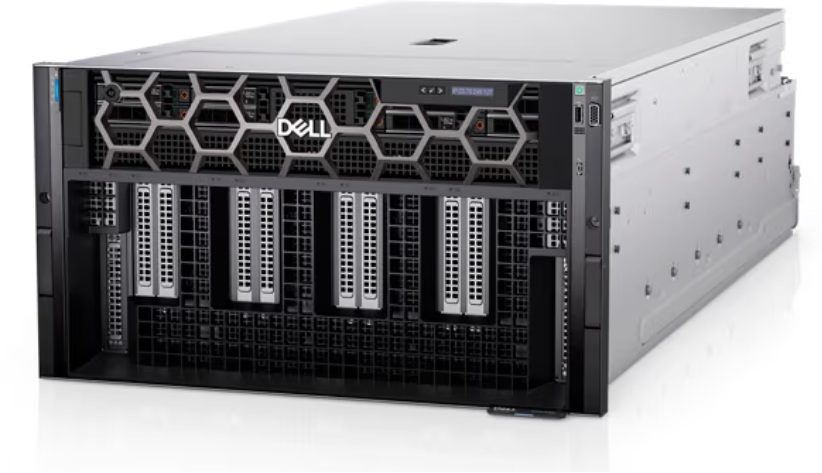
Dell AI Servers have become one of the biggest growth stories in enterprise technology, turning Dell Technologies from a mature PC and server company into a major player in the artificial intelligence infrastructure boom.
Demand for AI hardware has surged as companies, governments and cloud providers rush to build systems capable of training and running advanced AI models. Dell has benefited directly from that spending wave, with orders for AI-optimized servers rising sharply.
The company now has a massive AI server backlog of more than $51 billion, showing that demand remains strong. But investors are asking a tougher question: can Dell turn that backlog into stronger profit margins?
Dell AI Servers Push the Company Into a New Growth Era
Dell AI Servers are changing how the market views the company.
For years, Dell was mostly seen as a dependable but mature technology business, built around personal computers, enterprise servers and storage products. That image has shifted as AI infrastructure spending has accelerated.
In its latest quarter, Dell reported AI-optimized server revenue of about $16 billion, compared with less than $2 billion a year earlier. That kind of growth has helped fuel a sharp rise in Dell’s stock price over the past year.
The company also raised its full-year AI server revenue outlook to around $60 billion, reflecting stronger demand from customers building large-scale AI systems.
This growth has placed Dell closer to the center of the AI supply chain, alongside companies that provide chips, networking equipment, cloud infrastructure and data center services.
A $51 Billion Backlog Shows Strong Demand
Dell’s AI server backlog is one of the clearest signs of how quickly demand has grown.
The company ended the quarter with a backlog of about $51.3 billion for AI servers. It also booked roughly $24 billion in AI server orders during the period, supported by a customer base that has expanded to more than 5,000.
That backlog gives Dell strong revenue visibility. It means customers have already placed orders that the company must fulfill over time.
For investors, backlog matters because it shows future demand is not only theoretical. Companies are actively committing capital to AI infrastructure, and Dell is winning a meaningful share of that spending.
However, backlog alone does not guarantee strong earnings. The quality of revenue matters just as much as the size of the order book.
Why Customers Are Buying Dell AI Servers
Dell has several advantages in the AI infrastructure market.
The company can deliver full AI systems, not just individual pieces of hardware. Large enterprises, neocloud providers and government customers often need complete solutions that combine servers, storage, networking, software and support.
Dell’s scale also helps. The company has long experience managing complex supply chains and large enterprise deployments. That matters in a market where advanced graphics processing units, or GPUs, remain expensive and often supply constrained.
Customers building AI factories want speed, reliability and simplicity. Dell can help reduce procurement complexity by offering integrated systems that are ready for large workloads.
This end-to-end approach makes Dell attractive to organizations that want to deploy AI infrastructure without managing every component separately.
Dell AI Servers Strengthen Infrastructure Profits
The growth is most visible in Dell’s infrastructure solutions group, known as ISG.
This division includes servers and storage, and it has become the company’s main profit engine. The segment now generates the majority of Dell’s operating income, supported by strong demand for enterprise infrastructure.
AI server demand is also helping Dell’s traditional server business. As companies prepare for AI workloads, many are upgrading broader IT systems, including storage, networking and non-AI servers.
That creates a wider upgrade cycle. Customers may start with AI infrastructure, but they often need to modernize the rest of their technology stack as well.
Dell is also benefiting from a commercial PC refresh cycle, which can support cash flow in its client solutions group. This gives the company multiple sources of revenue, even as AI remains the headline growth driver.
The Margin Challenge Behind Dell AI Servers
The biggest concern is profitability.
AI-optimized servers can generate huge revenue, but they often carry lower margins than traditional enterprise hardware. These systems rely on expensive components, especially high-end GPUs from suppliers such as Nvidia.
When a large portion of the selling price comes from costly third-party components, Dell may not keep as much profit from each sale. That can pressure gross margins even while revenue grows quickly.
This is the key issue investors are watching. Dell has proven it can win AI server orders. Now it must prove it can convert those orders into durable earnings growth.
If AI server margins remain thin, revenue growth may not translate into the level of profit expansion that the market expects.
Why Dell’s Valuation Now Comes With Higher Expectations
Dell’s stock has climbed sharply as investors have revalued the company as an AI infrastructure play.
That creates opportunity, but it also raises the bar.
When a company trades like a growth stock, investors expect more than large order numbers. They want evidence that growth will improve earnings, cash flow and long-term competitive position.
For Dell, that means the AI server boom must eventually support stronger profitability or lead to valuable follow-on sales in storage, services, software and support.
If the company can attach higher-margin products and services to AI server deals, the business case becomes more attractive. If not, Dell may face pressure from investors who worry that the AI boom is adding revenue without enough profit.
Competition Remains Intense in AI Infrastructure
Dell is not the only company chasing the AI infrastructure opportunity.
The market includes major server makers, cloud providers, original design manufacturers and specialized AI infrastructure companies. Customers also have options when designing AI data centers, especially if they have the technical ability to work directly with suppliers.
Competition can pressure pricing, particularly for large enterprise and cloud deals. At the same time, supply constraints around GPUs can limit how quickly companies can fulfill demand.
Dell’s strength lies in its scale, customer relationships and ability to deliver complete systems. But it must continue to execute well as rivals target the same fast-growing market.
Dell AI Servers Could Reshape the Company’s Future
Dell AI Servers have already changed the company’s growth story.
The huge backlog, rapid revenue growth and expanding customer base show that Dell is benefiting from one of the biggest technology investment cycles in years. AI infrastructure is no longer a small side business. It has become central to Dell’s identity in the market.
The opportunity is clear. If demand stays strong and Dell improves profitability around AI systems, the company could become one of the key long-term winners in enterprise AI infrastructure.
But the risk is just as clear. High revenue from lower-margin hardware may not be enough to justify rising investor expectations.
For now, Dell has the orders. The next test is whether those orders can lift margins and earnings in a meaningful way.