Artificial intelligence could make autism screening easier to access by helping healthcare workers and families identify developmental differences earlier, particularly in communities where specialist services are limited.
AI autism screening tools are being developed to analyse behavioural signals such as eye gaze, facial expressions and movement patterns using smartphones, tablets and other widely available technology. Researchers believe these systems could eventually support existing screening methods by making initial assessments faster, more consistent and easier to deliver outside specialist clinics.
The technology is not intended to replace doctors or provide an autism diagnosis on its own. Instead, its most promising role may be helping identify children who could benefit from a more detailed professional evaluation.
That distinction is important as enthusiasm around healthcare AI grows.
Why AI Autism Screening Could Improve Access
Early autism screening can be difficult to access in communities with shortages of specialists, long referral pathways or limited healthcare infrastructure.
A 2026 study published in the Journal of Medical Internet Research examined attitudes toward AI-assisted autism screening in Egypt, where researchers highlighted barriers including limited specialist availability and fragmented screening pathways. The study involved 49 participants — 28 healthcare professionals and 21 parents of young children with a confirmed autism diagnosis — from urban, semi-urban and rural settings.
Researchers found considerable interest in mobile AI tools that could provide an accessible first stage of screening.
A smartphone-based system, for example, could potentially allow a frontline health worker or parent to complete an initial developmental assessment without first travelling to a specialised autism centre.
That could be particularly valuable in rural or underserved areas.
However, the Egypt research examined feasibility and attitudes rather than proving that a particular AI tool could safely replace conventional clinical screening. The researchers stressed that trust, cultural adaptation, ethical safeguards and integration into existing healthcare systems would all be essential.
How AI Autism Screening Technology Works
Some emerging systems use computer vision to examine behavioural patterns that may be difficult for people to measure consistently with the naked eye.
One example is SenseToKnow, a digital screening tool developed by researchers at Duke University.
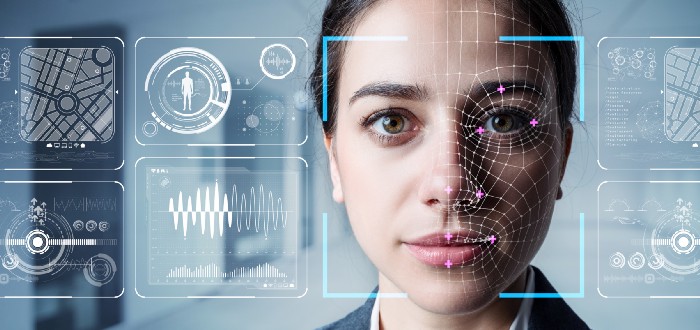
A child watches short videos on a smartphone or tablet while the device’s camera records responses. AI-based computer vision then analyses indicators including eye gaze, facial expressions and movement patterns.
The idea is not that one particular movement or expression proves a child is autistic.
Instead, an algorithm can analyse several behavioural signals together and look for patterns that may indicate that further developmental assessment would be appropriate.
This ability to process several subtle signals at once is one of the main reasons researchers are exploring artificial intelligence for developmental screening.
Smartphones Could Bring Screening Closer to Families
Accessibility may prove to be one of the biggest advantages of AI autism screening.
Traditional specialist assessments can require families to visit clinics equipped with trained developmental professionals. That model can be difficult to scale in areas where those professionals are scarce.
Smartphones and tablets are far more widely available.
Researchers involved in the 2026 Egypt study noted that mobile AI applications could potentially provide low-cost early-stage screening for parents and frontline healthcare providers, particularly in underserved communities.
If clinically validated tools can eventually operate effectively through ordinary mobile devices, autism screening could become easier to incorporate into community clinics, primary healthcare facilities and other settings that do not have specialist teams on site.
The result could be a simpler first step into the healthcare system.
Early Identification Can Connect Children With Support
The reason screening matters is not simply to attach a label to a child.
Screening is intended to identify whether additional developmental evaluation or support may be useful.
The American Academy of Pediatrics recommends autism-specific screening during routine well-child visits at 18 and 24 months, alongside ongoing developmental surveillance. Children identified as being at increased developmental risk should be referred for appropriate evaluation, while support for identified developmental delays should not necessarily be postponed while families wait for an autism assessment.
The US Centers for Disease Control and Prevention notes that autism can sometimes be identified at 18 months or younger and that an experienced professional can make a reliable diagnosis by around age two, although many children are diagnosed later.
AI could potentially strengthen this early-identification process by helping healthcare systems recognise which children need closer attention.
AI Could Help Clinicians Detect Subtle Behavioural Patterns
Human observation remains essential in developmental care, but behaviour can be complex.
Some differences are subtle, while others appear differently depending on the situation, environment or individual child.
AI systems can analyse large numbers of measurements quickly and consistently.
Duke researchers developing SenseToKnow say computer vision can detect small variations in behaviour by analysing how young children respond to carefully designed videos. The system measures several signals rather than relying on a single behaviour.
A growing body of research is examining similar approaches involving machine learning, computer vision and other forms of artificial intelligence.
A 2025 review of AI-assisted methods for young children found growing research interest in applying the technology to early autism screening, diagnostic support and intervention.
The important word, however, is support.
AI may help clinicians interpret information, but developmental assessment still requires professional judgement and a broader understanding of the individual child.
AI Autism Screening Is Not the Same as Diagnosis
This is one of the most important limitations to understand.
A screening result does not confirm that someone is autistic.
Screening identifies whether characteristics are present that justify closer assessment. A positive result can also be associated with developmental differences other than autism, meaning further evaluation is necessary.
Researchers therefore generally describe AI systems as tools that could augment existing healthcare processes rather than independently determine a diagnosis.
Even highly accurate results in research settings do not automatically mean a system will perform equally well across different countries, languages and populations.
A 2026 review of artificial intelligence in autism research found promising progress in early detection and behavioural analysis but also highlighted persistent weaknesses involving external validation, representative datasets and inconsistent performance measures.
Those limitations need to be addressed before widespread clinical deployment.
Different Populations Could Challenge AI Models
Artificial intelligence learns from data.
That creates both its power and one of its biggest risks.
If an autism screening system is trained mainly on children from one population, its performance may change when it encounters children with different cultural backgrounds, languages or behavioural environments.
Researchers examining AI-assisted screening in Egypt therefore stressed the importance of local cultural adaptation rather than assuming that a model developed elsewhere can simply be transferred into another healthcare system.
This matters because social communication is influenced by cultural expectations.
A behaviour interpreted one way in one community may have a different context elsewhere.
AI developers will therefore need diverse datasets and careful clinical validation before claiming that a tool works equally well across populations.
Parents and Doctors Need to Trust the Technology
Accuracy alone may not determine whether AI autism screening succeeds.
Families also need to understand what the technology does.
Healthcare workers need confidence that its results are useful, while health systems must establish clear rules governing who can access the data and how results influence referrals.
Participants in the Egypt study raised issues involving privacy, transparency, trust and the need to keep healthcare professionals involved in the process. Researchers concluded that successful implementation would require much more than simply producing an accurate algorithm.
This human side of AI healthcare is sometimes overlooked.
A technically impressive tool may still fail if parents find it confusing or healthcare workers do not trust its recommendations.
Privacy Will Be a Major Concern
Many AI screening systems rely on sensitive information.
Depending on the technology, this might include video of a child, facial information, movement data or questionnaire responses.
That makes privacy particularly important.
Healthcare providers and technology developers will need to establish how information is collected, stored, analysed and deleted.
Parents should also understand what they are consenting to and whether their child’s information could be used to improve future AI models.
The 2026 study in Egypt identified ethical safeguards and transparency as central requirements for public acceptance of AI-powered screening.
As these tools move closer to routine healthcare, data protection is likely to become just as important as algorithmic performance.
Researchers Are Still Testing AI Autism Screening
Despite its promise, AI autism screening remains an evolving field.
Duke researchers are currently seeking US Food and Drug Administration clearance for SenseToKnow. As part of that process, the team is conducting a study involving 200 children without an autism diagnosis and 150 children with an autism diagnosis through Duke Primary Care.
That continuing validation demonstrates why caution is necessary.
Promising research results are only one stage in bringing a medical technology into everyday use.
Researchers must establish whether systems work consistently in real healthcare settings, whether they produce too many false positives or missed cases, and whether clinicians can use the results appropriately.
Regulatory oversight may also be required depending on how a system is marketed and used.
AI Could Help Areas With Few Specialists
The greatest potential impact may ultimately be seen in places where specialist developmental services are hardest to reach.
Imagine a community health clinic that does not have an autism specialist.
Instead of waiting until a specialist happens to visit, a trained health worker could potentially use a validated digital screening tool during a routine appointment.
If the system identifies developmental concerns, the child could then be referred for further assessment.
That would not eliminate the need for specialists.
It could help specialists concentrate their limited time on children who have already been identified as needing closer evaluation.
The Egypt research suggests this type of approach could be particularly relevant in low- and middle-income countries where specialist shortages and fragmented referral systems contribute to delayed access.
The Future Is Likely to Be AI Plus Clinicians
The most realistic future for AI autism screening is probably not a choice between artificial intelligence and doctors.
It is a combination of both.
AI can process behavioural information quickly and consistently. Healthcare professionals can interpret those results alongside developmental history, family observations and the wider circumstances of an individual child.
Used carefully, that combination could make screening more accessible without reducing a complex developmental assessment to an algorithm.
Research still needs to prove that emerging systems are accurate across diverse populations, protect sensitive information and fit safely into existing clinical pathways.
But the potential is significant.
If researchers and healthcare systems can solve those challenges, AI autism screening could eventually make an important first step in developmental care available to many more families — including those who currently live far from specialist services.