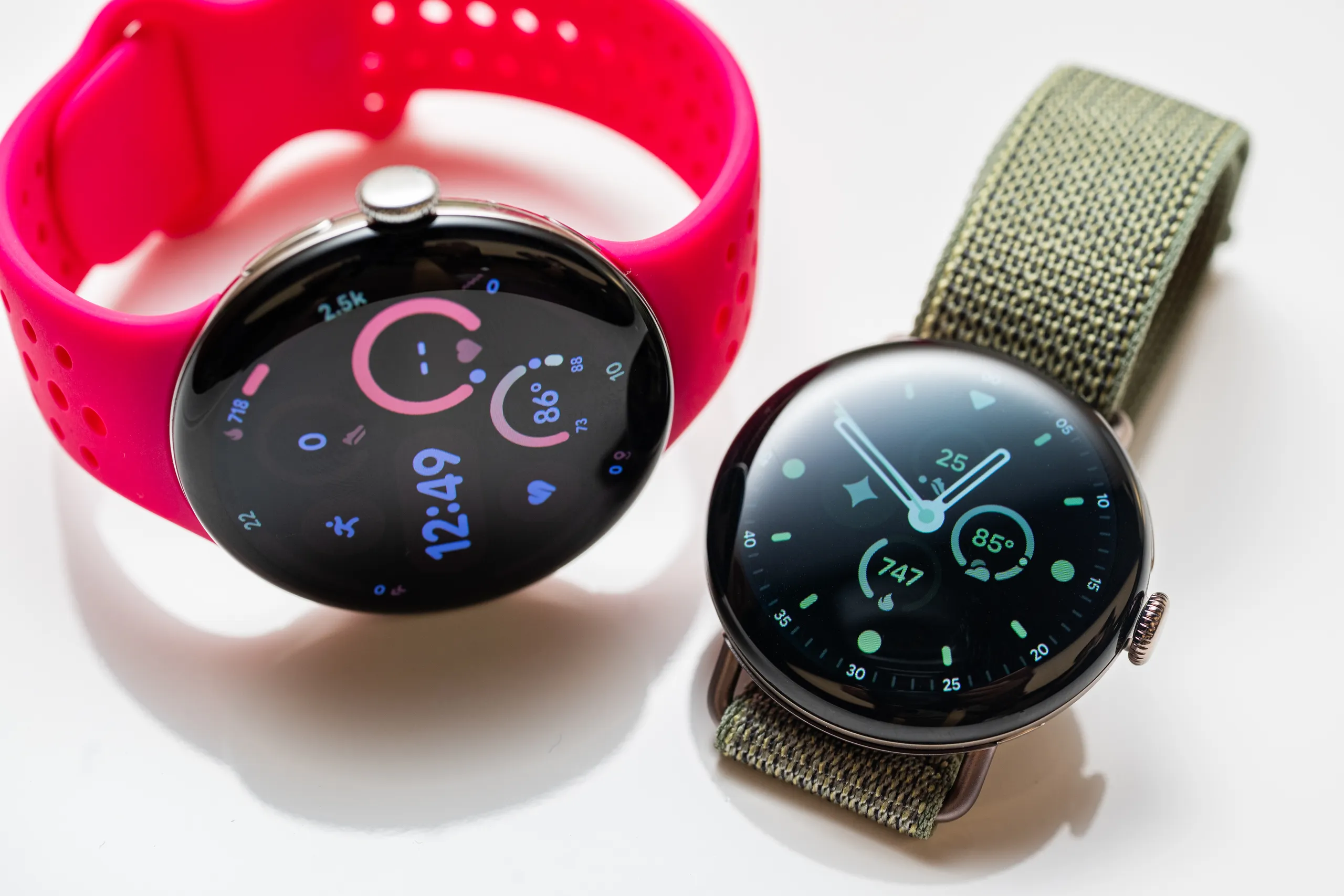
Google is taking its smartwatch ambitions deeper into artificial intelligence and health with the Pixel Watch 5, introducing more proactive Gemini features alongside new tools designed to identify subtle changes in a user’s wellbeing.
Unveiled at Google’s Made by Google event on August 12, 2026, the Pixel Watch 5 builds on the familiar circular design of its predecessor rather than attempting a dramatic hardware reinvention. The bigger changes are happening underneath the surface, where Google is combining faster processing, on-device AI and increasingly sophisticated health models.
Google says the new watch can surface useful information before users actively search for it, interact with Gemini with lower latency and monitor longer-term health patterns involving areas such as sleep breathing, blood pressure and metabolic health.
The result is a smartwatch that increasingly wants to move beyond counting steps and displaying notifications. Google wants the Pixel Watch 5 to become a device that understands context, watches for meaningful health changes and offers assistance at the moment it believes a user needs it.
Pixel Watch 5 Puts Gemini AI Closer to the Wrist
Artificial intelligence is central to Google’s pitch for the Pixel Watch 5.
Gemini was already available on Google’s previous smartwatch generation, but the company is now trying to make those interactions faster and more proactive.
One of the biggest changes involves Raise to Talk. Users can raise their wrist and speak to Gemini without manually opening an app. Google says commonly requested actions can now be processed with lower latency, with some core functions handled on-device and available even without an internet connection.
That means a user could raise their wrist to start a workout or set a timer without navigating through menus.
Google is also expanding At a Glance, which places context-sensitive information directly on the watch face.
For example, the Pixel Watch 5 can surface a boarding pass as a traveller reaches an airport or show how many stops remain during a commute.
The goal is to reduce the number of times people have to stop what they are doing, open an app and search for information themselves.
Proactive Gemini Suggestions Push AI Further
Perhaps more significant is Google’s move toward proactive AI.
Gemini Intelligence Proactive Suggestions attempts to predict which information or action might be useful based on context.
Google gives the example of someone receiving a message asking about the timing of a family dinner. Gemini can locate the relevant calendar information and place an actionable suggestion on the watch rather than requiring the user to search manually.
The wearer can then respond using one-handed controls, including a double-pinch gesture.
It represents a wider shift taking place across Google’s devices.
Instead of AI waiting for a direct question, the company increasingly wants Gemini to understand personal context and offer assistance before users explicitly request it.
That approach could make smartwatches particularly suitable for proactive AI because the device is almost always attached to the wearer.
But it also means the usefulness of these features will depend heavily on how accurately Gemini understands context and whether users are comfortable allowing it to connect information across services.
Google notes that Gemini features can vary by country and language and warns users to check responses for accuracy.
Faster Hardware Supports Pixel Watch 5 AI Features
The deeper AI integration is supported by updated hardware.
Pixel Watch 5 uses Qualcomm’s Snapdragon W5 Gen 2 Accelerated processor alongside Google’s dual-chip architecture.
Google says the watch has 50% more RAM than the Pixel Watch 4 and delivers a 12% CPU improvement, contributing to an overall performance increase of around 20%.
Those improvements may sound modest compared with yearly smartphone processor jumps, but responsiveness matters considerably on a smartwatch.
People generally interact with watches for only a few seconds at a time. Waiting several seconds for an assistant to respond can make a feature feel inconvenient enough that users simply reach for their phones instead.
Google is therefore using the additional processing power partly to make Gemini interactions feel immediate.
Pixel Watch 5 Takes Health Monitoring Further
Health is where Google is making some of its most ambitious Pixel Watch 5 claims.
The watch introduces Google’s new Health Guardian system, a collection of AI-powered features designed to monitor physiological patterns quietly in the background.
Google says Health Guardian uses sensor-based foundation models trained on enormous amounts of anonymised, opted-in wearable information to identify subtle patterns that may otherwise be difficult for users to notice.
The company is initially focusing on four areas: blood pressure trends, insulin resistance trends, sleep breathing quality and breathing emergencies.
The important distinction is that most of these tools are intended to identify trends rather than provide medical diagnoses.
Google specifically states that the blood pressure, insulin resistance and sleep breathing features are wellness tools and should not be used to diagnose conditions or make decisions about medication or treatment.
Blood Pressure Trends Without a Traditional Cuff
One of the most interesting additions is Blood Pressure Trends.
Instead of requiring users to manually take blood pressure readings with an inflatable cuff, Google says compatible devices can analyse pulse and motion patterns collected throughout the month to identify persistent changes in cardiovascular trends.
The system is not designed to display a conventional clinical blood pressure reading.
Rather, Google describes it as a way to highlight longer-term shifts that could encourage a user to check their blood pressure with a proper monitor or speak with a healthcare professional.
That distinction matters.
The Pixel Watch 5 is not replacing medical blood pressure equipment, and Google explicitly warns users against relying on the feature for hypertension management or medication decisions.
Still, passive monitoring could become an important direction for wearable technology if it can reliably identify meaningful trends without requiring users to perform daily measurements.
Pixel Watch 5 Tracks Insulin Resistance Trends
Google is also introducing Insulin Resistance Trends, another feature built around long-term sensor data rather than individual clinical measurements.
Insulin resistance refers to how effectively the body responds to insulin when managing energy from food.
Google says its system analyses several weeks of physiological information to look for changes associated with metabolic health without requiring a blood sample.
The feature is based on a large sensor foundation model trained using more than one trillion minutes of information from approximately five million opted-in users, according to Google. The company says its research was validated against standard clinical blood tests.
Again, Google stresses that the feature does not diagnose diabetes, measure glucose in real time or replace professional medical assessment.
Instead, it is intended to help users notice broader metabolic patterns.
Sleep Breathing Quality Adds Another Health Signal
Sleep tracking has been a major part of modern smartwatches for years, but Google is expanding the type of information it wants users to receive.
Sleep Breathing Quality Trends estimates how consistently a person’s breathing remained within an optimal range while they slept.
Users can see daily information, while longer-term patterns are combined into monthly assessments.
Google says the feature could help users recognise changes connected with their sleep environment or general wellness and provide additional information they can discuss with a healthcare professional when necessary.
The company is careful not to describe it as a sleep-apnea diagnostic tool.
That cautious positioning reflects the difficult line wearable manufacturers increasingly have to navigate as consumer devices begin collecting information that resembles medical data.
Breathing Emergency Detection Could Call for Help
Breathing Emergency Detection is one of the more unusual Pixel Watch 5 additions.
The feature uses several sensors, including optical heart-rate technology, motion sensors and a barometer, alongside on-device AI to look for severe and sustained reductions in oxygen saturation.
If the watch believes a breathing emergency is occurring and detects that the wearer has become unresponsive, it can automatically contact emergency services and provide the person’s location. The feature is launching first in selected European markets.
Google says the system was designed for situations where a person may be unable to call for assistance themselves.
However, the company also provides significant limitations.
Breathing Emergency Detection may not identify every emergency, is not intended for people with certain existing respiratory or cardiovascular conditions, and depends on factors such as sensor readings, connectivity and device battery. Google says the feature has not been cleared or evaluated by the US Food and Drug Administration and is initially being offered in certain European markets.
Google Health Coach Connects the Data
Collecting health information is only useful if people understand what it means.
That is where Google Health Coach enters the picture.
Powered by Gemini, the AI coach can combine information involving activity, sleep, nutrition and other health metrics to provide personalised explanations and recommendations.
Instead of simply telling someone that their sleep or heart-rate variability changed, Google wants the Coach to interpret those measurements alongside the person’s routines and goals.
For instance, the Coach could consider recovery information and suggest changing a planned intense workout when conditions indicate that a lighter session might be more suitable.
Users can also ask questions directly through Google Health.
The Coach can create personalised exercise plans, adapt weekly targets and explain patterns found in health data.
Google Health Premium is required for some coaching features and costs $9.99 per month or $99 annually in the US, although availability and pricing can vary by market.
Strength Training Gets More Attention
Smartwatches traditionally perform particularly well at tracking running, cycling and other cardiovascular exercises.
Strength training is harder.
Counting repetitions, recognising different exercises and understanding rest periods can be more complicated than measuring distance or running pace.
Google is trying to improve that experience with an upcoming on-wrist Strength Training mode.
Pixel Watch 5 will provide step-by-step workout guidance, track sets and rest periods, and make it easier for users to record weights and repetitions during sessions.
Google Health Coach can also generate strength-training routines based on personal goals, while users can create their own workouts through the Google Health app.
The feature is not immediately available at launch, however, with Google describing it as coming soon.
Pixel Watch 5 Gets More Accurate GPS
Google is also putting considerable emphasis on location accuracy.
Pixel Watch 5 delivers what Google describes as its most accurate GPS route tracking yet, claiming roughly twice the accuracy of previous Pixel Watch generations in difficult environments.
The company is using some of the technology developed for Google Maps to improve positioning.
The system can model how satellite signals travel around three-dimensional buildings and account for atmospheric conditions using weather reference stations.
This matters most in places where conventional GPS struggles, such as streets surrounded by tall buildings or trails with significant overhead coverage.
Google says internal testing found Pixel Watch 5’s route tracking performed better than the Apple Watch Ultra 3 and Garmin Fenix 8 Pro in certain challenging urban conditions. That comparison is based on Google’s own testing using pre-production watches, so independent real-world reviews will be important before treating it as definitive.
Sleep Tracking Becomes More Accurate
Google has also refined the watch’s sleep analysis.
The company says its latest algorithm improves sleep-stage accuracy by about 15% compared with its previous generation when evaluated against clinical reference measurements.
A new Smart Wake function monitors heart rate and movement during the 30 minutes before a scheduled alarm.
If it identifies a lighter stage of sleep, the watch can wake the wearer earlier within that window rather than waiting until the exact alarm time.
Google is also introducing bedtime automations, including the ability to pause audio content when the system detects that the wearer has fallen asleep.
These may be smaller improvements than the new Health Guardian features, but they reinforce Google’s strategy of making the watch respond automatically to what its sensors believe is happening.
Familiar Design, With New Colours
Anyone expecting a radical redesign may be disappointed.
The Pixel Watch 5 retains Google’s rounded, domed smartwatch appearance.
The Verge described the hardware changes as relatively modest, with Google’s biggest upgrades concentrated in AI, health and software rather than a dramatic new physical design.
Google’s Actua 360 display reaches a claimed peak brightness of 3,000 nits.
The watch also adds 11 new complication styles, two new watch faces and AI-generated watch faces that can be personalised using generative technology.
New finishes include Fog and Olive, while Canyon is exclusive to the smaller 41mm version. Google is also offering a new Pyrite housing option.
Battery Life Depends on the Size
Pixel Watch 5 remains available in 41mm and 45mm versions.
Google rates the 41mm model for up to 30 hours of battery life, while the larger 45mm version can reach up to 40 hours. Actual endurance will depend on features and usage.
Those figures suggest battery life remains an area where Google is taking an incremental rather than revolutionary approach.
The watch supports fast charging, although charging speeds can depend on the adapter, battery condition and environmental factors.
Google is also highlighting a more repairable architecture, an increasingly important consideration for expensive wearable devices whose batteries naturally degrade over time.
Pixel Watch 5 Price Starts at $399
The deeper AI and health push comes with a higher entry price than last year’s base model.
The Pixel Watch 5 starts at $399 for the 41mm version and $429 for the 45mm model. Google opened pre-orders on August 12, with general availability scheduled for August 20, 2026.
The Verge also notes that the standard Watch 5 now begins at $399, putting additional pressure on Google to demonstrate that its software and health improvements justify the price.
A Stephen Curry Special Edition will cost $579 and is scheduled to reach stores on September 3. It comes in the 45mm size with an exclusive performance-oriented band.
The Pixel Watch 5 works with most phones running Android 12 or newer, although some capabilities depend on region, subscriptions and Google services.
Health Features Come With Important Limits
Google’s increasingly ambitious health technology also makes the fine print more important.
Blood Pressure Trends is not a replacement for a blood pressure monitor.
Insulin Resistance Trends cannot diagnose diabetes or monitor glucose.
Sleep Breathing Quality is not a diagnostic test for sleep apnea.
Breathing Emergency Detection cannot guarantee that every emergency will be detected.
The company repeatedly describes these tools as wellness or informational features rather than substitutes for healthcare professionals.
This may ultimately become one of the defining challenges facing the entire wearable industry.
As watches become capable of identifying increasingly sophisticated physiological patterns, manufacturers must communicate useful information without creating the impression that consumer electronics can independently diagnose complex medical conditions.
Pixel Watch 5 Shows Where Wearables Are Heading
The Pixel Watch 5 may look familiar, but Google’s priorities for the device have changed considerably.
The smartwatch is becoming less about simply recording what happened and more about predicting what the wearer might need next.
Gemini can surface contextual information before users ask for it. Health Guardian looks for subtle physiological patterns over weeks. Google Health Coach attempts to turn those measurements into understandable recommendations.
That combination hints at where Google believes wearable technology is heading.
The next generation of smartwatches may not compete primarily on how many apps they can run or how many notifications they can display.
Instead, competition could increasingly centre on which device can make the best sense of continuous streams of personal data while interrupting users as little as possible.
Pixel Watch 5 is Google’s clearest attempt yet to build that kind of wearable.
Its biggest advances are therefore not necessarily visible when someone first puts it on their wrist. They are in the AI models running quietly behind the scenes — analysing workouts, sleep, location, health signals and context in an effort to make the watch more useful before its owner even asks.
Whether that approach proves genuinely helpful will depend on accuracy, privacy, regional availability and how well Google avoids overwhelming users with unnecessary suggestions.
But with Pixel Watch 5, Google’s direction is unmistakable: the smartwatch is no longer intended simply to track your day. It increasingly wants to understand it.