The U.S. Air Force has taken another major step toward autonomous air combat after an AI fighter jet completed 27 intercepts against a crewed aircraft during a series of flight tests.
The experiments involved the X-62 Variable In-Flight Simulator Test Aircraft, commonly known as VISTA. The heavily modified F-16D used artificial intelligence and live infrared sensor information to locate, track and intercept a T-38 Talon in real time.
According to the Air Force and Lockheed Martin, the intercepts were completed during eight flights at Edwards Air Force Base in California. The testing program, known as HAVE HEAT, concluded in April 2026.
AI Fighter Jet Uses Live Sensor Data
The latest trials were designed to show how an AI fighter jet could process information from onboard sensors and respond without relying on a human operator to identify the target.
The X-62 carried Lockheed Martin’s Legion Pod, an infrared search-and-track system capable of detecting and following airborne targets.
Artificial intelligence agents processed information from the pod and used it to guide the aircraft through each intercept. This allowed the system to connect sensor information directly with aircraft movement and decision-making.
The Air Force said the technology interpreted live infrared data and directed the X-62 toward the target while both aircraft were in flight.
Major Advance From Earlier AI Tests
The latest experiments represented a significant improvement over autonomous flight tests conducted in 2024.
During the earlier trials, human operators identified and locked onto targets while artificial intelligence controlled the aircraft’s movements. In the new tests, the AI system handled both target identification and aircraft control.
This meant the X-62’s autonomous system could process sensor information, select its target and carry out the required maneuvers.
Air Force officials described the achievement as an important step toward combining artificial intelligence, sensors and aircraft controls into a single autonomous mission system.
Lockheed Martin said its Skunk Works team integrated the AI agent into the X-62 and completed the required ground testing within three months.
AI Fighter Jet Supports Autonomous Aircraft Plans
The testing could help shape the Air Force’s Collaborative Combat Aircraft program.
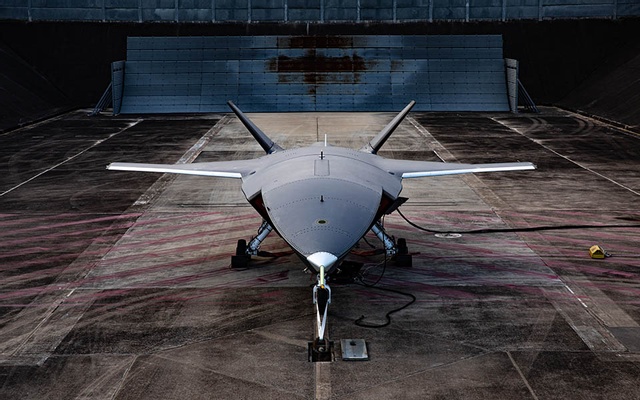
Collaborative Combat Aircraft are being developed as uncrewed aircraft that can fly alongside conventional fighter jets. They are expected to maneuver independently while following broader instructions from pilots in crewed aircraft.
These aircraft could support missions involving surveillance, electronic warfare, weapons deployment and protection of crewed fighters.
The successful X-62 tests suggest that future autonomous aircraft may be able to use their own sensors to detect threats and respond quickly during complicated missions.
However, the planned Collaborative Combat Aircraft will remain under human direction rather than operating with complete independence.
New Safety Systems Evaluated
The Air Force also conducted a separate testing program known as HAVE HOLIDAYS.
During that effort, engineers connected several modular technologies to the X-62’s Enterprise Open Mission Systems Architecture computer. The technologies included advanced sensors and an autonomous agent developed by an unnamed contractor outside the group of major defense companies.
The program focused partly on improving safety controls for autonomous systems.
Open mission-system architecture allows the Air Force to test and replace software, sensors and other technologies more quickly. This could shorten the time needed to evaluate new autonomous capabilities.
Powerful New Radar Planned for X-62
The X-62 is also undergoing a broader Mission Systems Upgrade that will expand its computing power, sensor capabilities and data communications.
As part of the modernization, engineers have begun integrating RTX’s PhantomStrike radar into the aircraft.
PhantomStrike is a compact active electronically scanned array radar designed to operate with lower power requirements. AESA radar technology can electronically direct radar beams without physically moving the antenna.
Installation, integration and ground testing are expected to continue through the end of 2026. The Air Force also plans to conduct a limited number of flight tests before more advanced evaluations begin in early 2027.
Future of AI-Controlled Combat Aircraft
The X-62 program is helping the Air Force study how artificial intelligence could support pilots and improve the performance of uncrewed aircraft.
Although the current aircraft is primarily a research and testing platform, the results could influence the design of future combat systems.
The ability of an AI fighter jet to interpret live sensor information and carry out an intercept marks an important move beyond computer simulations and controlled laboratory testing.
Future experiments are expected to examine how autonomous aircraft respond to more complicated environments, communicate with other aircraft and operate under human command.
For the Air Force, the goal is not simply to create an aircraft that can fly without a pilot. It is to develop systems capable of processing information, supporting mission decisions and working safely with crewed fighter jets during real-world operations.