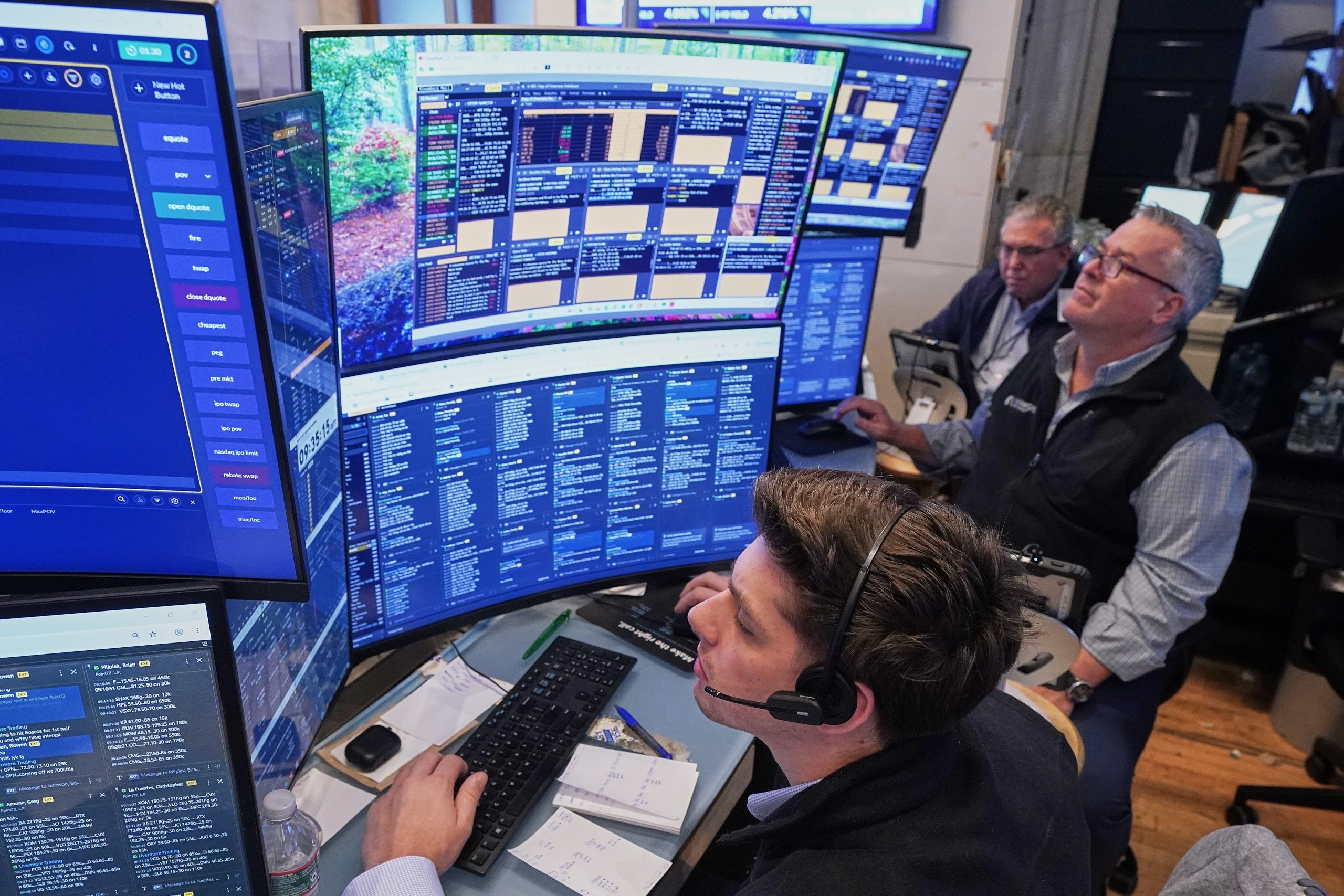
The AI stock rally is gathering fresh momentum on Wall Street, suggesting that the recent recovery in technology shares is about more than the dramatic unwinding of hedge fund Situational Awareness.
Artificial intelligence stocks suffered a sharp setback in July as concerns over stretched valuations, crowded trades and heavy leverage collided with a broader pullback in technology shares. One of the most visible casualties was Situational Awareness, the AI-focused investment firm founded by former OpenAI researcher Leopold Aschenbrenner.
The fund lost 67% of its portfolio value in July and was forced to unwind most of a roughly $16 billion public equities book. Citadel, the investment firm founded by Ken Griffin, stepped in and acquired a significant part of the portfolio.
That episode added unusually strong selling pressure to some AI-linked stocks. But with much of that forced liquidation now behind the market, investors are increasingly looking again at the fundamental forces supporting artificial intelligence spending.
And those forces remain substantial.
AI stock rally strengthens after July shakeout
Wall Street’s recovery has accelerated in early August.
The S&P 500 reached an all-time closing high this week after a powerful technology-led rebound. Over four trading sessions ending Tuesday, the benchmark gained 5.75%, its strongest four-day advance since April 2025.
Technology and semiconductor companies have been central to that comeback.
On Friday, U.S. equities advanced again, with technology shares helping lift the major indexes after weaker employment data reduced some concerns that the Federal Reserve would need to tighten monetary policy further. Nvidia and Broadcom were among the technology names contributing to the advance.
The move suggests investors are becoming more willing to return to companies linked to AI infrastructure after several weeks of aggressive selling.
It also strengthens the argument that July’s correction may have reflected positioning and leverage problems as much as deteriorating confidence in artificial intelligence itself.
Situational Awareness unwind removes a major pressure point
Situational Awareness had become one of Wall Street’s most closely watched AI-focused investment firms.
Its strategy included large positions linked to the infrastructure required to develop and operate advanced artificial intelligence systems. But when several of those investments moved sharply against the fund, heavy losses triggered a rapid reduction in exposure.
The portfolio fell 67% in July, forcing the firm to unwind most of its approximately $16 billion public stock portfolio. Citadel moved quickly to acquire part of those holdings after analyzing the portfolio and its liquidity.
For the wider market, the importance of the episode extends beyond one hedge fund.
A large investor that is forced to sell does not necessarily sell because the outlook for every company has deteriorated. Positions may be liquidated simply because the fund needs cash, must reduce leverage or has to satisfy risk requirements.
That distinction matters.
When forced selling becomes intense, even companies with strong underlying businesses can experience unusually sharp price declines.
Once that pressure fades, prices can recover rapidly as traditional investors return to the market.
That appears to be one factor behind the renewed AI stock rally.
Strong earnings support the AI stock rally
The bigger argument for AI shares, however, remains corporate spending.
Major technology companies continue investing heavily in data centers, networking equipment, chips, power systems and other infrastructure needed to support increasingly powerful AI models.
Those investments are producing substantial revenue for companies positioned within the AI supply chain.
Broadcom offers one example.
The semiconductor and infrastructure technology company reported second-quarter fiscal 2026 revenue of $22.19 billion, an increase of 48% from a year earlier.
More importantly for the AI market, Broadcom said revenue from AI semiconductors reached $10.8 billion during the quarter, up 143% year over year.
The company forecast roughly $16 billion in AI semiconductor revenue for its third quarter, representing expected growth of more than 200% from the same period a year earlier.
Those numbers help explain why investors remain reluctant to abandon the AI investment theme despite concerns about valuations.
AI is no longer simply a story about future potential. Billions of dollars are already flowing through the semiconductor, networking, cloud-computing and data-center industries.
Corporate profits are helping too
The recovery is also benefiting from a wider improvement in corporate results.
S&P 500 companies have been reporting earnings that, overall, have exceeded already elevated expectations for a second consecutive quarter.
That has provided investors with another reason to reconsider some of the pessimism that drove July’s technology selloff.
Strong earnings are particularly important because one of the biggest questions surrounding artificial intelligence stocks has been whether profits can eventually justify the enormous amounts being spent on AI infrastructure.
Markets may tolerate high investment when revenue and earnings are growing quickly. They become less forgiving when spending expands faster than evidence of financial returns.
For now, results from major technology companies continue to provide enough evidence to keep investors interested.
Interest-rate expectations provide another boost
The AI stock rally is also being supported by changes in the broader economic environment.
Friday’s U.S. employment report showed employers unexpectedly cut 23,000 jobs, while earlier job-growth estimates were revised lower.
The report pushed Treasury yields down and eased fears of another near-term Federal Reserve interest-rate increase. The S&P 500 and Nasdaq advanced following the release.
Interest rates are especially important for technology companies.
When bond yields rise, investors can earn more from lower-risk fixed-income assets. That can make highly valued growth stocks less attractive.
Lower yields can have the opposite effect, supporting valuations for companies whose expected profits stretch far into the future.
The market has also benefited from easing U.S.-Iran tensions and lower oil prices, which have reduced some inflation concerns.
Semiconductor stocks remain far from risk-free
Despite the improving mood, investors have not completely forgotten the lessons of July.
Semiconductor shares remain highly volatile.
The Philadelphia Semiconductor Index has gained about 70% in 2026, reflecting enormous enthusiasm around AI infrastructure. Yet the index was still more than 17% below its late-June peak as of this week.
That gap shows how quickly sentiment can change.
The same companies that benefit most when investors become optimistic about AI spending can experience some of the largest declines when expectations change.
Valuation remains another concern.
Investors are paying high prices for many businesses expected to benefit from artificial intelligence. Those valuations assume years of strong demand for computing capacity, memory, networking hardware, electricity and data-center infrastructure.
Any evidence that large technology companies are slowing AI investment could therefore trigger another rapid reassessment.
AI trade is becoming broader
Another important development is the widening definition of an “AI stock.”
The first phase of the artificial intelligence boom was dominated by companies producing advanced processors.
The investment story has since expanded.
Investors are increasingly looking at memory manufacturers, networking specialists, optical-component makers, data-center operators, power suppliers and companies developing the infrastructure required to connect huge computing clusters.
That broader ecosystem could make the AI trade more durable.
Instead of depending entirely on a handful of semiconductor companies, investment can rotate between different parts of the AI infrastructure chain as spending patterns change.
At the same time, this creates another challenge: not every company that benefits from AI investment will ultimately generate attractive returns for shareholders.
Investors are becoming more selective.
What comes next for the AI stock rally?
The next major test will come from economic data and corporate earnings.
U.S. inflation figures are due next week and could significantly influence expectations for Federal Reserve policy.
Economists surveyed by Reuters expect headline consumer inflation of 3.4% year over year. Markets will watch closely for any surprise that could revive expectations of higher interest rates.
Technology investors will also receive new corporate signals.
Applied Materials, Cisco and CoreWeave are among companies scheduled to report results, providing fresh information about semiconductor equipment, networking demand and AI cloud infrastructure.
The key question will be whether demand continues to justify the huge amounts of capital moving into the sector.
For now, the evidence suggests the AI stock rally cannot be explained by the Situational Awareness unwind alone.
Removing a large forced seller may have helped stabilize some of the hardest-hit stocks. But improving earnings, continuing AI infrastructure investment, lower Treasury yields and renewed confidence in technology companies are giving the recovery a broader foundation.
That does not eliminate the risks.
Artificial intelligence stocks remain expensive, volatile and extremely sensitive to changing expectations.
But after July’s dramatic shakeout, Wall Street appears increasingly willing to make a distinction between excessive leverage in one investment portfolio and the longer-term economic opportunity surrounding artificial intelligence.
For the AI trade, that distinction could prove crucial.