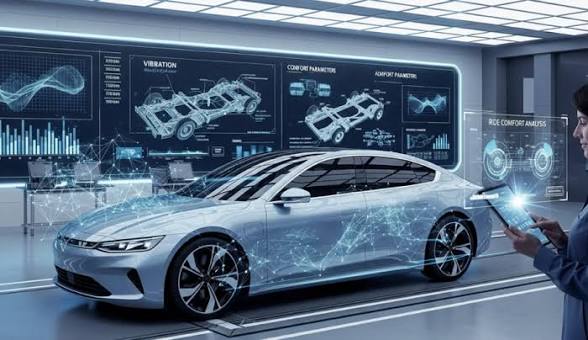
AI vehicle diagnostics are changing how drivers maintain their vehicles by detecting problems before they become expensive repairs. Powered by artificial intelligence and machine learning, modern diagnostic systems continuously analyze data from connected vehicles, helping improve safety, reliability, and overall driving performance.
As today’s vehicles become increasingly digital, AI vehicle diagnostics are allowing manufacturers and service providers to identify mechanical issues earlier, reduce maintenance costs, and deliver a more convenient ownership experience.
What Are AI Vehicle Diagnostics?
Unlike traditional diagnostic systems that react only after a warning light appears, AI vehicle diagnostics continuously monitor a vehicle’s health in real time.
Modern cars contain hundreds of sensors that collect information on engine performance, braking systems, battery health, transmission operation, suspension, steering, tire pressure, and numerous electronic components. Artificial intelligence processes this data to identify unusual patterns that could indicate an emerging fault.
Rather than simply displaying an error code, AI systems can estimate the seriousness of an issue, determine its likely cause, and recommend the most appropriate maintenance action.
How AI Vehicle Diagnostics Improve Reliability
One of the greatest strengths of AI vehicle diagnostics is continuous monitoring.
Instead of waiting for a component to fail, AI compares live vehicle data with normal operating conditions. When performance begins to deviate from expected patterns, drivers receive an early warning before the problem develops into a major mechanical failure.
Early detection offers several benefits, including:
- Fewer unexpected breakdowns.
- Lower repair costs.
- Improved vehicle reliability.
- Longer component lifespan.
- Greater peace of mind for drivers.
This proactive approach helps reduce costly emergency repairs while keeping vehicles operating efficiently.
Predictive Maintenance Replaces Fixed Service Schedules
AI vehicle diagnostics are transforming maintenance from a time-based routine into a condition-based service model.
Rather than servicing a vehicle according to mileage alone, artificial intelligence evaluates actual component wear using information such as:
- Driving habits.
- Road conditions.
- Climate.
- Vehicle performance.
- Operating history.
For example, AI may identify gradual brake wear, declining battery performance, or reduced engine efficiency weeks before traditional inspections would detect these issues.
This enables maintenance to be carried out precisely when needed, improving both efficiency and vehicle longevity.
Faster Repairs With Artificial Intelligence
AI vehicle diagnostics also benefit repair technicians.
Instead of manually inspecting multiple systems to locate a fault, technicians can review AI-generated diagnostic reports that identify the most likely source of a problem based on live sensor data and previous repair records.
This significantly shortens diagnostic time while improving repair accuracy.
Drivers benefit from quicker service appointments and reduced vehicle downtime.
Remote Diagnostics Make Vehicle Ownership Easier
Many modern vehicles now support remote diagnostics through connected car technology.
When an issue is detected, diagnostic information can be transmitted securely to manufacturers or authorized service centers before the vehicle even arrives for inspection.
Drivers may also receive notifications through smartphone apps, including:
- Maintenance reminders.
- Software update alerts.
- Service scheduling recommendations.
- Early fault warnings.
This level of connectivity makes maintaining a vehicle more convenient while reducing the likelihood of unexpected failures.
AI Vehicle Diagnostics Support Electric Vehicles
AI vehicle diagnostics play an increasingly important role in electric and hybrid vehicles.
Battery systems are among the most valuable and complex components in electric cars. Artificial intelligence continuously monitors battery temperature, charging efficiency, energy consumption, and overall battery health.
If abnormal behavior is detected, the system alerts the driver early, helping prevent reduced performance or long-term battery damage.
These capabilities contribute to improved battery lifespan, enhanced efficiency, and greater vehicle safety.
AI Improves Road Safety
Vehicle reliability has a direct impact on road safety, and AI vehicle diagnostics help reduce risk through early fault detection.
Artificial intelligence can identify developing issues involving:
- Braking systems.
- Steering components.
- Suspension.
- Tire pressure.
- Battery performance.
- Engine operation.
Receiving advance notice allows drivers to schedule repairs before minor problems become serious safety hazards.
Software Updates Continue Improving Vehicles
Many manufacturers now deliver over-the-air software updates that enhance vehicle performance without requiring a dealership visit.
AI vehicle diagnostics help identify software improvements that can increase efficiency, strengthen system monitoring, improve security, and even introduce new vehicle features.
This allows vehicles to remain technologically up to date throughout their lifespan.
Human Technicians Remain Essential
Although AI vehicle diagnostics provide highly accurate insights, experienced technicians continue to play a critical role.
Artificial intelligence can detect abnormalities and recommend possible solutions, but skilled professionals are still needed to confirm diagnoses, perform repairs, and ensure every vehicle meets safety standards before returning to the road.
The most effective maintenance combines AI-driven analysis with expert human judgment.
The Future of AI Vehicle Diagnostics
Artificial intelligence will continue reshaping vehicle maintenance as connected and autonomous technologies become more advanced.
Future AI vehicle diagnostics are expected to:
- Predict failures with even greater accuracy.
- Schedule maintenance automatically.
- Communicate directly with nearby service centers.
- Continuously improve through cloud-based learning.
- Enhance electric vehicle battery management.
These innovations will reduce downtime, lower maintenance costs, and make vehicle ownership increasingly convenient.
Conclusion
AI vehicle diagnostics are redefining modern automotive maintenance by helping drivers identify problems before they lead to costly repairs. Through continuous monitoring, predictive maintenance, remote diagnostics, and intelligent repair recommendations, artificial intelligence is making vehicles safer, more reliable, and easier to maintain.
As automotive technology continues to evolve, AI vehicle diagnostics will become an essential part of every connected vehicle, giving drivers greater confidence while reducing the complexity of vehicle ownership.