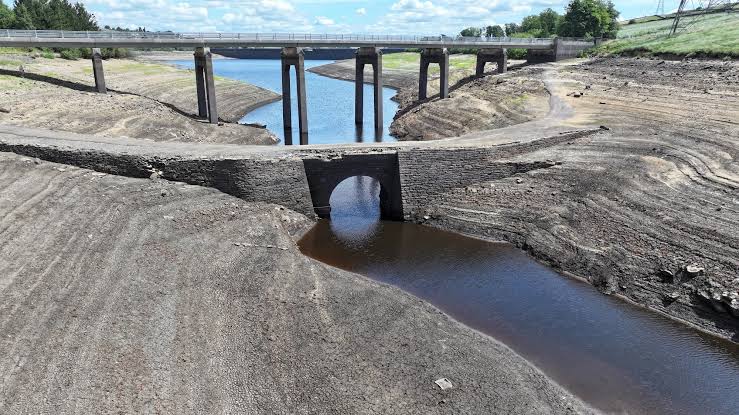
More than half of England is now officially experiencing drought as prolonged heat and exceptionally low rainfall place growing pressure on rivers, farms, wildlife and public water supplies.
The Environment Agency has declared England drought conditions across seven regions covering large parts of central, eastern and southern England. Officials say water is being consumed more quickly than natural rainfall can replace it.
The effects are already becoming visible. Rivers are running low, harvests are beginning earlier than usual and the threat of wildfires remains high. More than 20 million people are also living under hosepipe restrictions.
The declaration comes during another spell of extreme summer weather, with some parts of the country entering their fourth heatwave of 2026.
Seven Regions Enter England Drought Conditions
The Environment Agency has placed seven areas in official drought status:
- East Anglia
- Hertfordshire and all of London
- Thames Valley
- Hampshire and the Isle of Wight
- Devon and Cornwall
- The West Midlands
- Wessex, covering Dorset, Somerset, Wiltshire and South Gloucestershire
Many other areas across southeast, central and northwest England remain under prolonged dry weather status. Much of northeast England is still classified as having normal conditions.
A drought declaration does not automatically mean every home will lose access to water. It signals that authorities are increasing their response to falling water levels and worsening environmental conditions.
Measures may include closer monitoring of rivers and reservoirs, tighter controls on water taken from groundwater sources and additional restrictions on household consumption.
Water companies may also introduce hosepipe bans in places where restrictions are not already operating.
What an England Drought Declaration Means
There is no single measurement used to define a drought.
The Environment Agency considers several factors, including rainfall levels, river flows, reservoir storage, groundwater supplies and the effects on agriculture and the natural environment.
A drought can develop when unusually dry weather continues for long enough to affect people, businesses, ecosystems and water availability.
Helen Wakeham, the Environment Agency’s director of water and chair of the National Drought Group, said the country was using water faster than rainfall and natural systems could restore it.
The agency is now increasing its response as conditions become more serious.
Officials are particularly concerned about the speed at which the current drought has developed.
From Wet Winter to Severe Summer Drought
The rapid change in weather has made 2026 especially unusual.
January and February brought heavy rainfall to much of the United Kingdom. That helped restore groundwater and reservoir levels after earlier dry periods.
Conditions then changed sharply during late spring and summer.
High temperatures and very little rainfall caused water reserves in soil, plants and rivers to decline quickly. This sudden movement between unusually wet and extremely dry weather is sometimes described as climate whiplash.
The Environment Agency has characterised the current event as a flash drought because it developed much faster than droughts that emerge gradually over several seasons or years.
Warm weather has made the situation worse by increasing evaporation. Moisture disappears more quickly from soil, vegetation and open water when temperatures remain high for extended periods.
July Rainfall Falls to Extremely Low Levels
England received only 7% of its average July rainfall, according to the figures provided.
The situation was even more severe in southern England, which received just 1% of the rainfall normally expected during the month.
Some locations in Devon and Hampshire went for more than a month without measurable rain.
Will Lang, the Met Office’s chief meteorologist, said the exceptionally warm and dry conditions had continued to cause significant disruption across much of the country.
Rain may reach some regions in early August. However, forecasters have not identified the prolonged and widespread rainfall needed to restore rivers, soils and water reserves.
Brief showers may offer temporary relief, but they are unlikely to reverse drought conditions immediately.
Hosepipe Bans Affect More Than 20 Million People
More than 20 million people are already covered by hosepipe bans as water suppliers attempt to reduce demand.
Restrictions usually limit non-essential outdoor water use, including washing vehicles with a hose, filling paddling pools and watering gardens.
The exact rules can vary between water companies, so households need to check the restrictions operating in their local area.
Hosepipe bans are intended to protect essential supplies during prolonged dry weather. They can also reduce pressure on reservoirs, rivers and groundwater systems.
Authorities are encouraging people to avoid wasting water even in areas without formal restrictions.
Small changes in household use can become significant when millions of people are drawing from the same limited supplies.
England Drought Raises Farming Concerns
The drought is creating serious challenges for farmers and food producers.
Dry soils can reduce crop growth, while limited water supplies make irrigation more difficult and expensive. Some farmers have begun harvesting earlier because crops have matured or dried out faster than expected.
Livestock producers are also dealing with heat stress and declining grass quality.
Paul Tompkins, deputy president of the National Farmers’ Union of England and Wales, said increasingly extreme weather was making food production more difficult, risky and costly.
He described the current conditions as evidence of the effects of climate change on farming.
The union has warned that drought should concern the wider public because prolonged disruption to agriculture can affect national food security.
Lower crop yields and rising production costs may eventually place additional pressure on food supply chains.
Wildfire Danger Remains High
The combination of dry vegetation, low humidity and high temperatures has created favourable conditions for wildfires.
The National Fire Chiefs Council said the wildfire risk remained elevated across the United Kingdom.
More than 200 wildfire incidents were reported in England and Wales during the previous two weeks.
Dry grass and vegetation can allow fires to spread rapidly, particularly when strong winds are present. Fire services have urged the public to avoid activities that could accidentally ignite surrounding land.
Discarded cigarettes, barbecues and poorly extinguished fires can all create serious risks during dry weather.
The danger is especially high in woodland, farmland, parks and areas of open grass.
Fourth Heatwave Brings Temperatures Near 35C
Parts of the United Kingdom have entered their fourth heatwave of the year.
Amber and yellow heat-health alerts have been issued, with temperatures expected to reach about 35C in parts of southeast England.
Periods of extreme heat can increase health risks for older people, young children and those with existing medical conditions.
They also place additional pressure on hospitals, transport networks, farms and energy systems.
The repeated heatwaves are contributing directly to the England drought by drying soils and increasing demand for water.
People tend to consume more water during hot weather, while gardens, farms and public spaces also require additional supplies.
UK June Temperature Record Revised to 38C
The Met Office has confirmed that the United Kingdom’s June temperature record was higher than initially reported.
A temperature recorded in Lingwood, Norfolk, on June 26, 2026, was revised from 37.7C to 38.0C after verification.
The reading comfortably exceeded the country’s previous June record of 35.6C.
The revised figure demonstrates the exceptional intensity of the summer heat.
High temperatures do not create drought on their own, but they can accelerate water loss when combined with low rainfall.
North Wales and Scotland Also Face Water Stress
Dry conditions are affecting other parts of the United Kingdom.
North Wales and the Upper Severn river basin entered official drought conditions during the previous week, according to Natural Resources Wales.
Scotland does not use formal drought declarations in the same way as England and Wales. Instead, the Scottish Environment Protection Agency monitors different levels of water scarcity.
Parts of eastern Scotland have reached the most serious category, known as significant scarcity.
These developments show that water stress is not limited to one part of Britain.
England Drought Is the Third in Five Years
The 2026 drought is England’s third in five years, following similar events in 2022 and 2025.
Droughts occur naturally, but scientists have warned that climate change is increasing their likelihood and severity.
Hotter summers cause soils to dry more quickly. They can also extend the duration of droughts and increase the damage to farming, wildlife and water supplies.
Periods of intense rainfall do not always solve the problem.
When soil becomes extremely dry and hard, heavy rain may run across the surface rather than soaking into the ground. This can create a risk of local flooding while doing little to restore deeper groundwater reserves.
Sustained and moderate rainfall is generally more effective at replenishing rivers, reservoirs and soils.
What Happens Next
The outlook will depend on how much rain falls during August and the months that follow.
Occasional showers may help gardens and surface vegetation, but authorities say a longer period of consistent rainfall would be needed to make a major difference.
Water companies and environmental agencies will continue monitoring reservoir levels, river flows, groundwater and demand.
Additional hosepipe restrictions may be introduced if supplies decline further.
Farmers, businesses and households are also likely to face continued calls to reduce unnecessary water use.
The England drought has developed rapidly after a wet start to the year, highlighting how quickly water conditions can change during periods of extreme heat.
With high temperatures continuing and no sustained rainfall in the immediate forecast, pressure on the country’s water system, agricultural sector and natural environment is likely to remain serious.