Samsung Electronics has announced remarkable financial results for the fourth quarter and fiscal year 2025, reflecting its strong performance across multiple business divisions. The company reported its highest-ever quarterly consolidated revenue of KRW 93.8 trillion for Q4 2025, marking a 9% quarter-on-quarter (QoQ) increase. Operating profit also reached a record high of KRW 20.1 trillion for the quarter. For the entire year, Samsung achieved KRW 333.6 trillion in revenue and KRW 43.6 trillion in operating profit.
Record-High Performance from Memory Business
The Device Solutions (DS) Division drove significant growth, with a 33% QoQ sales increase. The Memory Business saw record revenues, fueled by strong demand for high-value products like HBM (High Bandwidth Memory) and a surge in overall market prices. The Memory Business is expected to continue benefiting from the booming AI market, with plans to roll out its HBM4 products in Q1 2026.
Smartphone Segment Faces Intense Competition
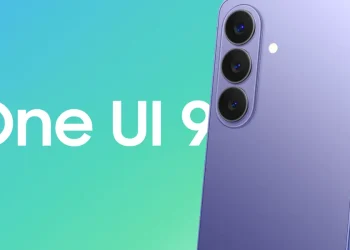
The Device eXperience (DX) Division, responsible for Samsung’s smartphone, tablet, and wearable business, faced a decline in revenue by 8% compared to the previous quarter. This drop was primarily attributed to the reduced impact of new smartphone model launches and intensified market competition. However, Samsung plans to revitalize its smartphone offerings in 2026, particularly through AI-driven experiences and flagship launches like the Galaxy S26 series.
Big Investments in Research and Development
Samsung remains committed to innovation, with R&D investments totaling a record KRW 10.9 trillion for the quarter and KRW 37.7 trillion for the year. These investments will continue to focus on AI technologies, next-generation memory solutions, and high-performance chips, helping the company maintain its leadership in various sectors, including semiconductors and mobile devices.
AI and the Future of Samsung
Looking ahead to 2026, Samsung is doubling down on its leadership in AI and next-generation technologies. The DS Division expects continued growth driven by AI and server demand, while the DX Division plans to integrate AI across its entire device ecosystem, including smartphones, wearables, and home electronics. This AI focus will be central to Samsung’s strategy for the future, particularly in sectors like memory, mobile, and semiconductors.
Strong Future Outlook for Semiconductors and AI Technologies
In the semiconductor space, Samsung is preparing to launch new products like HBM4 and DDR5, with the goal of reinforcing its competitive position. The company is also ramping up its Foundry Business, targeting double-digit revenue growth by expanding advanced node production. Additionally, Samsung’s Networks Business aims to capitalize on new market opportunities, particularly in 5G and virtualized networks.
Expansion Plans and Strategic Growth
Samsung’s growth plans for 2026 also include the expansion of its Consumer Electronics (CE) and Harman businesses. The CE Division aims to increase revenue by focusing on premium product lines, while Harman seeks to strengthen its automotive and audio business portfolios, driving growth in the automotive sector and expanding sales of advanced driver assistance systems (ADAS).