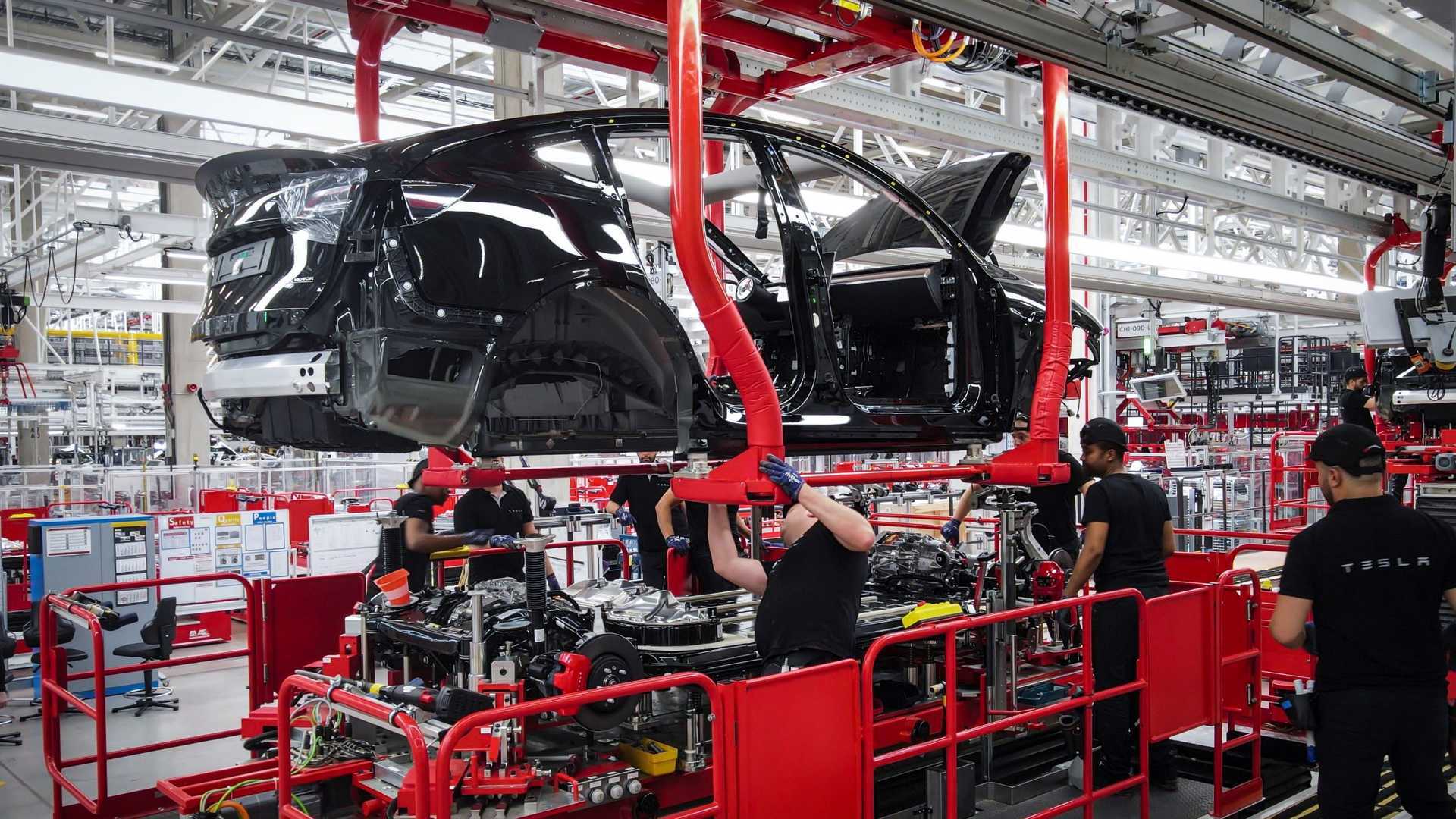
Tesla has reached a major manufacturing achievement after producing its 10-millionth electric vehicle worldwide.
The Tesla production milestone was marked by a Diamond Black Model Y that rolled off the assembly line at the company’s Fremont factory in California.
The achievement makes Tesla the first automaker focused entirely on electric vehicles to exceed 10 million units in cumulative production.
Chief Executive Elon Musk congratulated Tesla employees, describing the milestone as the result of an extraordinary amount of work across the company.
Tesla production milestone shows rapid expansion
Tesla’s rise from one million to 10 million vehicles highlights how quickly the company expanded its global manufacturing operations.
The automaker produced its one-millionth vehicle at the Fremont factory in early 2020. It then added another nine million vehicles in approximately six years.
That growth continued despite Tesla recording a 9% decline in vehicle sales during 2025.
The company’s manufacturing expansion was supported by rising demand for its Model 3 and Model Y, as well as the opening of new factories in the United States, China and Germany.
Global Gigafactories accelerated production
Tesla initially relied heavily on its Fremont facility, which it acquired and transformed into its main U.S. production center.
The company later expanded through its Gigafactory network.
Gigafactory Shanghai began operations in January 2020 and became a major manufacturing and export center for Tesla.
The company opened Gigafactory Berlin-Brandenburg in Grünheide, Germany, in March 2022. Production at Gigafactory Texas in Austin also began in 2022, following the factory’s Cyber Rodeo opening event in April.
These facilities allowed Tesla to produce vehicles closer to important markets while increasing overall manufacturing capacity.
Model 3 and Model Y drove higher volumes
Tesla entered the automotive market with premium electric cars, including the Model S sedan and Model X sport utility vehicle.
Those vehicles helped establish the brand but were not designed for the same production volumes as the company’s later models.
Tesla started building the Model 3 in July 2017. The electric sedan gave the company access to a wider and more price-conscious market.
Production of the Model Y crossover began in January 2020. It later became Tesla’s most important product and is now manufactured at several factories, including the Berlin-Brandenburg plant.
The strong performance of the Model 3 and Model Y enabled Tesla to move from a niche electric vehicle producer to one of the world’s largest automakers by volume.
Model Y became the world’s top-selling car
The Model Y became the world’s best-selling vehicle across all powertrain categories in 2023.
It was the first fully electric vehicle to lead the global annual vehicle sales ranking.
JATO Dynamics estimated that approximately 1.22 million Model Y vehicles were sold during that year.
The achievement demonstrated how electric vehicles had moved beyond a specialist market and begun competing directly with the world’s most popular gasoline and hybrid models.
Toyota RAV4 narrowly passed Model Y
The Model Y faced stronger competition the following year.
A final analysis by JATO Dynamics analyst Felipe Muñoz found that the Toyota RAV4 and its Chinese-market Wildlander counterpart narrowly recorded more sales than the Model Y.
The Toyota models reached approximately 1.187 million units, while the Model Y finished with about 1.185 million.
The difference was fewer than 3,000 vehicles, showing how closely the two models competed for the global sales lead.
Tesla follows a premium-first strategy
Tesla has generally followed a top-down product strategy.
The company first introduced new electric vehicle technologies through more expensive models before using them in higher-volume vehicles.
The Model S and Model X helped Tesla develop its battery systems, software and charging technology.
The company later brought many of those features to the more affordable Model 3 and Model Y.
This strategy allowed Tesla to build its brand through premium products before expanding into larger market segments.
Production achievement differs from deliveries
The Tesla production milestone represents the number of vehicles manufactured rather than the number delivered to customers.
Production and delivery figures can differ because some completed vehicles remain in transit or inventory before reaching buyers.
The company has now produced half of the 20 million vehicles connected to one of the long-term performance targets included in Elon Musk’s proposed compensation package.
However, that target is based on vehicle deliveries, meaning Tesla must still sell and hand over the required number of vehicles to customers.
Musk’s compensation plan contains several ambitious targets that could award him Tesla shares worth more than $1 trillion over the next decade if the company achieves the required business milestones.
Tesla faces pressure to maintain growth
Reaching 10 million vehicles is an important achievement, but Tesla faces increasing competition in major electric vehicle markets.
Established automakers are expanding their battery-powered lineups, while Chinese manufacturers continue to grow rapidly.
Tesla must also respond to changing demand, pricing pressure and the need to introduce new products.
The company’s 2025 sales decline showed that long-term growth may not continue at the same pace without stronger demand and a broader vehicle range.
Tesla’s next phase may depend on its ability to produce more affordable models while protecting profit margins.
A defining moment for electric mobility
The Tesla production milestone reflects the wider development of the global electric vehicle industry.
When Tesla began selling vehicles, battery-powered cars represented a small part of the automotive market.
The company’s growth helped demonstrate that electric vehicles could achieve large-scale production and compete with conventional cars.
Producing 10 million vehicles does not remove the challenges facing Tesla, including rising competition and changing consumer demand.
However, the milestone confirms the company’s central role in transforming electric vehicles from premium alternatives into mainstream products sold around the world.