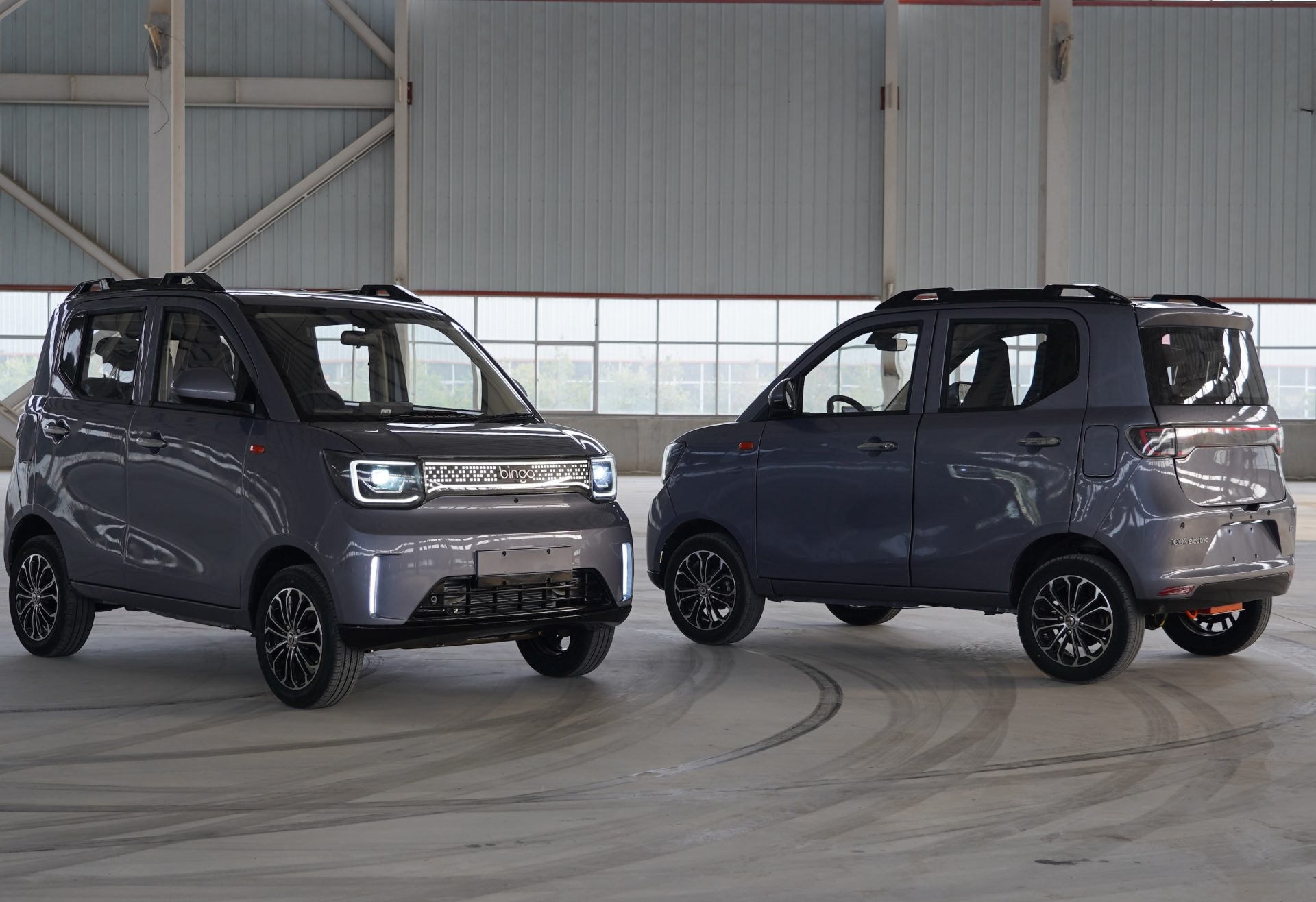
Bingo EV Kenya has entered the local electric vehicle market with a battery-swapping car designed for ride-hailing drivers and last-mile delivery operators.
The California-based startup introduced the Bingo E2 in Nairobi as part of a broader plan to develop an electric mobility network that includes vehicle assembly, battery-swapping stations, fast chargers and roadside battery support.
Bingo is targeting commercial drivers who face high fuel expenses and limited access to affordable electric vehicle charging.
The company says the E2 can travel up to 440 kilometres on a full charge. It uses a dual-battery setup that combines one fixed battery with four removable battery packs.
Bingo EV Kenya Targets Commercial Drivers
Bingo is positioning the E2 as a practical alternative for drivers working in ride-hailing and delivery services.
These operators often cover long distances each day, making fuel one of their biggest operating expenses. Electric vehicles can reduce daily energy costs, but long charging times and limited public charging infrastructure remain major barriers.
Bingo believes its battery-swapping system can help address that problem.
Instead of waiting for the entire vehicle battery to recharge, drivers would be able to exchange depleted battery packs for charged ones at designated stations.
The company also plans to install DC fast chargers and offer roadside battery support for drivers who need assistance while working.
Speaking during the launch, Bingo co-founder Christian Scheder said the company was introducing more than a vehicle.
“We’re launching a new EV, but what we’re really launching is a whole ecosystem for ride-hailing and last-mile delivery drivers to succeed,” he said.
Battery-Swapping System Could Reduce Downtime
The Bingo E2’s battery system is designed to give commercial drivers more flexibility.
According to the company, the vehicle has one permanent battery and four swappable battery packs. Together, they provide a claimed driving range of up to 440 kilometres.
The removable packs could allow drivers to replace part of the vehicle’s stored energy without taking the car off the road for a long charging session.
This could be particularly useful for ride-hailing drivers, who lose income whenever their vehicles are not carrying passengers.
Delivery businesses may also benefit from faster battery replacement because their vehicles often operate on tight schedules across urban areas.
The success of the system, however, will depend on how quickly Bingo can establish enough swapping stations in convenient locations.
Bingo EV Kenya Plans Local Assembly
Bingo plans to begin assembling its electric vehicles in Nairobi by December.
The company expects to start local production with 100 units. Before then, it plans to import between 10 and 20 vehicles later this year.
Local assembly could help Bingo reduce transport costs, shorten delivery times and adapt the vehicles to Kenyan road and operating conditions.
It could also support job creation in vehicle assembly, maintenance, battery services and charging infrastructure.
Bingo has not disclosed the exact location of its planned assembly operation or the expected price of the E2.
The final cost will be important because ride-hailing and delivery drivers are highly sensitive to vehicle financing, maintenance and operating expenses.
Company Targets 1,500 Sales in 2027
Bingo has set ambitious sales targets for its entry into Kenya.
The company aims to sell 1,500 vehicles in 2027. It also hopes to have 10,000 Bingo electric vehicles operating on Kenyan roads by the end of 2028.
Reaching those targets will require the company to build customer confidence and secure reliable financing options for commercial drivers.
Many ride-hailing operators cannot afford to purchase vehicles in cash. Leasing, hire-purchase agreements or partnerships with financial institutions could therefore play a major role in adoption.
Bingo will also need to show that replacement batteries, repairs and spare parts will remain available over the full life of the vehicles.
Fuel Costs Drive Interest in Electric Cars
Kenya’s rising transport costs have increased interest in electric mobility among businesses and individual drivers.
Fuel expenses can significantly reduce earnings for ride-hailing operators, especially when fares do not rise at the same pace as petrol prices.
Scheder said high fuel costs were making it difficult for commercial drivers to remain profitable.
“We know the cost of gas and fuel is very high, and right now they’re not making money,” he said.
Electric cars may offer lower running costs because electricity is generally cheaper than petrol for each kilometre travelled.
They also have fewer moving mechanical parts than traditional combustion-engine vehicles, which can reduce some maintenance requirements.
However, drivers must consider the purchase price, battery replacement terms, charging costs, insurance and resale value before switching.
Bingo EV Kenya Bets on a Full Mobility Network
Bingo’s strategy goes beyond selling electric cars.
The company plans to create a supporting network that addresses several common concerns among EV buyers.
Battery-swapping stations could reduce charging delays. DC fast chargers would provide another option for drivers who prefer conventional charging, while roadside battery support could help users who run low on power away from a station.
This ecosystem approach may give Bingo an advantage if the company can roll out the services at the same pace as vehicle sales.
Selling large numbers of cars before enough stations are available could leave customers struggling to access the battery-swapping service.
The company will therefore need to coordinate vehicle deliveries with the expansion of its charging and battery infrastructure.
Kenya’s EV Market Continues to Expand
Bingo is entering Kenya as the country’s electric vehicle sector attracts growing interest from startups, automakers, energy companies and transport operators.
Electric motorcycles have led much of the early adoption, particularly among delivery riders and motorcycle taxi operators.
Passenger cars and commercial delivery vehicles are also becoming more visible as businesses search for ways to reduce fuel costs and emissions.
Kenya has an advantage because a large share of its electricity comes from renewable energy sources. This can make electric transport more environmentally beneficial than in markets that rely heavily on coal-fired power.
Even so, the industry still faces challenges, including high vehicle prices, limited charging infrastructure, financing constraints and uncertainty over battery resale value.
Battery Swapping Could Shape Kenya’s EV Future
Battery swapping has already become an important part of electric motorcycle services in parts of Kenya.
Applying the same concept to passenger cars could help drivers avoid long charging stops. However, car batteries are larger, heavier and more expensive, making the infrastructure more complex.
Bingo’s modular system may reduce some of those difficulties by allowing drivers to swap several smaller battery packs rather than one large battery.
The model could be attractive to drivers who operate for long hours and need predictable access to energy.
Its success will depend on battery durability, station availability, service pricing and the safety of the swapping process.
A Major Test for Bingo EV Kenya
Bingo’s entry adds a new option to Kenya’s developing electric mobility market.
The E2’s claimed 440-kilometre range and battery-swapping design could appeal to ride-hailing and delivery operators looking to reduce fuel expenses and vehicle downtime.
However, the company must still prove that it can build enough infrastructure, keep the vehicles affordable and provide dependable after-sales service.
The planned start of Nairobi assembly in December will be an important milestone.
Bingo EV Kenya could gain a strong position in the commercial transport sector if it delivers a reliable vehicle, accessible financing and a convenient battery network. Its progress may also show whether battery-swapping cars can become a practical part of Kenya’s transition to electric transport