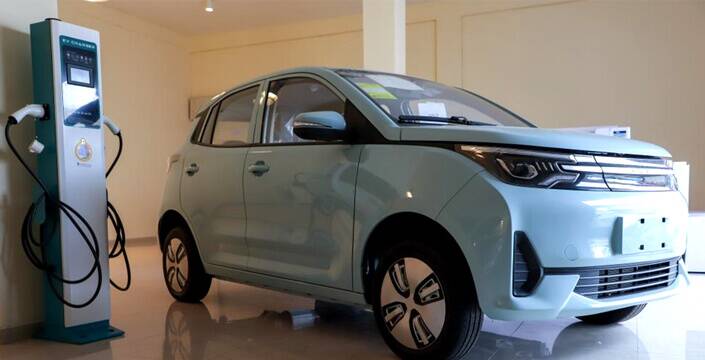
Ethiopia EV market growth is accelerating sharply after the government banned the import of fossil-fuel cars and slashed tariffs on electric vehicles. The bold policy shift, introduced in 2024, has reshaped one of Africa’s smallest auto markets and sparked rapid adoption of cleaner transportation alternatives. From less than 1% of vehicles on the road a few years ago, electric vehicles now account for nearly 6% of the total car fleet—above the global average.
Government officials and industry experts say the Ethiopia EV market boom is driven by a combination of economic necessity and strategic planning. The ban on internal combustion engine (ICE) imports was motivated mainly by the high cost of fuel subsidies, which strained public finances. Coupled with reduced duties on EVs—15% on fully built units and zero on kits assembled locally—new electric models have become more price-competitive than used petrol and diesel cars.
Policies Transform Ethiopia EV Market
In 2024, Ethiopia enforced a ban on the importation of fossil-fuel vehicles, effectively ending the entry of new gasoline or diesel cars. Alongside this, the government cut taxes and tariffs for electric models to make them more affordable. These measures helped open the door for major Chinese brands like BYD and Chang’an to enter the market and dominate new vehicle sales.
The impact has been visible on city streets. Previously dominated by aging fossil-fuel cars, Addis Ababa and other urban centres now feature a growing number of electric vehicles. Buyers have responded to the lower running costs and reliability of EVs, while some owners, like drivers switching to electric taxis, have shared positive experiences with the new technology.
Local Assembly and Infrastructure Expansion
As the Ethiopia EV market expands, local vehicle assembly is beginning to take shape. There are now 17 assembly plants in operation, with plans to increase this number to 60 by 2030. This growing local capacity is seen as a way to create jobs, boost industrial activity, and deepen the benefits of EV adoption beyond just consumer purchases.
Electricity supply is another key piece of the puzzle. Ethiopia’s abundant hydropower, including output from the Grand Ethiopian Renaissance Dam, has enabled low-cost electricity that makes operating EVs cheaper than fossil-fuel cars. Affordable power is crucial in keeping total cost of ownership down and making EVs attractive to buyers across income brackets.
Challenges Remain for Broader Adoption
Despite the strong growth in the Ethiopia EV market, major challenges remain. Charging infrastructure is still concentrated in major cities, and many rural areas have limited access to reliable electricity. Only about half of the population has access to power, which could slow adoption outside urban centres.
Affordability also remains a barrier for many households. Even with lower tariffs, EV prices can still be high relative to incomes in Ethiopia, where car ownership is low compared to regional averages. Access to credit and financing solutions will play a key role in sustaining long-term growth.
Policy support and infrastructure investments are central to the future of the Ethiopia EV market. Government targets include expanding local assembly capacity and increasing public chargers, with the goal of making electric transportation more accessible nationwide. Continued focus on energy security, local industry growth, and affordable mobility suggests that EVs will play an increasingly important role in Ethiopia’s transport future.
As the country builds on its early lead in electric mobility, Ethiopia’s approach may serve as a model for other African nations seeking to accelerate their transition to cleaner transportation. Success will depend on overcoming infrastructure gaps, expanding access to financing, and ensuring that the benefits of electrification reach a broad cross-section of society.