The way cars are designed is changing fast, and AI is now playing a bigger role than ever. At General Motors, engineers and designers are using artificial intelligence to move ideas from sketch to reality in a fraction of the time it used to take.
AI car design is not replacing human creativity. Instead, it is helping designers see their ideas sooner, test them faster, and refine them more efficiently.
From sketchpad to screen in hours
The process still begins the same way it always has, with a designer and a sketch. What has changed is everything that comes next.
At GM, AI tools can now take those early drawings and turn them into full 3D models, animations, and visual concepts within hours. In the past, that step alone could take weeks or even months and required multiple teams working together.
Now, designers can explore multiple ideas quickly, adjust details on the fly, and immediately see how a vehicle might look in motion.
Faster decisions, fewer delays
One of the biggest advantages of AI car design is speed. Instead of waiting for different teams to pass work back and forth, designers and engineers can collaborate in real time.
This reduces delays between stages and helps teams make decisions faster. It also allows automakers to respond more quickly to market trends, which is becoming increasingly important in a competitive global industry.
Rethinking aerodynamics with AI
AI is also changing how engineers test performance. Traditionally, aerodynamic testing has been one of the slowest parts of vehicle development.
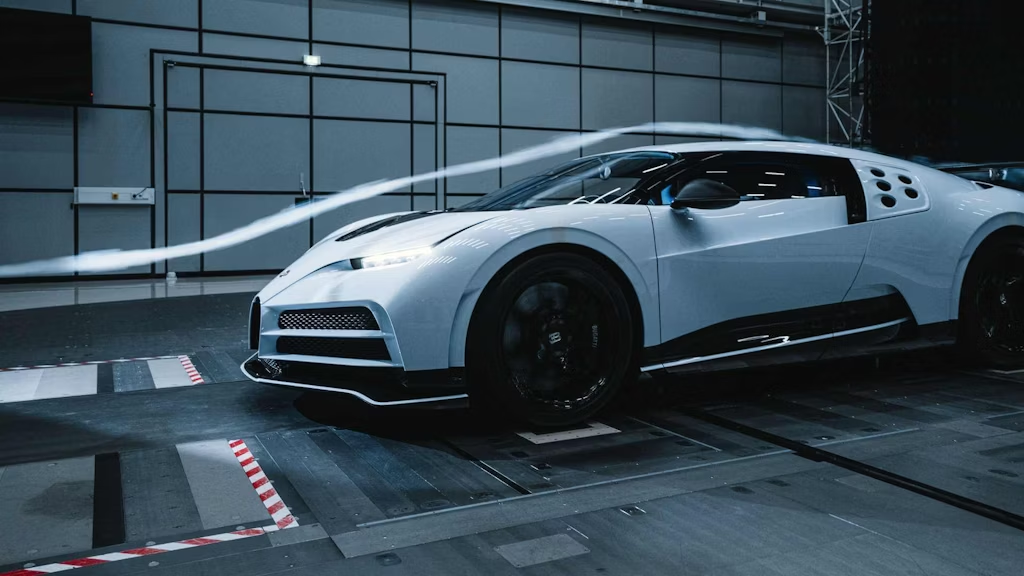
GM now uses a virtual wind tunnel powered by AI. Engineers can adjust parts of a car, like the windshield angle, and get feedback almost instantly.
What once took weeks can now happen in minutes. That means better designs, faster improvements, and fewer costly delays.
AI as a partner, not a replacement
Despite all these changes, GM is clear about one thing. AI is not here to replace designers.
Human creativity still drives the vision behind every vehicle. AI simply helps bring that vision to life faster and with more precision.
Designers remain in control, while AI handles repetitive tasks, simulations, and early-stage testing.
Why this shift matters
AI car design is not just about speed. It reflects a bigger shift in how the automotive industry works.
Car development has traditionally taken five to seven years. With AI, that timeline could shrink significantly. That matters in a world where technology, regulations, and consumer expectations are constantly changing.
For automakers, it means staying competitive. For consumers, it could mean better cars arriving sooner. And for the industry, it signals a future where creativity and technology work side by side.
As AI continues to evolve, its role in car design is likely to grow. But the core idea remains the same. The best designs still start with people. AI just helps bring them to life faster.