Saic Z7T has been officially revealed through new images released by Huawei, showcasing the latest electric vehicle developed jointly with Chinese automaker SAIC. The model represents the shooting brake version of the Saic Z7 sedan and marks the first station wagon introduced under the HIMA automotive alliance.
The unveiling signals another step in Huawei’s expanding role in the electric vehicle ecosystem. While full technical specifications have not yet been released, more details about the Saic Z7T are expected to be announced later in March.
Saic Z7T introduces HIMA’s first station wagon
The Saic Z7T stands out as the first station wagon model developed within Huawei’s Harmony Intelligent Mobility Alliance, also known as HIMA.
Visually, the car adopts a shooting brake design that blends the sporty look of a coupe with the practicality of a wagon. Official images reveal a mountain green exterior color paired with hidden door handles and striking red brake calipers.
Compared with the Saic Z7 sedan, the rear structure has been redesigned to accommodate the extended wagon profile. The car also features a sloping roofline and a continuous rear taillight that stretches across the back of the vehicle.
Although the full body dimensions remain undisclosed, the design suggests a spacious layout intended to balance performance and practicality.
Saic Z7T expected to feature advanced driver technology
One of the most notable features of the Saic Z7T is the presence of a roof mounted lidar sensor. This indicates the vehicle will likely support Huawei’s Qiankun ADS 4.0 advanced driving system.
Huawei’s autonomous driving technology uses lidar sensors, cameras and artificial intelligence to enhance vehicle perception and driver assistance.
The front headlights are also expected to adopt the same laser emitting mechanism used in the Saic Z7 sedan. Reports suggest the system includes 408 laser emitting points designed to improve lighting performance and visibility.
These technologies highlight Huawei’s focus on integrating intelligent driving features into next generation electric vehicles.
Saic Z7T powertrain details still emerging
At the moment, official powertrain specifications for the Saic Z7T have not been confirmed.
However, industry sources indicate the vehicle will likely be offered as a battery electric vehicle. Early reports suggest two drivetrain options may be available, including rear wheel drive and all wheel drive configurations.
Battery options are expected to include 80 kWh and 100 kWh packs, which could position the car competitively in the mid to large electric vehicle segment.
Pricing for the Z7T has also not been revealed yet. For comparison, the Saic Z7 sedan is expected to sell in a range between 250,000 and 350,000 yuan, which is roughly $36,000 to $50,000.
Saic Z7T expands Huawei’s HIMA vehicle lineup
The Saic Z7T will become part of Huawei’s growing portfolio of intelligent vehicles developed through the HIMA platform.
Currently, the alliance includes five automotive brands: Aito, Luxeed, Stelato, Maextro and Saic. Together these brands cover a wide price range in China’s rapidly expanding electric vehicle market.
Saic represents the fifth brand within the ecosystem and is positioned as a stylish and technologically advanced option designed for broader accessibility.
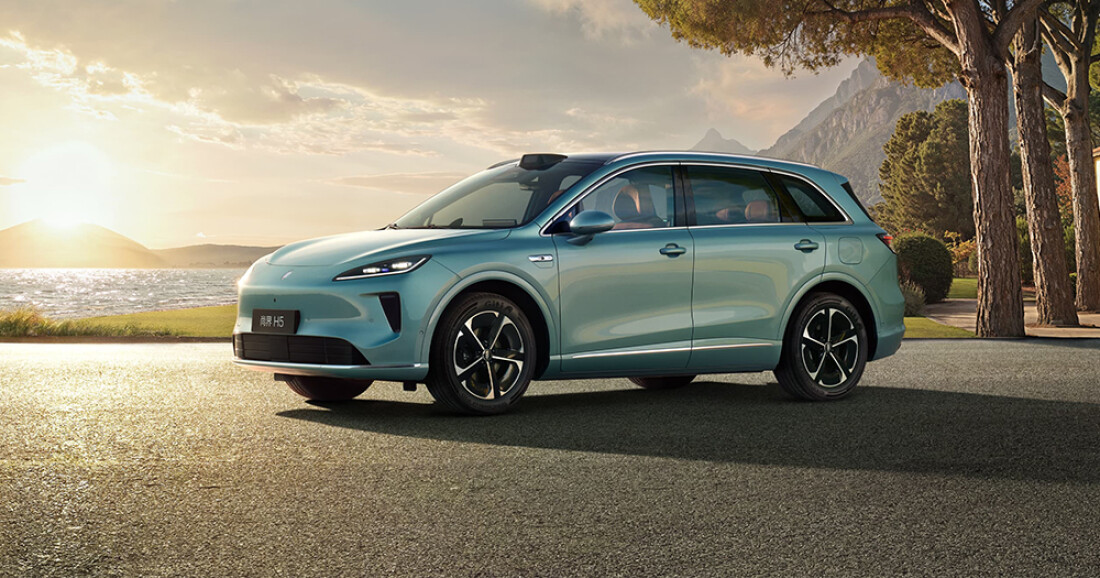
The brand’s first vehicle was the Saic H5 mid size SUV. The Saic Z7 followed as its second model and now serves as the foundation for the newly revealed Saic Z7T wagon.
Saic Z7T reflects China’s evolving EV market
The introduction of the Z7T highlights how quickly China’s electric vehicle sector continues to innovate.
Manufacturers are increasingly experimenting with new body styles such as shooting brake wagons to attract consumers seeking both performance and practicality.
At the same time, advanced technologies including lidar sensors and AI assisted driving systems are becoming standard features in many new Chinese EVs.
As Huawei deepens its involvement in the automotive industry, vehicles like the Saic Z7T illustrate how technology companies are helping reshape the future of mobility.