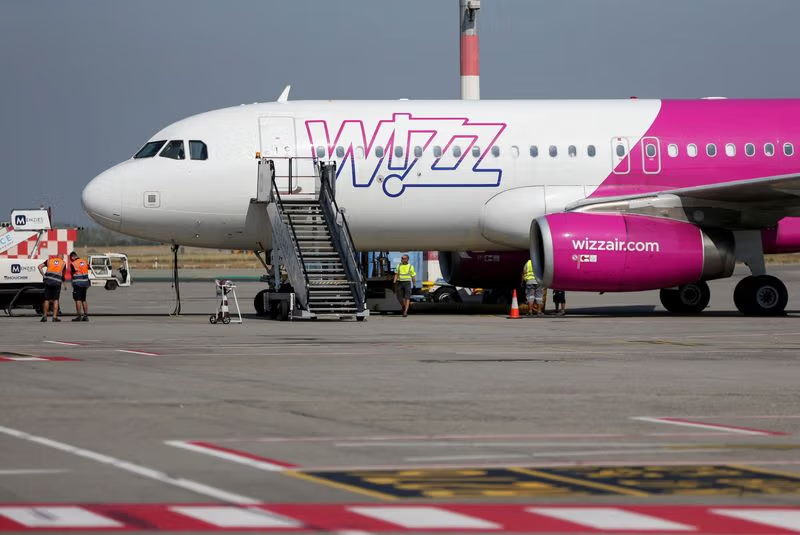
The Wizz Air profit warning has shaken airline investors after the low-cost carrier said the escalating conflict involving Iran could significantly impact its financial performance this year. Rising oil prices, travel disruption, and currency fluctuations triggered the airline’s updated outlook.
According to the company, the Wizz Air profit warning reflects growing pressure on airlines as geopolitical tensions ripple through the global economy. Higher jet fuel costs and suspended flights to the Middle East are expected to reduce earnings during the current financial year.
Wizz Air informed investors that the crisis could wipe approximately €50 million from its profits. Previously, the airline projected results ranging from a €25 million profit to a €25 million loss. However, the updated guidance now indicates that the company expects a loss.
Airlines remain extremely sensitive to energy price fluctuations. Fuel typically represents one of the largest operating costs in aviation. Therefore, the recent surge in oil prices has quickly increased financial pressure across the industry.
The Wizz Air profit warning came as Brent crude climbed above $83 per barrel following disruptions linked to the conflict. Rising energy prices often translate directly into higher aviation fuel costs. Consequently, airline profitability can deteriorate rapidly when oil prices rise sharply.
In addition to fuel costs, Wizz Air has suspended some flights to destinations in the Middle East due to safety concerns. The airline said roughly one third of the projected financial impact comes from the cancellation of scheduled services in the region.
Travel disruptions have become increasingly common during periods of geopolitical instability. Airlines frequently suspend routes when security risks rise or airspace restrictions affect flight operations.
Meanwhile, the remaining financial impact highlighted in the Wizz Air profit warning relates to macroeconomic factors. Currency fluctuations and fuel price volatility have both intensified since the conflict began.
The euro has weakened against the U.S. dollar in recent days. Because jet fuel is typically priced in dollars, European airlines face higher costs when the euro declines. As a result, exchange rate shifts add further pressure to airline balance sheets.
Wizz Air explained that its current assessment assumes fuel prices and currency exchange rates remain at current levels throughout the remainder of the fiscal year. If energy prices continue rising, the financial impact could increase further.
The Wizz Air profit warning also affected investor sentiment across airline stocks. Shares in Wizz Air dropped roughly 6% at the start of trading following the announcement.
Other European airlines experienced similar declines. Shares of International Airlines Group, the parent company of British Airways, fell around 2.6%. Meanwhile, easyJet shares dropped nearly 3%.
Investors reacted to the possibility that sustained oil price increases could reduce profitability across the aviation sector. Airlines often hedge fuel purchases to reduce exposure to price swings. However, prolonged energy shocks can still significantly affect operating margins.
Energy markets have grown increasingly volatile due to disruptions near the Strait of Hormuz. This critical shipping route carries a large portion of global oil exports. Therefore, any threat to tanker traffic can quickly influence global energy prices.
Recent reports indicated that several oil tankers faced incidents in the Persian Gulf. As tensions escalate, energy traders fear that supply disruptions could tighten global markets even further.
The Wizz Air profit warning illustrates how geopolitical conflicts can ripple through multiple sectors of the global economy. Airlines, shipping companies, and logistics firms often experience immediate financial consequences when energy markets fluctuate.
Beyond aviation, the conflict may also affect technology supply chains. South Korea’s semiconductor industry has already warned that rising energy costs could disrupt chip manufacturing.
South Korea produces a large share of the world’s memory chips. Officials noted that some key semiconductor materials are sourced from the Middle East. Therefore, prolonged instability could disrupt supply chains for the global electronics industry.
Meanwhile, broader financial markets have also reacted to the crisis. European equities initially declined before stabilizing later in the trading session.
Currency markets have shown similar volatility. The U.S. dollar strengthened against several currencies before retreating later in the day. Such movements often reflect investors shifting toward perceived safe-haven assets during geopolitical uncertainty.
Despite these pressures, some analysts believe the oil market still holds limited spare supply capacity. Experts estimate that global markets may have around two to four weeks of flexibility before severe supply shortages begin affecting prices more dramatically.
However, uncertainty remains high. If disruptions to oil exports intensify, fuel costs could rise further and deepen the challenges facing airlines.
The Wizz Air profit warning therefore highlights the fragile balance between geopolitical stability and global economic performance. Airlines operate within a complex network of fuel markets, currency movements, and international travel demand.
When conflicts disrupt these systems, the financial consequences can appear quickly across the aviation sector.
For now, investors continue to monitor developments in the Middle East closely. If tensions ease, fuel prices may stabilize and reduce pressure on airlines. However, if the conflict continues to escalate, the aviation industry could face an extended period of financial uncertainty.