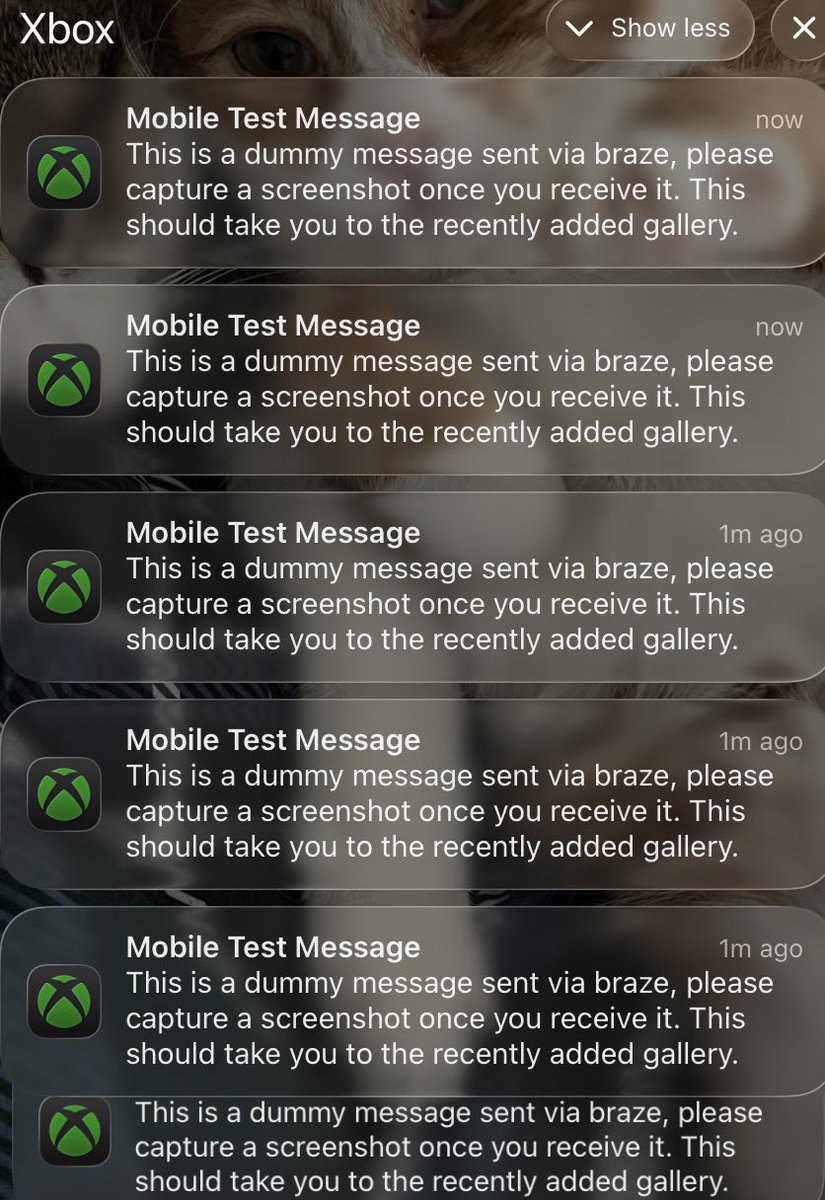
Xbox Braze test message notifications suddenly flooded thousands of phones, leaving Xbox app users confused and frustrated. Around 12:30 p.m. ET, users began receiving repeated push alerts that appeared to be internal testing messages rather than official communications. The unexpected Xbox Braze test message quickly became a trending topic across social platforms as gamers tried to figure out what was happening.
The notification read: “This is a dummy test message sent via braze. please capture a screenshot once you receive it. This should take you to the recently added gallery.” Instead of a one-time alert, many users reported receiving multiple identical notifications within minutes. Screenshots shared online showed phones overwhelmed with repeated pop-ups from the Xbox app.
While some users feared their accounts had been hacked, others suspected a development error. The Xbox Braze test message referenced Braze, a well-known customer engagement platform used by companies to manage notifications and messaging campaigns. That clue pointed toward an internal testing mistake rather than a security breach.
What Caused the Xbox Braze Test Message Spam
Discussion quickly moved to online forums, where users speculated that a test notification may have accidentally been pushed to production. Several commenters suggested that an internal development message was mistakenly released to the public.
Braze is a messaging and audience engagement platform that companies use to test, schedule, and deliver push notifications. If a test campaign was misconfigured or sent to a live audience instead of internal testers, it could explain the widespread alerts.
Importantly, there is no indication that user accounts were compromised. The Xbox Braze test message appears to have been the result of a backend testing error rather than malicious activity.
Xbox Confirms Internal Test Notification Glitch
Microsoft later addressed the issue directly. The company posted a statement acknowledging that the Xbox app had sent unintended test notifications. According to Xbox, the spam was caused by an internal testing mishap and has since been resolved.
The company apologized for the disruption, thanking users for their patience. The confirmation eased concerns among players who initially feared a data breach or system compromise.
Despite the reassurance, the flood of alerts left some users frustrated. Many expressed annoyance at the sudden interruption, especially those who received multiple notifications in quick succession.
What Is Braze and Why It Matters
Braze is a widely used customer engagement platform that helps companies send targeted messages, notifications, and in-app communications. Businesses rely on it for marketing campaigns, updates, and testing messaging systems before public release.
The Xbox Braze test message incident highlights how powerful backend tools can cause large-scale disruptions if misconfigured. Even a small internal mistake can result in millions of unintended notifications reaching users instantly.
Such errors are not uncommon in large digital ecosystems. However, transparency and quick acknowledgment often help minimize long-term damage to brand trust.
Xbox Leadership Changes Add to Public Attention
The notification glitch comes at a time of significant leadership shifts within Xbox. Recently, Microsoft Gaming CEO Phil Spencer announced his retirement, while Xbox president Sarah Bond revealed she would step down and transition into an advisory role.
With executive transitions already drawing attention, the Xbox Braze test message added another unexpected headline for the gaming division this week.
For now, the issue appears fully resolved. Users are no longer receiving the test alerts, and no evidence suggests lasting impact on app functionality or account security.
The Xbox Braze test message serves as a reminder of how interconnected modern app systems are. A single internal test can reach millions within seconds. While the glitch caused temporary frustration, it underscores the importance of careful testing protocols in large-scale digital platforms.