AI daily workflows are rapidly becoming a key focus for organisations seeking to turn artificial intelligence from a theoretical tool into a practical engine of business performance. Many companies already use AI to generate insights through dashboards and analytics platforms, yet those insights often fail to translate into real operational decisions.
However, the next phase of AI adoption is changing that reality. By embedding autonomous AI agents directly into business processes, organisations can integrate intelligence into AI daily workflows. As a result, companies can improve decision-making, accelerate execution, and scale expertise across teams while maintaining human oversight.
AI daily workflows moving beyond dashboards
For many businesses, the biggest barrier to implementing AI daily workflows is not the technology itself but how it is integrated into operations.
In many organisations, AI remains confined to pilot projects or isolated analytics tools. These systems produce valuable insights but rarely influence everyday work because they are disconnected from operational platforms such as customer relationship management systems, service platforms, or supply chain tools.
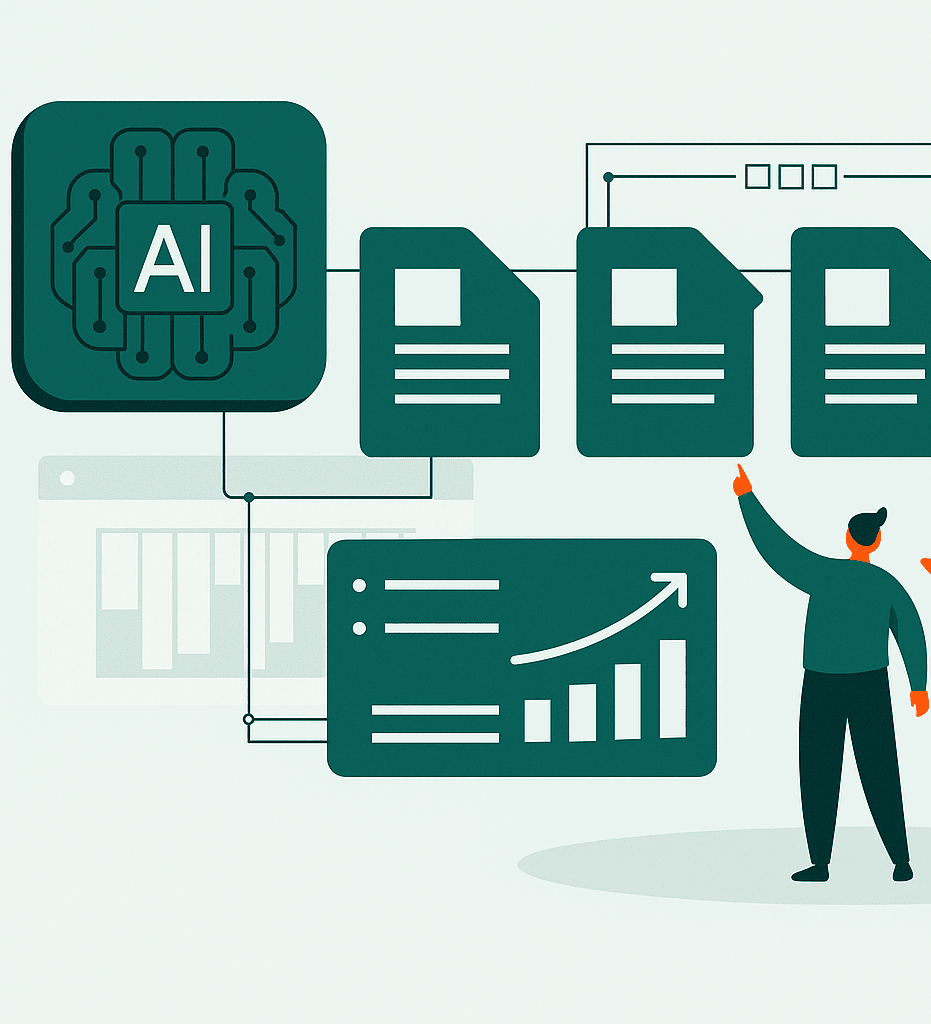
Embedding AI directly into operational systems solves this problem. When autonomous AI agents operate inside enterprise platforms, they can analyse context, evaluate information, and initiate actions instantly. Instead of waiting for employees to interpret reports, AI becomes an active part of how work gets done.
In practice, this shift turns artificial intelligence from a passive analytics tool into a decision-support system that directly influences outcomes.
Rethinking autonomy and trust in AI daily workflows
As AI daily workflows become more common, business leaders must rethink the relationship between automation, oversight, and trust.
Traditional automation relies on predefined rules and fixed workflows. In contrast, autonomous AI agents can evaluate context and make goal-driven decisions. Because of this capability, organisations must design systems where AI operates with controlled autonomy rather than unrestricted independence.
Effective implementation requires clear objectives, defined boundaries, and escalation paths. AI agents can operate confidently within these guardrails while humans maintain accountability.
Human roles also evolve in AI daily workflows. Instead of reviewing every automated action, leaders focus on supervising results, evaluating system performance, and refining operational policies. Transparency, explainability, and consistent monitoring help organisations build trust in intelligent systems.
Governance frameworks for AI daily workflows
Governance is essential for organisations adopting AI daily workflows at scale. As artificial intelligence becomes embedded in operations, governance must evolve from occasional compliance checks into a continuous capability.
One effective strategy is risk-based segmentation. High-impact decisions such as financial approvals or customer-facing interactions require deeper validation and stronger monitoring than internal productivity tasks.
This tiered approach allows organisations to innovate quickly where risk is low while applying stronger oversight where consequences are greater.
Continuous monitoring is also essential. Autonomous systems operate in dynamic environments, so performance tracking, bias detection, and compliance checks must remain ongoing processes.
By integrating governance directly into the same platforms that run AI agents, companies gain real-time visibility into outcomes and maintain the ability to intervene whenever necessary.
Strategic advantages of AI daily workflows
The long-term value of AI daily workflows extends far beyond cost reduction and productivity improvements.
When autonomous AI agents become embedded within operational processes, they align data, actions, and decision-making across departments. This alignment reduces operational friction and allows organisations to respond faster to market changes.
Another key advantage is the ability to scale institutional expertise. The knowledge and decision-making patterns of experienced employees can be embedded into intelligent systems that guide teams with context-aware recommendations.
Over time, each interaction improves the system’s performance, creating a compounding effect that strengthens organisational knowledge.
AI daily workflows also enhance adaptability. Businesses can anticipate customer needs, identify risks earlier, and adjust processes in real time based on current data.
AI-native organisations shaping the future of work
The companies that succeed with AI daily workflows will be those that treat artificial intelligence as an operating principle rather than just another tool.
Organisations that simply add AI to existing processes may see incremental improvements but often introduce additional complexity. In contrast, AI-native organisations redesign workflows from the ground up, integrating autonomous AI agents directly into operational systems.
These companies focus on strong data infrastructure, governance frameworks, and cross-functional collaboration. They also invest in change management to help employees understand how to work effectively alongside intelligent systems.
Ultimately, the most successful organisations will create environments where humans and AI collaborate naturally. Autonomous agents handle repetitive complexity at scale, while employees focus on strategy, relationships, and creative problem-solving.
This model enables companies to adapt continuously to changing markets, technologies, and customer expectations.