The AI traffic twin is transforming traffic management in England’s Tees Valley by helping authorities reduce congestion and improve travel times. Transport officials say the new system, powered by artificial intelligence and real-time data, has already reduced road delays and improved bus journey speeds across the region.
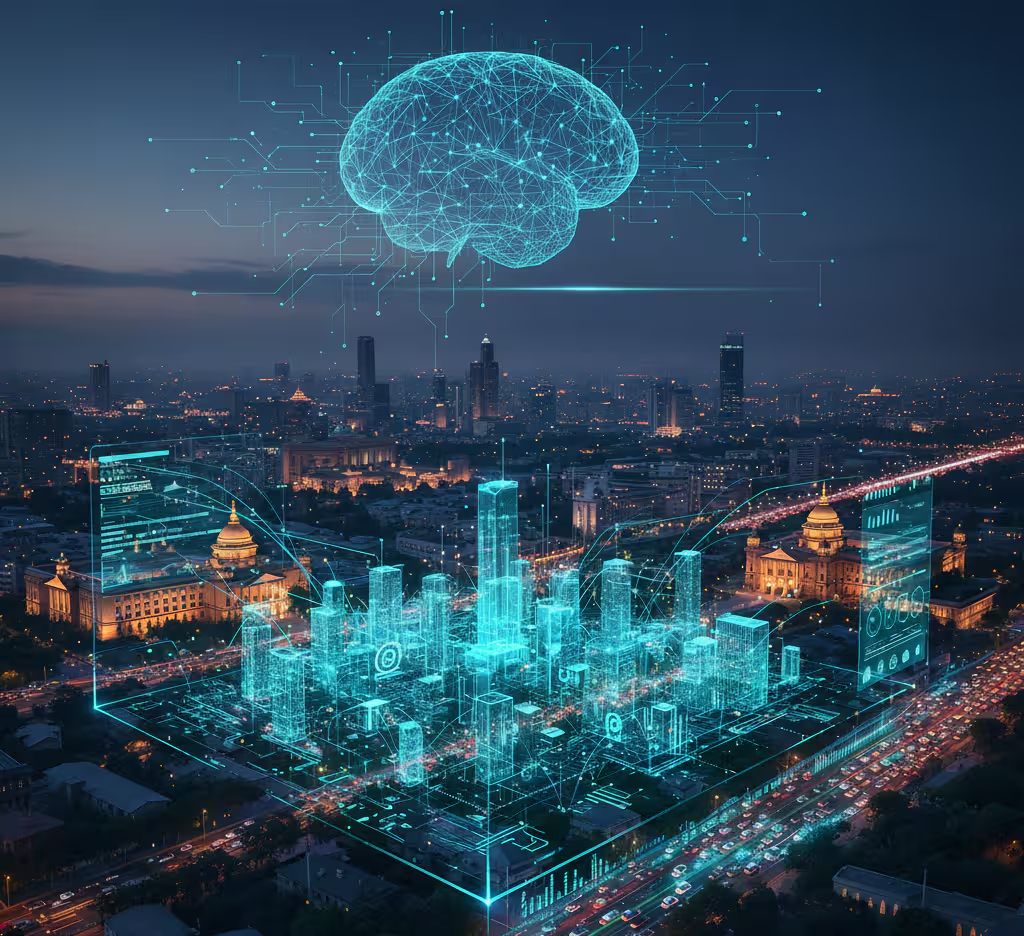
Developers created the AI traffic twin as a digital replica of the Tees Valley road network. By analysing traffic patterns and predicting congestion before it occurs, the system allows transport managers to respond faster and keep vehicles moving more efficiently.
AI traffic twin improves traffic flow across Tees Valley
Transport authorities report that the AI traffic twin has reduced traffic delays by 13.7 percent during the first six months of its pilot phase.
The system works by collecting real-time information from multiple sources. These include GPS data from buses, roadside traffic sensors, and other monitoring systems across the region.
By combining these data streams, the AI traffic twin can identify congestion hotspots and adjust traffic controls to prevent delays from worsening.
Sean Fryer, digital transport delivery manager at the Tees Valley Combined Authority, explained that the technology helps reduce everyday disruptions for commuters.
According to Fryer, the AI traffic twin enables authorities to anticipate problems before they escalate and respond automatically across 11 key traffic hotspots.
How the AI traffic twin makes faster decisions
The traffic twin analyses large volumes of transport data to determine the most efficient traffic management strategies.
For example, when congestion builds in a specific location, the system can automatically modify traffic light cycles or redirect vehicles to alternative routes.
Stephen Harker, leader of Darlington Council and transport portfolio holder at the Tees Valley Combined Authority, said the system still operates under human supervision but often produces faster and more effective solutions.
Harker explained that the AI traffic quickly identifies disruptions and suggests adjustments that reduce delays. In many cases, the system can respond far more rapidly than manual traffic management.
AI traffic twin pilot welcomed with cautious optimism
Local leaders have welcomed the traffic twin project as a promising step toward smarter transport management.
However, some officials believe the technology must be combined with broader policies aimed at reducing car dependency.
Green Party councillor Matthew Snedker said technological innovation alone cannot solve traffic congestion if the number of vehicles on the road continues to rise.
Data shows vehicles travelled about 13 billion miles on North East roads in 2024. This figure represents an increase of more than 1.5 billion miles compared with a decade earlier.
Snedker argued that sustainable transport strategies should encourage greater use of buses, cycling, and other forms of active travel.
Future expansion planned for AI traffic twin system
The next stages of the traffic twin project aim to expand the system’s capabilities.
Future upgrades will integrate additional data sources such as freight transport movements, cycling routes, and environmental monitoring.
By expanding the digital model of the transport network, officials hope the traffic twin will provide deeper insights into traffic behaviour and improve long-term transport planning.
If the project continues to deliver strong results, it could become a model for other regions seeking to use artificial intelligence to improve road networks and public transport efficiency.