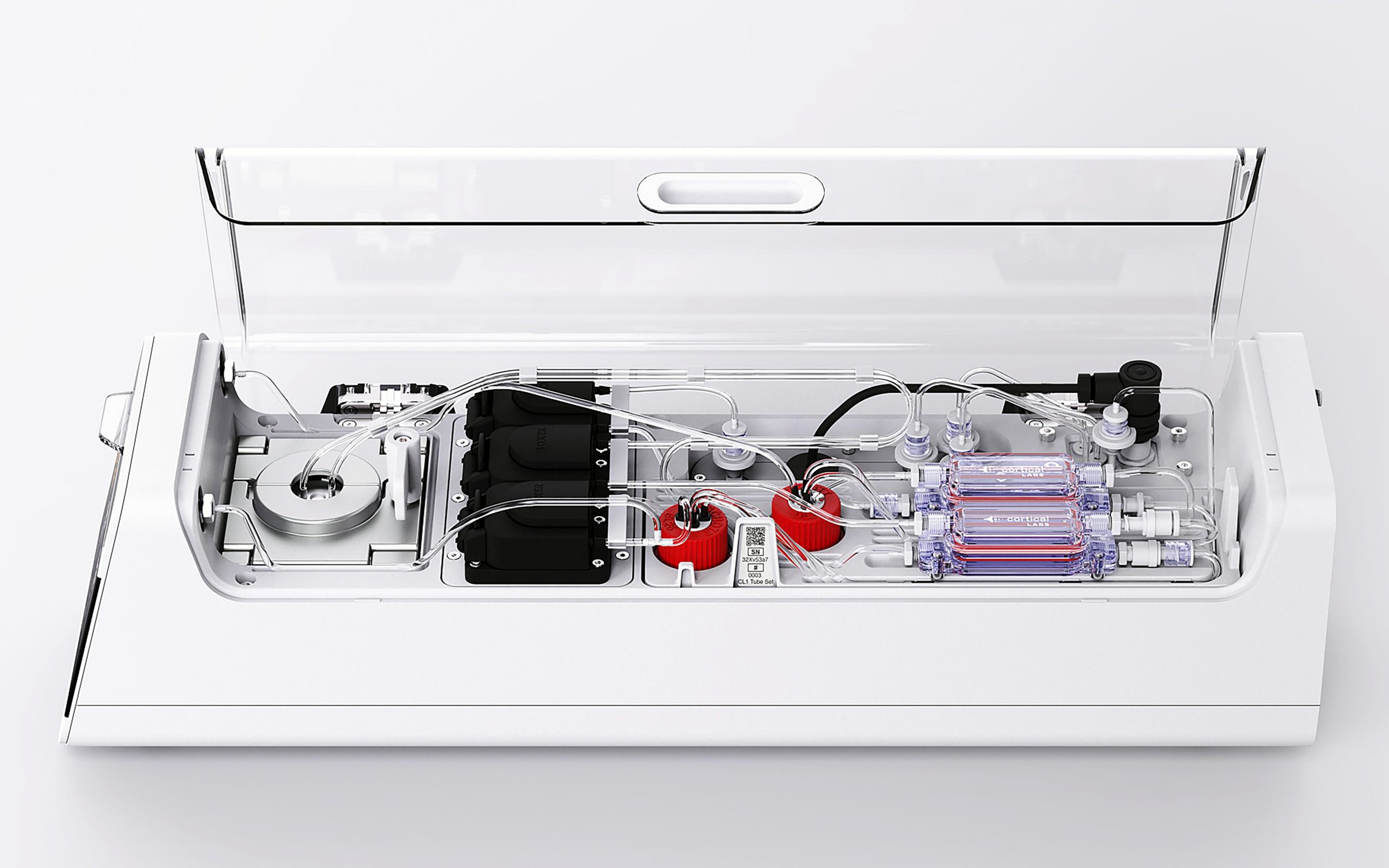
A groundbreaking biological computer Doom experiment has captured global attention after scientists demonstrated that living human neurons grown on a silicon chip can interact with and play the classic 1993 video game Doom.
Researchers from Australian biotech company Cortical Labs created a hybrid system that combines biological brain cells with electronic hardware. The experiment uses around 200,000 living neurons grown in a laboratory and connected to a microelectrode array that allows them to communicate with a computer.
The unusual system transforms video game information into electrical signals that the neurons can interpret, effectively allowing the biological network to control gameplay actions.
Biological Computer Doom Experiment Explained
The biological computer Doom setup involves neurons grown in a dish placed on a silicon chip equipped with microscopic electrodes. The cells remain alive in a nutrient solution while the electrodes stimulate and monitor their electrical activity.
When events occur in the game environment, such as an enemy appearing on the screen, the system converts the visual information into electrical signals. These signals stimulate the neurons in specific regions of the neural culture.
The neurons respond by generating their own electrical spikes. The system interprets those responses as commands inside the game, such as moving, turning, or firing a weapon.
Through this process, the biological neural network gradually learns to respond to game events.
From Pong to Biological Computer Doom
The biological computer Doom demonstration builds on earlier research by the same team. In 2022, the scientists gained global attention with an experiment known as DishBrain.
In that project, clusters of lab grown neurons were taught to play the simple arcade game Pong. Electrodes delivered feedback whenever the neural network failed to hit the ball.
This structured feedback encouraged the neurons to reorganize their activity and improve performance over time. Researchers described this process as a form of goal directed learning.
However, moving from Pong to Doom proved far more challenging. Pong involves only basic movements and simple visual cues. Doom, by contrast, features complex environments, multiple enemies, and constant movement.
Scientists had to develop a more advanced interface that translates the chaotic digital world of Doom into electrical signals the neurons can understand.
How the Biological Computer Learns
The biological computer Doom experiment relies on reinforcement learning principles. When neurons respond correctly to signals, the system provides feedback that encourages similar responses in the future.
Over time, the neural network adapts its firing patterns and becomes better at navigating the game environment.
Researchers say the system currently behaves like a beginner player. The neurons can sometimes detect enemies, move through the environment, and attempt to fire weapons, although mistakes and repeated failures remain common.
Despite these limitations, the experiment demonstrates that biological neurons can interact with complex digital systems.
Why the Biological Computer Doom Research Matters
Scientists say the biological computer Doom research is not about creating living video game players. Instead, the goal is to better understand how neurons learn, adapt, and process information.
The insights could eventually help researchers develop new treatments for neurological diseases or design entirely new computing architectures inspired by the human brain.
Hybrid biological digital computers could also open new possibilities in artificial intelligence and neuroscience research.
For now, the experiment shows something remarkable: a cluster of human brain cells grown in a lab can learn to interact with a digital world where demons attack and survival depends on quick reactions.