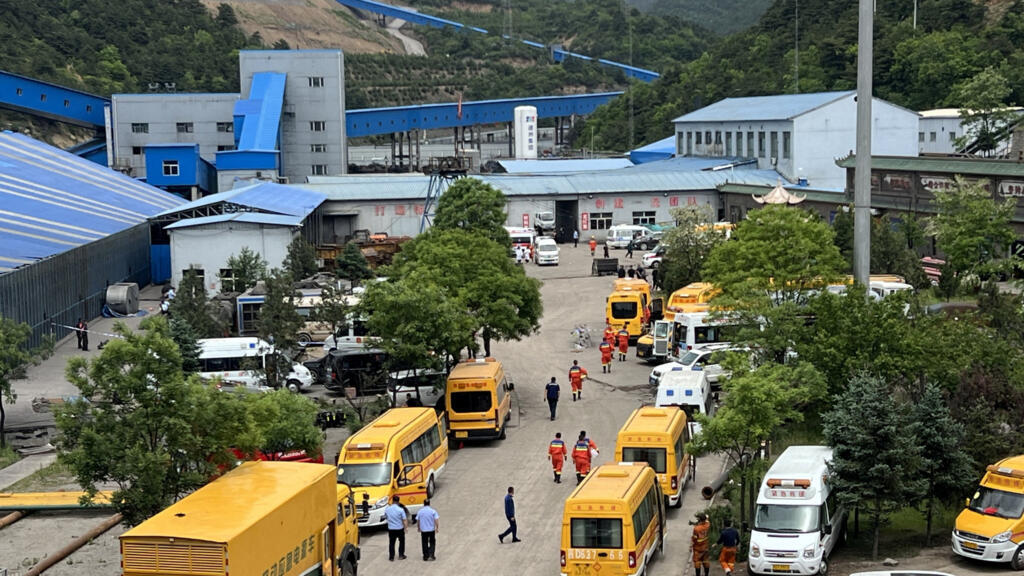
A China coal mine explosion in northern Shanxi province has killed at least 82 people, according to Chinese state media, in what is now the country’s deadliest mining disaster in more than a decade.
Authorities said two workers remain missing following the massive blast at the Liushenyu Coal Mine. Rescue teams continue searching through dangerous underground conditions as investigations into the cause of the explosion intensify.
The disaster happened on Friday evening while hundreds of workers were reportedly on duty inside the mine.
How the China Coal Mine Explosion Happened
Officials said the China coal mine explosion occurred at around 19:29 local time at the Liushenyu Coal Mine in Shanxi province, one of the country’s largest coal-producing regions.
At the time of the incident, 247 miners were believed to be working underground. More than 100 workers were rescued while hundreds of emergency personnel were deployed to the site.
Authorities initially reported a higher death toll before later revising the numbers, explaining that the chaotic conditions immediately after the blast caused confusion during the early rescue efforts.
Chinese President Xi Jinping ordered officials to spare no effort in treating the injured and locating survivors. The Chinese State Council later announced a rigorous investigation and warned that those responsible would face severe punishment.
Survivors Describe Chaos Underground
Several survivors described scenes of panic and toxic gas spreading rapidly through the tunnels after the explosion.
One injured miner told state media that he suddenly saw smoke filling the mine and smelled sulphur moments before workers began collapsing from fumes. He said he later regained consciousness and escaped with another survivor.
Medical officials confirmed that many of the injured miners suffered from toxic gas inhalation. Reports indicated that dangerous levels of carbon monoxide were detected inside the mine following the blast.
Rescue Operations Face Major Difficulties
Emergency crews have encountered serious challenges during rescue operations. Officials said rising water levels near the explosion zone have blocked access to certain underground sections.
Rescuers also discovered that mine blueprints provided by operators did not accurately reflect actual underground conditions, complicating efforts to locate missing workers safely.
China’s Ministry of Emergency Management dispatched hundreds of rescue personnel from multiple specialist teams to support operations at the site.
Mine Previously Flagged for Safety Risks
The Liushenyu mine had previously been identified as a site with severe safety hazards by Chinese mining regulators in 2024.
Reports also indicated that Tongzhou Group, the company operating the mine, received administrative penalties earlier this year related to safety violations. Some members of the management team have now reportedly been detained following the explosion.
Authorities have not yet officially confirmed the exact cause of the blast.
China’s Long History of Mining Disasters
The China coal mine explosion has renewed attention on the country’s dangerous mining industry, which has historically suffered from major industrial accidents despite years of safety reforms.
In the early 2000s, fatal mining incidents were common across China as rapid industrial expansion increased pressure on coal production. Although regulations and enforcement have improved significantly, deadly accidents still occur.
Previous disasters include a 2023 mine collapse in Inner Mongolia that killed 53 people and a 2009 explosion in Heilongjiang province that claimed more than 100 lives.
Why This Matters
China remains the world’s largest coal consumer and one of the biggest greenhouse gas emitters globally. The disaster highlights continuing safety challenges within the country’s massive mining sector even as China rapidly expands renewable energy production.
The tragedy also raises fresh questions about industrial oversight, worker protections, and enforcement of safety standards in high-risk industries.
What Happens Next
Investigators are expected to examine whether safety violations, gas management failures, or operational negligence contributed to the explosion.
Rescue operations remain ongoing as emergency teams continue searching for the two missing miners. Chinese authorities are also likely to launch broader inspections of coal mines across Shanxi and other mining regions following the disaster.