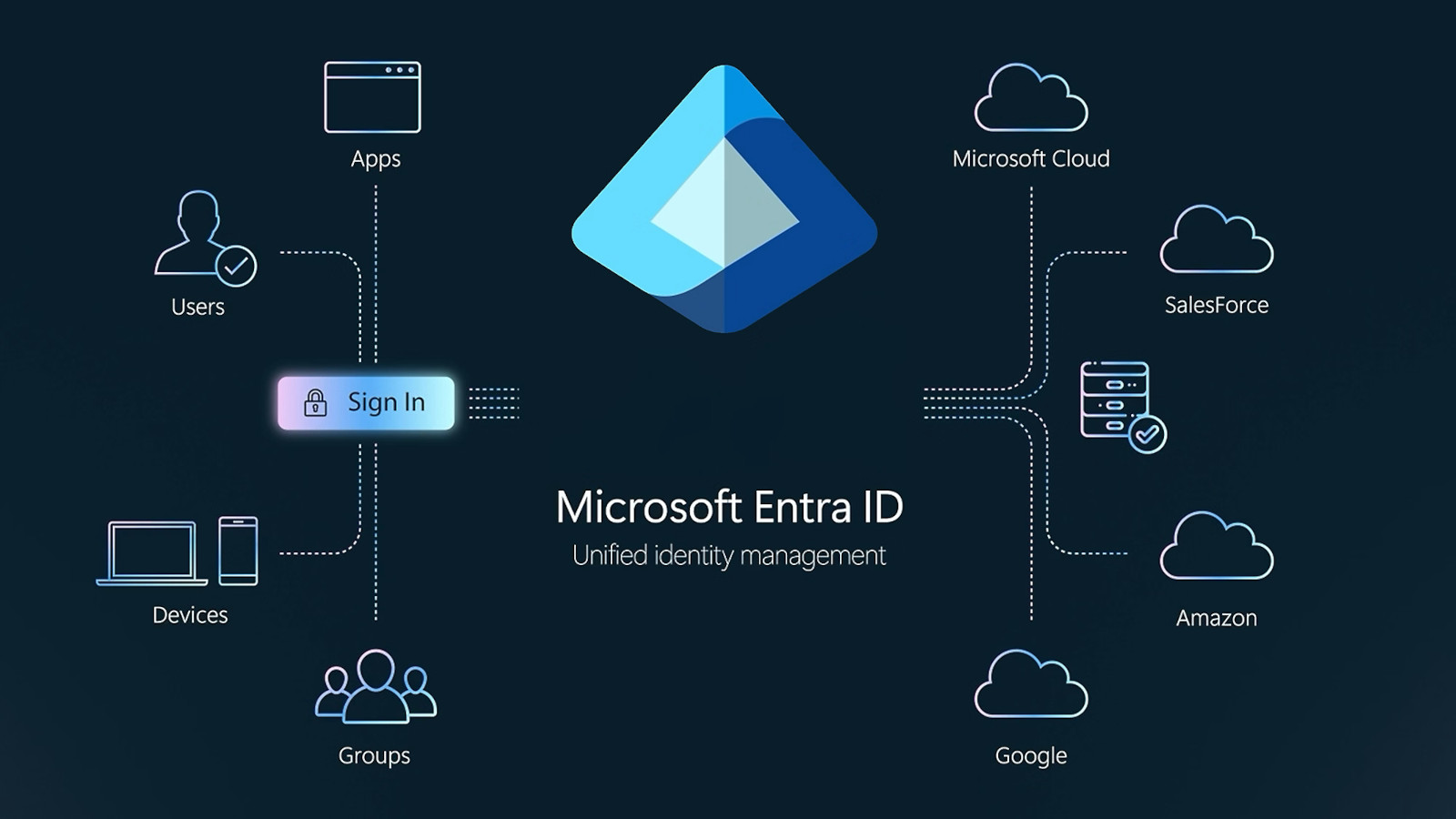
The Entra ID AI bug has raised fresh concerns about how artificial intelligence systems are integrated into enterprise security frameworks. Researchers recently uncovered a flaw that allowed unintended privilege escalation, prompting Microsoft to act quickly.
The vulnerability affected a role designed to manage AI agents within Microsoft Entra ID. Although intended to have limited permissions, the role created an unexpected pathway to higher-level access.
AI identity flaw reveals privilege escalation risk
The Entra ID AI bug exposed what experts describe as a critical “scope gap.” This gap allowed a low-privilege role to gain control over high-value service principals.
As a result, attackers could potentially access sensitive systems or applications with elevated permissions. In environments where powerful service principals exist, the risk becomes even more serious.
Microsoft addressed the issue with a patch released earlier in April, closing the vulnerability before wider exploitation.
Growing risks in AI-driven identity systems
The Entra ID AI bug highlights a broader issue in cybersecurity. As organizations deploy AI agents, they introduce new digital identities that require proper governance.
Traditional identity systems were built for human users. However, AI agents operate differently and often at a much faster pace. This creates gaps that attackers can exploit if controls are not updated.
Experts warn that each AI agent adds complexity to identity management, increasing the overall attack surface.
Security gaps raise governance and visibility concerns
Beyond the technical flaw, the Entra ID AI bug has also raised questions about transparency. While Microsoft resolved the issue, the update was applied quietly.
This means security teams must now review past activity to ensure no unauthorized access occurred before the fix. Without clear visibility, detecting such incidents becomes more difficult.
Organizations are now being urged to apply zero-trust principles not only to users but also to AI-driven identities.
Widespread exposure increases urgency
The impact of the Entra ID AI bug is significant because many enterprise environments rely on service principals with elevated permissions. Analysts suggest that most systems could have been vulnerable before the patch.
This widespread exposure increases the urgency for stronger monitoring and tighter access controls.
Companies must now evaluate how AI roles are configured and ensure that privilege boundaries are clearly defined.
Stronger controls needed for AI security
The Entra ID AI bug serves as a wake-up call for organizations embracing AI technologies. Security models must evolve to handle non-human identities effectively.
Experts recommend continuous monitoring, stricter role definitions, and improved auditing processes. These measures can help reduce the risk of privilege escalation in the future.
The Entra ID AI bug may have been fixed, but it exposes deeper challenges in modern identity security. As AI adoption grows, so do the risks associated with managing digital identities.
Organizations that fail to adapt their security strategies could face serious threats. Strengthening governance and visibility will be key to staying ahead of emerging vulnerabilities.