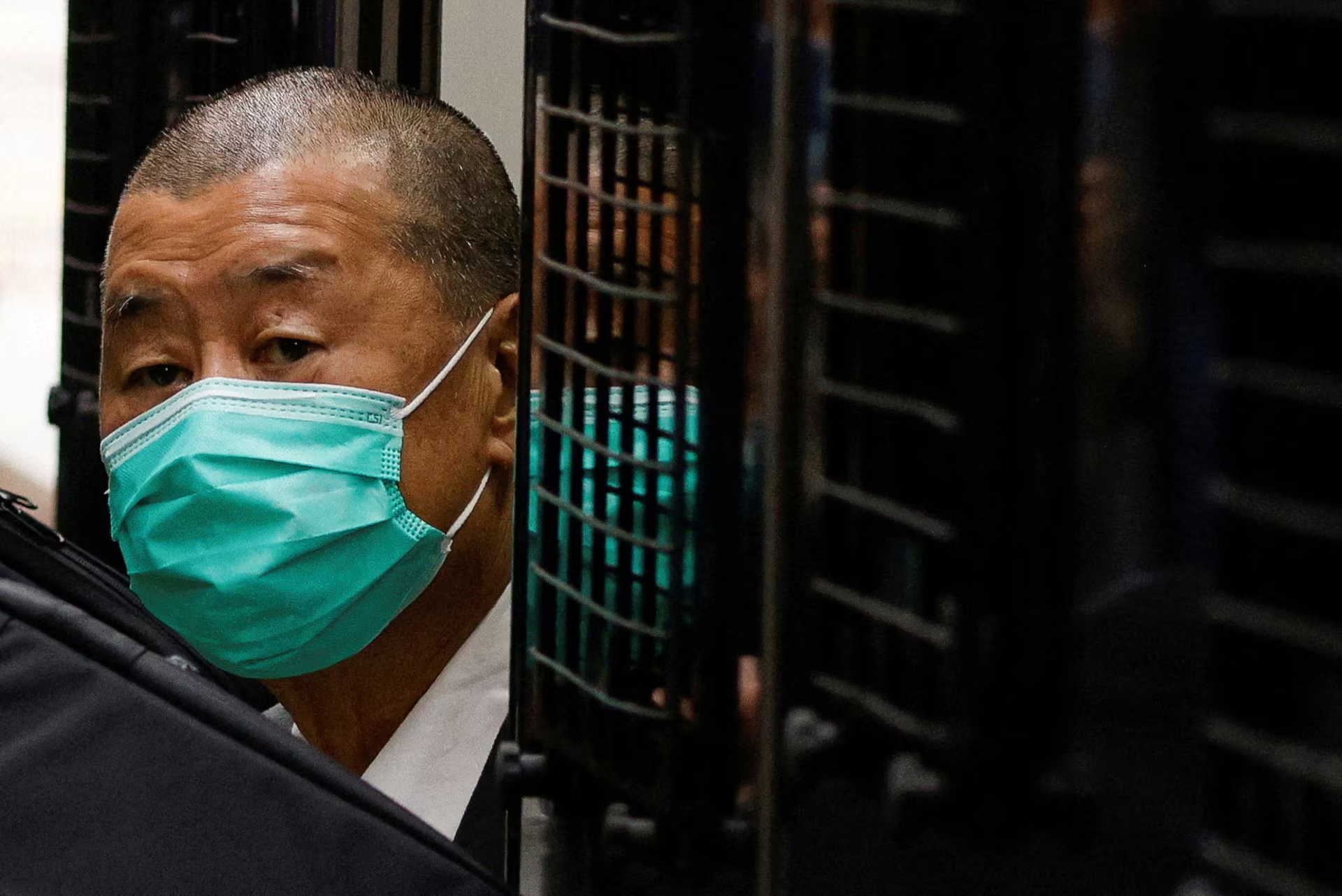
The Jimmy Lai fraud conviction was overturned by a Hong Kong appellate court on Thursday. This surprise legal decision comes shortly after a separate court sentenced Lai to 20 years in prison. Specifically, Judges Jeremy Poon, Anthea Pang, and Derek Pang allowed the appeal. They stated that a lower court judge had “erred” in his original findings. Consequently, the court quashed the convictions and set aside the sentences for Lai and his co-defendant.
Even with the quashing of the Jimmy Lai fraud conviction, the 78-year-old tycoon remains behind bars. He still faces a 20-year term for national security charges. These include conspiracy to collude with foreign forces and publishing seditious materials. This case has drawn global criticism from rights groups and Western nations. Furthermore, it serves as a high-profile example of the crackdown under Beijing’s security laws. While Thursday’s victory is significant, Lai’s son, Sebastien, noted that the ruling changes very little. He urged for an immediate release due to his father’s five years in solitary confinement.
The original Jimmy Lai fraud conviction in December 2022 centered on lease terms. Prosecutors alleged that Lai concealed a private consultancy firm, Dico Consultants Ltd, within the Apple Daily headquarters. However, the appellate court ruled that the prosecution failed to prove a criminal duty to disclose. Therefore, the judges found the lower court’s reasoning unsupportable. Specifically, the defense argued that Dico supported the publishing operations. It did not merely handle Lai’s private affairs.
Meanwhile, the focus shifts back to Lai’s deteriorating health. His family describes the situation as a “life-or-death emergency.” He currently suffers from high blood pressure, heart palpitations, and vision issues. Because of these conditions, international pressure continues to mount. Most notably, U.S. President Donald Trump raised the matter with Xi Jinping. He plans to follow up during a visit to Beijing in late March 2026. Additionally, the UK government has prioritized the case on humanitarian grounds.
Despite the overturned Jimmy Lai fraud conviction, the legal landscape in Hong Kong remains very restrictive. On the same day as the ruling, another court sentenced a man to eight months in prison. His crime involved attempting to terminate a wanted activist’s insurance policy. This illustrates the ongoing tension within Hong Kong’s judicial framework. Ultimately, while Lai won this specific appeal, his long-term freedom remains a central point of international friction.